
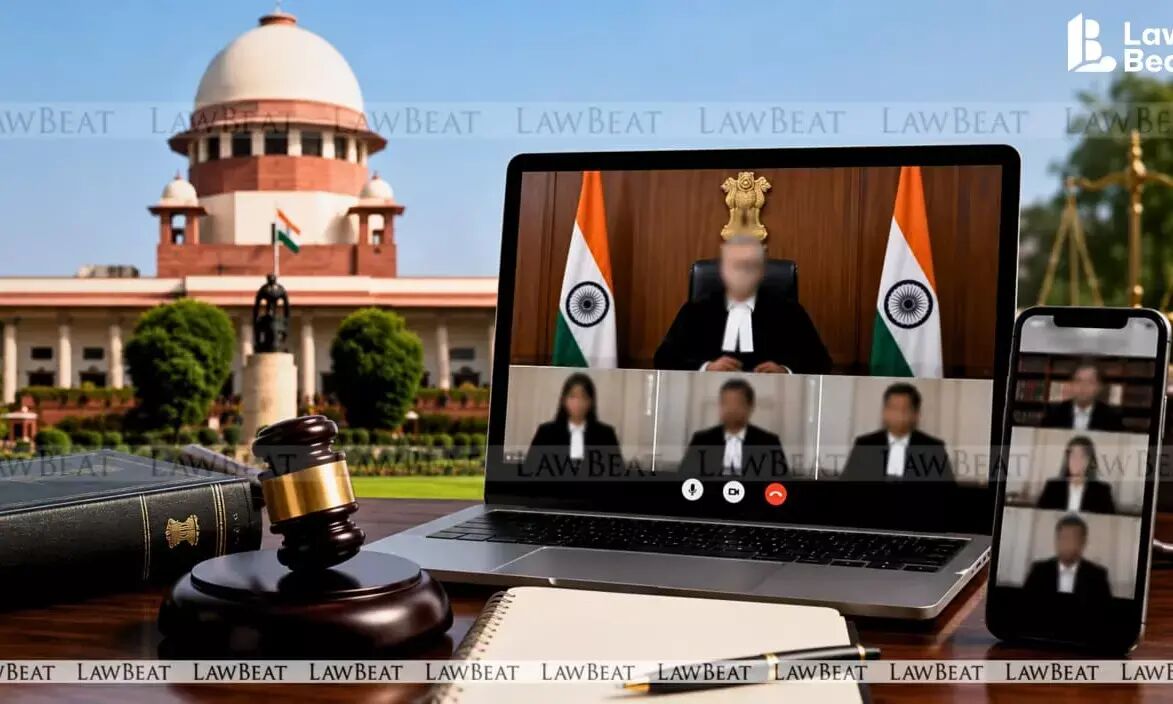
Supreme Court India: Commercial Exploitation of Court Recordings Addressed
Summary
- The Supreme Court of India mandates prior permission for sharing court hearing recordings online to prevent misuse.
- A Public Interest Litigation highlighted concerns about edited and out-of-context dissemination of live-streamed court clips.
- CJI Surya Kant expressed concerns over the commercial exploitation of court proceedings and directed the Union of India to formulate guidelines within three weeks.
- An interim order from July 24, 2026, already prohibited various forms of unauthorized use, including monetization and uploading, of audio-video recordings without prior consent.
- While news outlets can report on proceedings, they are explicitly forbidden from using audio or video clips in their reportage, even for fair and accurate news.
Supreme Court Addresses Misuse of Court Recordings
The Supreme Court has made it clear that while fair and accurate news reporting of judicial proceedings is protected, the unauthorized commercial exploitation and dissemination of court recordings are strictly prohibited.
The Supreme Court of India recently convened to address the growing concern over the unauthorized extraction and circulation of audio and video recordings from court proceedings on various digital and social media platforms. During the hearing of a Public Interest Litigation (PIL), the court was presented with allegations that clips from live-streamed hearings were being selectively edited, taken out of context, and widely disseminated, leading to a distortion of judicial processes and public perception.
Chief Justice of India (CJI) Surya Kant, presiding over the bench, voiced significant apprehension regarding the commercial exploitation of courtroom proceedings. He clarified that the court's intent was not to impose a gag order on reporting but rather to tackle the prevalent misuse of these recordings. Solicitor General Tushar Mehta concurred with the court's perspective, highlighting monetization, advertising, and misrepresentation as primary issues stemming from such practices. He specifically pointed out that video recordings of court proceedings were being uploaded to YouTube channels, urging an immediate cessation of such activities.
Further concerns were raised by Justice Bagchi, who noted that lawyers themselves were uploading these videos for personal gain, thereby violating the professional rule against canvassing. He emphasized the lack of regulation concerning the selective extraction and promotion of parts of live-streamed proceedings by legal professionals. Senior Advocate Gopal Sankaranarayanan illustrated this problem with an example, describing how a 30-minute hearing might be reduced to a one-minute video with sensationalized and misleading titles, such as 'lawyer slams...court slams lawyer,' completely misrepresenting the actual context. In response to these issues, the bench led by CJI Surya Kant has directed the Union of India to formulate comprehensive guidelines and submit them for the court's consideration within a three-week timeframe.
Regulatory Framework and Prior Prohibitions
The Supreme Court has unequivocally stated that prior authorization is essential for sharing recordings of court hearings online, while simultaneously affirming that legitimate and accurate news reporting will not be impeded. This stance builds upon an interim order issued on July 24, 2026, which strictly prohibited the posting, reposting, uploading, transmission, or storage of audio and video recordings of court proceedings on social media and other digital platforms without explicit permission from the Secretary General of the Supreme Court of India or the Registrar Generals of the respective High Courts.
This comprehensive interim measure specifically forbids the extraction, dissemination, monetization, posting, re-posting, uploading, transmitting, modification, storing, or hosting of any audio-video recording of judicial proceedings without the required prior consent. However, the court had also clarified that this order would not impact fair and accurate news reporting of judicial proceedings, aiming to strike a balance between public access and preventing misuse.
An additional clarification was provided in August, addressing potential confusion regarding paragraph 11 of the July 24, 2026, order. The Chief Justice of India reiterated that the order should not be interpreted as a blanket prohibition on reporting by recognized news outlets. These outlets retain the right to report on court proceedings and inform the general public about legal developments and judicial pronouncements. Nevertheless, they are explicitly bound by the restrictions outlined in paragraph 10 of the original order, which mandates that audio or video clips of the court proceedings shall not be utilized in the course of such reportage.
Protecting the Integrity of Judicial Proceedings
The Supreme Court's firm stance underscores its commitment to safeguarding the integrity of judicial proceedings against unauthorized commercial exploitation and out-of-context dissemination. The concerns raised by the CJI, Solicitor General Tushar Mehta, and Justice Bagchi collectively highlight the potential for significant harm when court recordings are manipulated for personal gain, advertising, or to create misleading narratives. The court's directive for the Union of India to develop new guidelines is a crucial step towards establishing a robust regulatory framework for the use of such recordings.
This ongoing effort by the India Supreme Court to regulate court recordings on social media and other platforms is vital for maintaining public trust in the judiciary. The prohibition on lawyers uploading court videos for personal gain, as well as the general restriction on YouTube channels and other digital platforms from monetizing or misrepresenting court proceedings, reinforces the seriousness with which the court views these issues. The distinction between legitimate news reporting—which is protected—and the unauthorized use of audio-video clips—which is forbidden—is a key aspect of this regulatory push.
Ultimately, the court seeks to prevent the distortion of judicial proceedings that arises from selective editing and sensationalized reporting, ensuring that the public receives accurate information without compromising the sanctity of the courtroom. The upcoming guidelines are expected to provide further clarity and enforcement mechanisms to address these challenges effectively.
Practical Implications
Lawyers and compliance officers must understand the Supreme Court's clear prohibition on the unauthorized commercial exploitation and dissemination of court proceeding recordings. They should advise media clients and individuals against using such clips for personal gain or out-of-context reporting, and monitor the upcoming guidelines from the Union of India for further regulatory clarity.
Source
Source: Original reporting via Live Law
How does this affect you?
Get an AI analysis of this article grounded in your jurisdictions, practice areas, and any policy documents you've uploaded to Wansom.
Finish Reading the Full Story and the Expert Analysis.
Get the latest legal & regulatory intelligence in India
Wansom is AI and can make mistakes.