
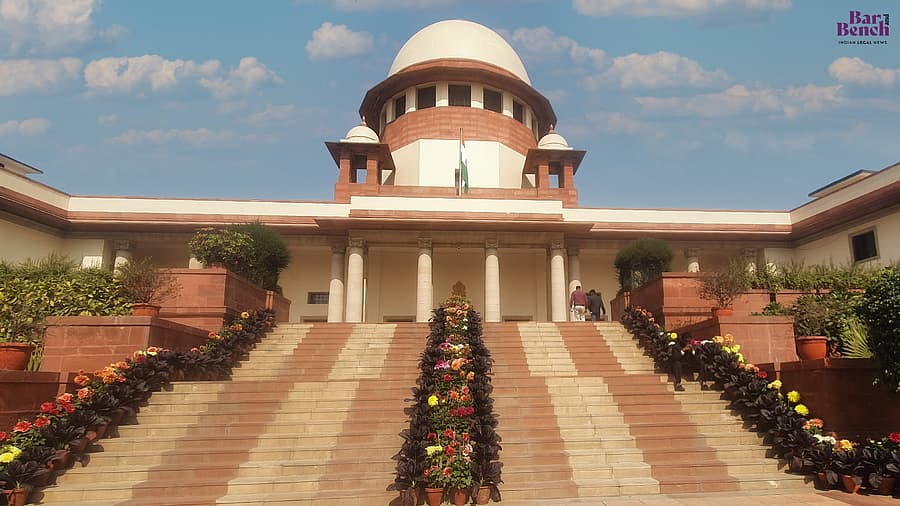
Supreme Court Himachal Pradesh: Allows Withdrawal of 45 MLA Cases
Summary
- The Supreme Court permitted the Himachal Pradesh government to withdraw prosecutions in 45 criminal cases against sitting and former lawmakers.
- These cases originated from protests and public grievance voicing during the COVID-19 pandemic.
- The Supreme Court overturned the Himachal Pradesh High Court's earlier decision, which had allowed withdrawal in only 20 of 65 similar cases.
- The High Court's approval was required due to the 2021 *Ashwini Kumar Upadhyay* judgment, mandating strict judicial scrutiny for withdrawing cases against lawmakers.
- The apex court found that none of the 45 cases involved grave or heinous crimes, and some had already resulted in acquittals or dismissals.
Supreme Court Overturns High Court on Lawmaker Case Withdrawals
The Supreme Court clarified its interpretation of these guidelines, noting that none of the 45 cases in question involved grave or heinous offenses.
India's Supreme Court recently granted permission to the Himachal Pradesh government to withdraw prosecutions in 45 criminal cases that had been filed against sitting and former Members of Parliament (MPs) and Members of Legislative Assembly (MLAs). These cases, initiated by the state police during the COVID-19 pandemic, primarily stemmed from protests and instances where public grievances were voiced.
The apex court's decision effectively set aside an earlier ruling by the Himachal Pradesh High Court. The High Court had previously allowed the withdrawal of only 20 out of a total of 65 cases involving lawmakers, necessitating the state government's appeal to the higher court. The Supreme Court bench, comprising Chief Justice of India Surya Kant, Justice Joymalya Bagchi, and Justice V Mohana, reviewed the specifics of each case before issuing its directive.
Legal Framework for Withdrawing Prosecutions
The High Court's initial requirement for approval to withdraw these cases was mandated by the Supreme Court's own 2021 judgment in the *Ashwini Kumar Upadhyay* case. This landmark ruling established a stringent framework for judicial scrutiny, designed to prevent the potential misuse of executive power when governments seek to drop prosecutions against elected representatives. The *Upadhyay* judgment underscores the need for courts to carefully examine such requests to ensure they are not politically motivated or undermine the rule of law.
In its recent decision, the Supreme Court clarified its interpretation of these guidelines, noting that none of the 45 cases in question involved grave or heinous offenses. The court emphasized that the allegations against these public representatives largely concerned their participation in demonstrations or expressing public concerns in various forums, rather than serious criminal conduct. Furthermore, the bench observed that in four of the cases that the High Court had not permitted to be withdrawn, the judicial process had already concluded with either an acquittal or a dismissal of charges.
Implications for Criminal Cases Against Politicians
This ruling from the Supreme Court on the Himachal Pradesh COVID protest cases provides significant clarity regarding the withdrawal of prosecution against lawmakers in India, particularly for offenses related to political protests. It suggests a nuanced application of the *Ashwini Kumar Upadhyay* guidelines, distinguishing between serious criminal acts and those arising from public demonstrations or voicing grievances.
The Supreme Court's stance that these cases did not disclose the commission of any grave or heinous crime, nor did they suggest the accused were hardened criminals, is a crucial aspect of the judgment. This precedent will likely influence how future requests to withdraw criminal cases against politicians in India are evaluated, especially when the charges stem from non-violent protest activities. It reinforces the judiciary's role in ensuring that the executive's power to withdraw cases is exercised judiciously, without unduly penalizing public representatives for actions that fall outside the scope of severe criminality.
Practical Implications
This ruling clarifies the Supreme Court's interpretation of judicial scrutiny for withdrawing criminal cases against lawmakers, particularly for non-heinous protest-related offenses. Lawyers should note this precedent when advising political clients or challenging High Court decisions regarding prosecution withdrawals, especially in light of the *Ashwini Kumar Upadhyay* guidelines.
Source
How does this affect you?
Get an AI analysis of this article grounded in your jurisdictions, practice areas, and any policy documents you've uploaded to Wansom.
Finish Reading the Full Story and the Expert Analysis.
Get the latest legal & regulatory intelligence in India
Wansom is AI and can make mistakes.