
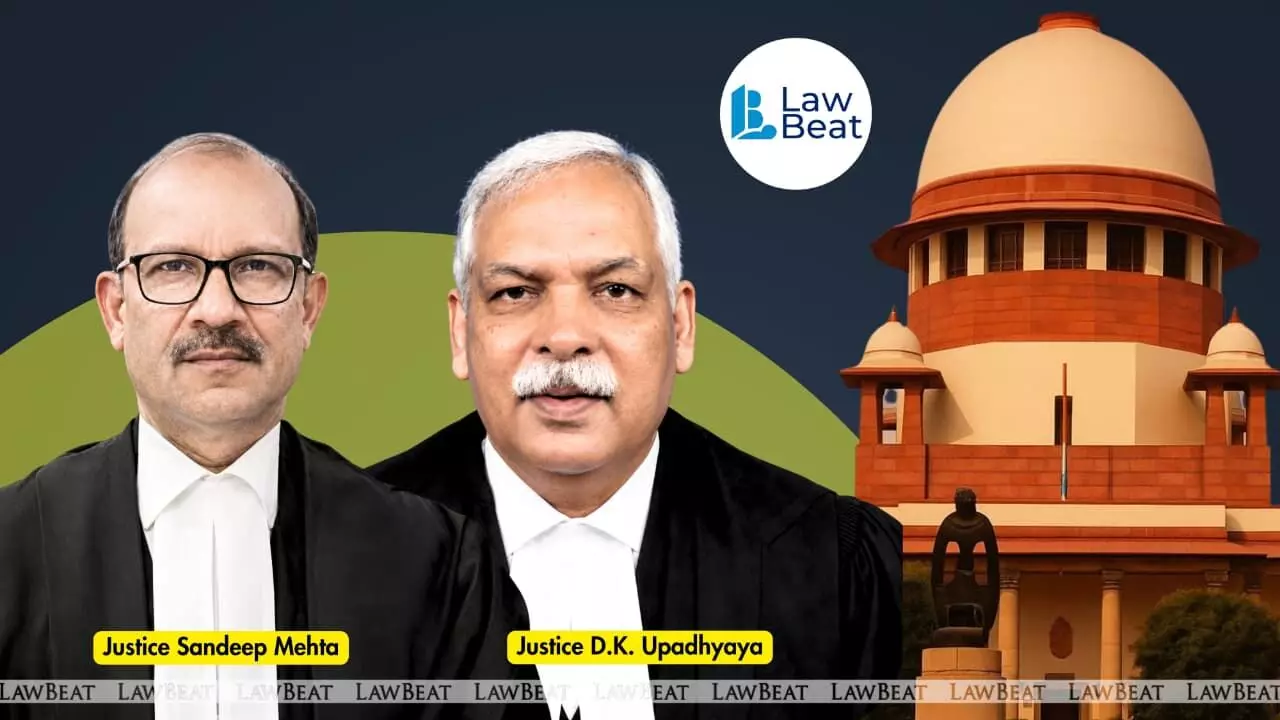
Supreme Court: High Courts Can Quash FIRs on Compromise Under BNSS
Summary
- The Supreme Court ruled that High Courts can directly quash criminal proceedings under Section 528 BNSS (formerly Section 482 CrPC) in purely private disputes after a voluntary settlement.
- This decision means High Courts do not need to relegate parties to trial courts for compounding offences when a compromise has been verified.
- The ruling stemmed from an appeal by Abhishek Dutt, whose FIR for Sections 420 and 34 IPC was not quashed by the Madhya Pradesh High Court despite a verified compromise.
- The Supreme Court emphasized that the dispute was 'purely private' and cited the precedent of Gian Singh v. State of Punjab.
- The apex court allowed Dutt's appeal, quashing the FIR and all related criminal proceedings, effective October 13, 2026.
Supreme Court Clarifies High Court Powers on FIR Quashing
The Supreme Court emphasized that High Courts are not obligated to direct parties to a trial court for the compounding of offences when such a compromise has been established.
The Supreme Court has recently affirmed that High Courts possess the authority to quash criminal proceedings under Section 528 of the Bharatiya Nagarik Suraksha Sanhita (BNSS), which replaced the erstwhile Section 482 of the Criminal Procedure Code, 1973. This power can be exercised in instances where parties have reached a voluntary settlement in disputes that are fundamentally private in nature. The apex court emphasized that High Courts are not obligated to direct parties to a trial court for the compounding of offences when such a compromise has been established.
This significant pronouncement came from a Bench comprising Justices Sandeep Mehta and Devendra Kumar Upadhyaya. Their ruling underscores that once a voluntary settlement has been verified, particularly by an officer like the Registrar of the High Court, there is no justification for compelling parties to undergo the additional step of approaching a trial court. The decision streamlines the process for resolving certain criminal matters, allowing for a more direct path to justice when a genuine compromise has been achieved.
The Abhishek Dutt Case: A Catalyst for Clarity
The Supreme Court's clarification arose from an appeal filed by Abhishek Dutt, challenging an August 21, 2026, order issued by a single-judge bench of the Madhya Pradesh High Court at Gwalior. Dutt, along with proforma respondent no. 3, had sought the quashing of a 2022 First Information Report (FIR) registered at Police Station Padav, Gwalior. The FIR pertained to alleged offences under Sections 420 and 34 of the Indian Penal Code, 1860, which correspond to Section 318(4) and Section 3(5) of the BNS, respectively. The complaint had been lodged by Dr. Amarjit Singh Bhalla, identified as respondent no. 2.
Supreme Court's Reversal and Legal Precedent
The Supreme Court, however, found the Madhya Pradesh High Court's approach to be unjustified. It noted that the complainant had consistently affirmed, both before the High Court and the Supreme Court, that the dispute was settled and that the FIR should be quashed. The apex court further determined that the matter was unequivocally a “purely private” dispute, stemming from a monetary transaction, thus making it an ideal candidate for an early resolution through compromise.
In its decision, the Supreme Court explicitly stated that there was no valid reason for the High Court to have directed the parties to the trial court for compounding, especially given that the settlement had already been verified by the Registrar. The Bench relied on its own precedent set in the 2012 case of Gian Singh v. State of Punjab & Anr., which delineates the scope of inherent powers to quash criminal proceedings following a settlement between parties. The court concluded that once the High Court itself had acknowledged the voluntary nature of the compromise, it became a fitting situation for the exercise of its extraordinary powers to quash the proceedings.
Broader Implications for Criminal Justice
This ruling by the Supreme Court provides crucial clarity regarding the High Court inherent powers compromise, particularly under Section 528 BNSS FIR quashing. It establishes that in cases involving purely private disputes where a voluntary and verified compromise has been reached, High Courts can directly quash the criminal proceedings, bypassing the often-léngthy process of approaching a trial court for compounding offences High Court. This streamlines the resolution of such matters, offering a more efficient pathway for parties to move past their disputes.
For legal practitioners, this decision means they can now confidently advise clients to seek the quashing of FIRs directly from the High Court in appropriate circumstances, without the need for an intermediate step at the trial court level. The emphasis on the High Court's extraordinary powers to quash criminal proceedings after a voluntary settlement underscores the judiciary's commitment to facilitating amicable resolutions in private disputes, thereby reducing the burden on the lower courts and expediting justice.
Practical Implications
Lawyers can now directly advise clients to seek quashing of FIRs by the High Court under Section 528 BNSS (or erstwhile Section 482 CrPC) in cases of purely private disputes where a voluntary compromise has been reached and verified, bypassing the need to approach the trial court for compounding. This ruling streamlines the process for settling private criminal matters and provides a clearer path for early resolution.
Source
Source: Original reporting via Live Law
How does this affect you?
Get an AI analysis of this article grounded in your jurisdictions, practice areas, and any policy documents you've uploaded to Wansom.
Finish Reading the Full Story and the Expert Analysis.
Wansom is AI and can make mistakes.