
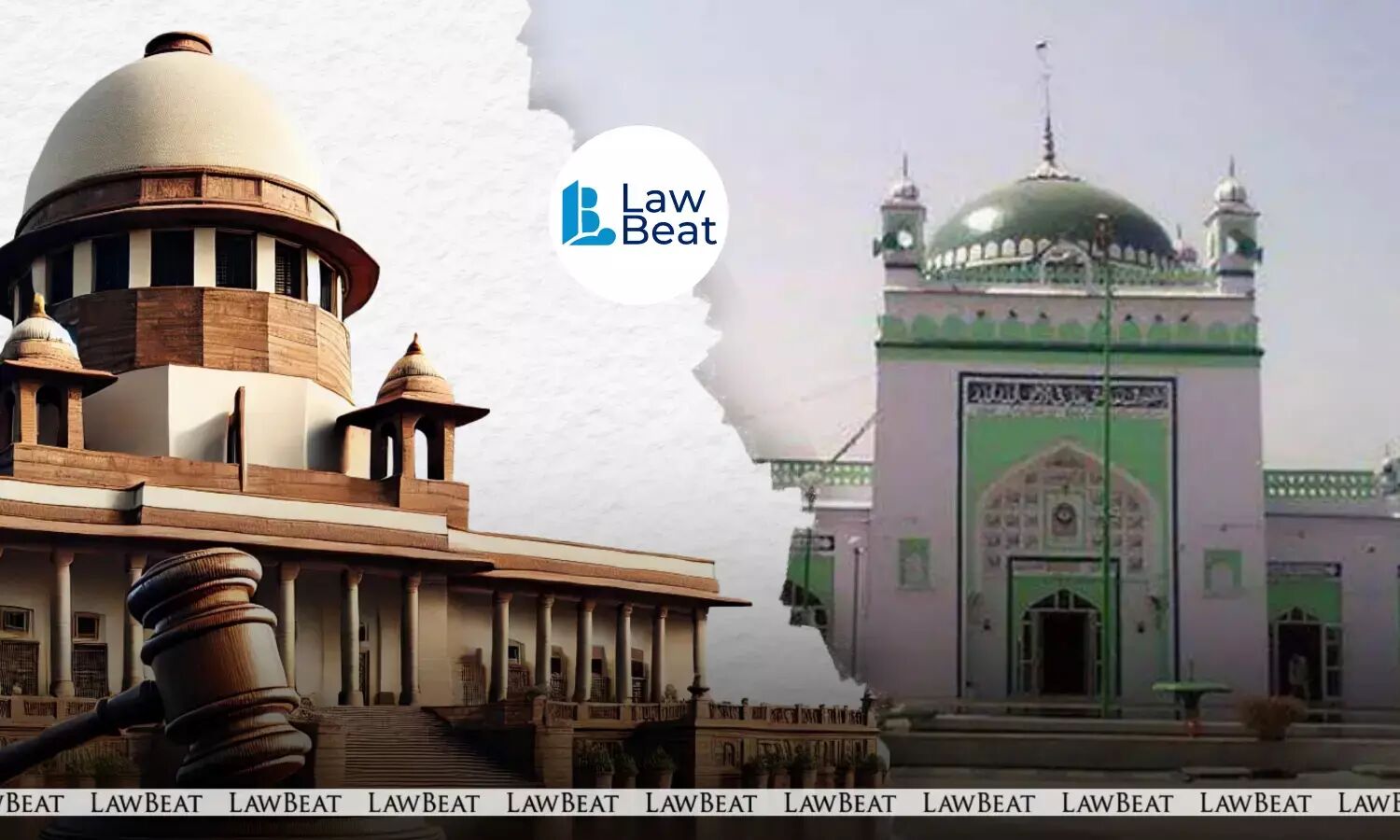
Supreme Court: Sambhal Jama Masjid Survey Challenge Arguments
Summary
- The Supreme Court heard arguments from the Shahi Jama Masjid Committee challenging a trial court's order for a survey of the Sambhal Jama Masjid.
- Senior Advocate Huzefa Ahmadi contended that the mosque's religious character, protected as an ancient monument, cannot be altered under existing laws.
- Arguments focused on the alleged misinterpretation of the Places of Worship (Special Provisions) Act, 1991, and the Ancient Monuments and Archaeological Sites and Remains Act, 1958.
- The committee also argued that the trial court's ex parte appointment of a local commissioner violated Order XXVI Rule 9 of the Code of Civil Procedure.
- The Supreme Court had previously stayed the operation of the contested survey order in December of the previous year.
Supreme Court Hears Challenge to Sambhal Survey
The core of the committee's argument centered on the inviolability of a place of worship's religious character, asserting that it must remain unchanged under existing legal frameworks.
The Supreme Court recently heard extensive arguments from the Shahi Jama Masjid Committee, Sambhal, challenging a trial court's directive for a survey of the Sambhal Jama Masjid. Senior Advocate Huzefa Ahmadi, representing the Muslim side, presented a robust case before a bench comprising Justices PS Narasimha and Alok Aradhe, asserting that the religious character of the mosque, protected as an ancient monument, cannot be altered.
This hearing follows the Supreme Court's decision last December to stay the operation of the contested survey order. The committee's primary contention revolves around the legality of the trial court's appointment of a local commissioner to conduct the survey, including photography and videography of the premises.
The core of the committee's argument centered on the inviolability of a place of worship's religious character, asserting that it must remain unchanged under existing legal frameworks.
Legal Interpretation of Religious Character Preservation
A significant portion of the arguments focused on the interpretation of key legislation governing religious sites and ancient monuments in India. Ahmadi contended that the Allahabad High Court had erroneously interpreted provisions of both the Places of Worship (Special Provisions) Act, 1991, and the Ancient Monuments and Archaeological Sites and Remains Act, 1958. Specifically, he argued that Section 4(3) of the 1991 Act was misapplied, emphasizing that the law explicitly prohibits any alteration to the religious character of a place of worship.
He further elaborated that preservation under the 1958 Act inherently includes safeguarding a monument's intrinsic religious character. Illustrating this point, Ahmadi stated that a monument designated as a temple cannot be converted into a church, just as a mosque cannot be transformed into a temple. The senior counsel also highlighted that while plaintiffs relied on Section 18 of the 1958 Act, which grants access to protected monuments, they overlooked Section 16, designed to protect such sites from pollution and desecration. He maintained that if a protected monument possesses a religious character, that character must remain intact, rendering any plea for religious practices inconsistent with its existing nature legally untenable. Additionally, Ahmadi challenged the High Court's interpretation of agreements concerning the monument, arguing that a mutawalli acts merely as a custodian, with ownership ultimately vesting in the Almighty.
Procedural Challenges to the Survey Order
Beyond the substantive legal interpretations, the Shahi Jama Masjid Committee also raised serious procedural objections regarding the appointment of the local commissioner. Ahmadi argued that the trial court failed to satisfy the mandatory requirements stipulated under Order XXVI Rule 9 of the Code of Civil Procedure (CPC). He pointed out that the application seeking the survey, photography, and videography was allowed ex parte, meaning without providing notice to the mosque committee, despite the mosque having been in continuous use since India's Independence.
The trial court, according to Ahmadi, neither recorded specific reasons demonstrating the necessity of a local investigation nor clearly defined the exact points the commissioner was required to examine. Given the sensitive nature of the dispute, the appointment of a commissioner without first hearing the mosque committee was deemed unjustified. Ahmadi also referenced the unfortunate violence that transpired following the commissioner's visit to the mosque premises, which tragically resulted in the loss of six lives. He underscored that a commissioner's role is to assist the court, not to enable a party to gather evidence, thereby asserting that the High Court's reasoning permitting a commission for evidence collection was contrary to the CPC.
Broader Implications for Religious Site Character Preservation
The arguments presented in the Sambhal Jama Masjid SC survey challenge carry significant implications for the interpretation of laws governing religious sites across India. Ahmadi urged the Supreme Court to hear the current proceedings concurrently with other pending Special Leave Petitions that involve similar legal issues. This request was made in light of the Supreme Court's own December 12 order, which directed that such related proceedings should not continue independently.
During the hearing, Justice PS Narasimha offered a notable remark, emphasizing the importance of societal tolerance in such matters. The conclusion of the Muslim side's submissions marks a critical juncture in a case that could set precedents for how the religious character of historical sites is protected and how survey orders are challenged under the Places of Worship Act 1991 interpretation and the Ancient Monuments Act 1958 religious character provisions.
Practical Implications
This case provides critical insights into the Supreme Court's interpretation of the Places of Worship Act and the Ancient Monuments Act regarding the preservation of religious character of historical sites. Lawyers should monitor this case for precedents on challenging survey orders and defining the scope of religious character protection, particularly when advising on property disputes involving places of worship.
Source
Source: Original reporting via Live Law
How does this affect you?
Get an AI analysis of this article grounded in your jurisdictions, practice areas, and any policy documents you've uploaded to Wansom.
Finish Reading the Full Story and the Expert Analysis.
Wansom is AI and can make mistakes.