
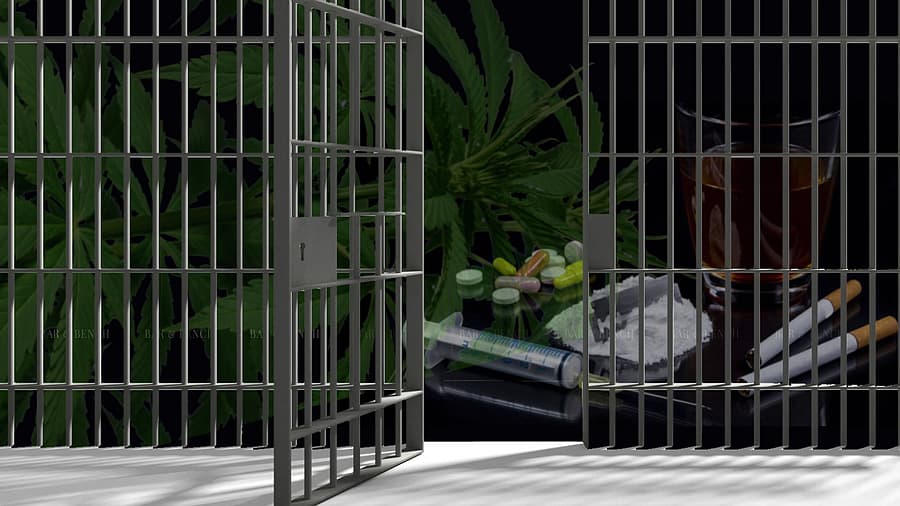
P&H High Court: 44% Punjab Prisoners Develop Drug Dependence
Summary
- The Punjab and Haryana High Court expressed serious concern over prisoners developing drug dependence after entering jails.
- The court noted that the lack of a rehabilitation strategy prevents inmates from fully exercising their right to life.
- Official data revealed 44% (15,768 out of 35,449) of Punjab prisoners are drug-dependent.
- A significant 83% of these drug-dependent inmates registered with an OOAT Clinic only after their jail admission.
- The court concluded that the data indicates a serious systemic problem within Punjab's prison system.
Judicial Scrutiny on Prison Drug Crisis
The P&H High Court Punjab prisoners drug dependence issue was thus framed not merely as a correctional challenge, but as a direct infringement on basic human rights.
The Punjab and Haryana High Court recently voiced profound concern regarding the alarming rate at which inmates in Punjab's correctional facilities develop drug dependence after their admission. In a significant intervention, a bench comprising then Acting Chief Justice Ashwani Kumar Mishra and Justice Rajesh Gaur, presiding over the case `Court On Its Own Motion v State of Punjab and Others`, highlighted a critical systemic failure.
The court observed that without a robust strategy to address and cure this inmate drug addiction, prisoners are effectively denied the full realization of their fundamental right to life. This continued dependence, the judges noted, inevitably leads to further personal crises, undermining any prospect of successful rehabilitation and reintegration into society. The P&H High Court Punjab prisoners drug dependence issue was thus framed not merely as a correctional challenge, but as a direct infringement on basic human rights.
Alarming Statistics Unveiled
Official data presented to the court on September 1 painted a stark picture of the scale of the problem. It revealed that a staggering 44 percent of all prisoners housed in Punjab's jails, amounting to 15,768 individuals out of a total of 35,449, were classified as drug-dependent. This figure underscores the pervasive nature of drug dependence within the state's prison system.
Further analysis by the court indicated that a substantial majority of these drug-dependent inmates, specifically 83 percent, were registered with an Out Patient Opioid Assisted Treatment Clinic (OOAT Clinic) only after their entry into jail. This contrasts with the 2,540 inmates who, according to an affidavit filed by the State of Punjab and highlighted by the Amicus Curiae, were already registered under the OOAT Clinic and receiving medication prior to their admission. The court explicitly recorded that the current number of drug-dependent inmates stands at 15,768, concluding that these figures prima facie expose a serious malaise afflicting Punjab prisons.
Right to Life and Rehabilitation Gaps
The High Court's observations directly link the absence of effective prison drug rehabilitation Punjab programs to the constitutional right to life for prisoners in India. The bench underscored that the state's failure to implement a comprehensive strategy for de-addiction and recovery within its correctional facilities prevents inmates from leading a life free from the debilitating effects of substance abuse, both during and after their incarceration.
This judicial stance emphasizes that merely housing individuals does not fulfill the state's obligation; it must also ensure conditions that uphold their dignity and facilitate their potential for reform. The lack of adequate support for those grappling with drug dependence, particularly when it develops post-incarceration, represents a significant gap in the state's duty towards inmate welfare and healthcare.
Implications for Prison Welfare and Policy
This ruling from the Punjab Haryana High Court carries significant weight for future prison administration and policy. By categorizing the situation as a 'serious malaise' and directly connecting it to the right to life, the court has signaled an imperative for immediate and comprehensive reform in how inmate drug addiction is managed across Punjab's jails. The focus on the timing of drug dependence – often occurring after entry – suggests systemic issues within the prison environment itself.
The judgment effectively mandates a re-evaluation of existing strategies, including the efficacy and accessibility of OOAT Clinic Punjab jails, and calls for the development of more proactive and preventative measures. It sets a precedent that could empower legal challenges against inadequate facilities and conditions, pushing the State of Punjab to enhance its commitment to the health and rehabilitation of its incarcerated population.
Practical Implications
This ruling provides a strong precedent for lawyers representing prisoners in Punjab to challenge inadequate drug rehabilitation facilities and conditions of detention, citing the right to life. It also signals potential for increased litigation against the State of Punjab regarding prison healthcare and inmate welfare, requiring compliance officers in prison administration to review and update drug treatment strategies.
Source
How does this affect you?
Get an AI analysis of this article grounded in your jurisdictions, practice areas, and any policy documents you've uploaded to Wansom.
Finish Reading the Full Story and the Expert Analysis.
Wansom is AI and can make mistakes.