
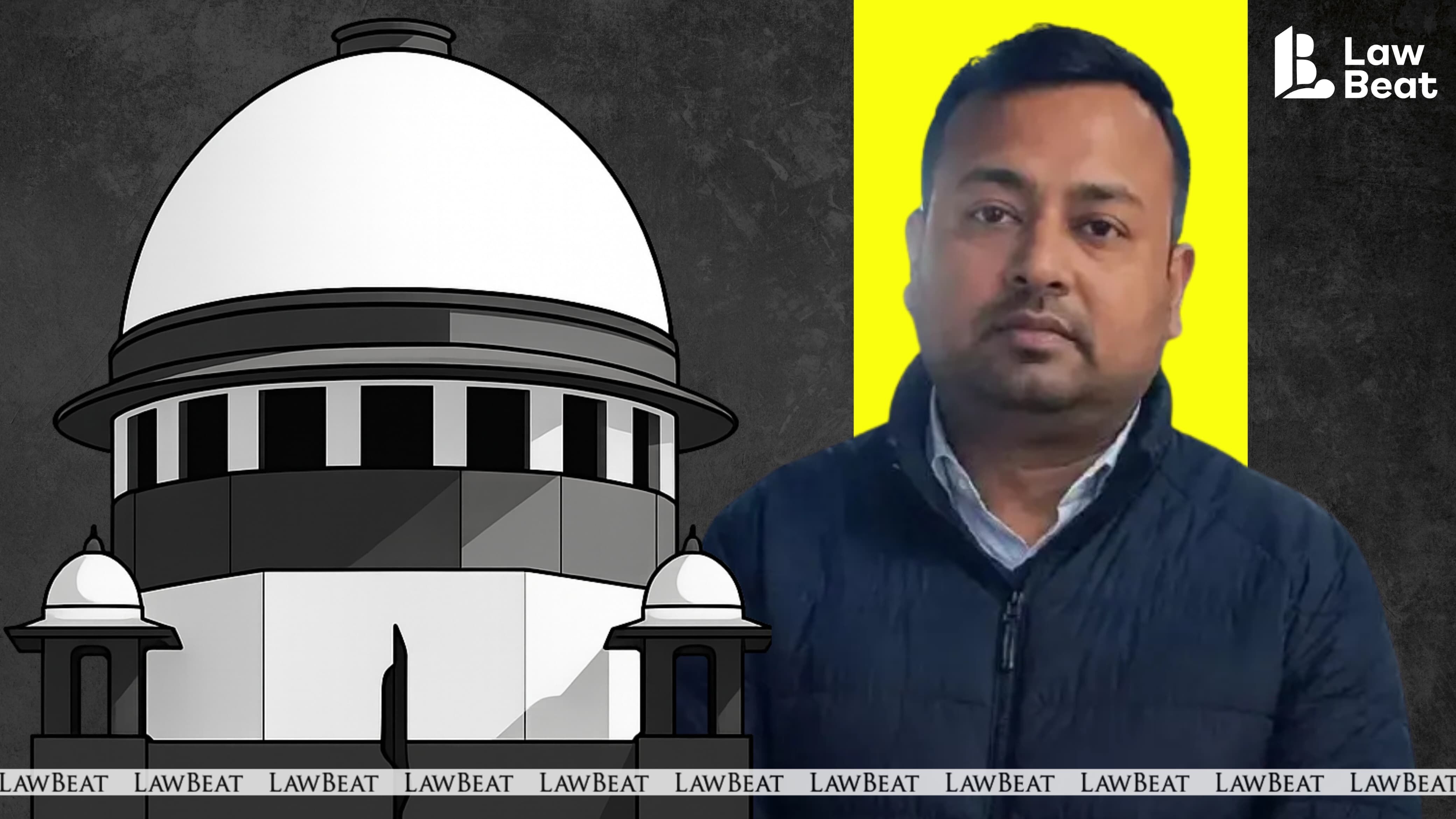
Supreme Court: Sumit Roy Right to Silence Does Not Bar Arrest
Summary
- The Supreme Court heard an anticipatory bail plea from Sumit Roy, personal assistant to Abhishek Banerjee, regarding an ongoing investigation.
- The Enforcement Directorate sought Roy's custodial interrogation, arguing the investigation was ongoing and revealed "a tip of the iceberg."
- Roy's counsel invoked his constitutional right to silence, stating he was cooperating by appearing daily but not answering questions.
- The Bench observed that while the right to silence is secured, so is the investigating agency's right to arrest.
- Roy's defense also questioned the five-year delay in the FIR and noted his absence from the FIR itself.
What Happened
The Bench observed that while an individual's right to silence is indeed secured by the Constitution, the same Constitution also guarantees the investigating agency’s authority to make an arrest.
The Supreme Court recently heard the anticipatory bail plea of Sumit Roy, who serves as the personal assistant to Trinamool Congress leader Abhishek Banerjee. During the proceedings, the Enforcement Directorate (ED) vehemently sought Roy's custodial interrogation as part of an ongoing investigation. A Bench comprising Chief Justice of India Surya Kant, Justices Joymalaya Bagchi and V. Mohana presided over the hearing.
Solicitor General Tushar Mehta, representing the ED, informed the Bench that his review of the case records indicated the investigation had only uncovered "a tip of the iceberg." Mehta stressed the critical need for Roy's custodial interrogation, asserting that the probe remained active and required his direct involvement to progress.
In response, Senior Advocate Gopal Sankaranarayanan, representing Sumit Roy, argued that his client had consistently cooperated with the investigation, appearing daily before the agency from 10 AM to 6 PM. However, Mehta countered that Roy was "not answering questions," prompting Sankaranarayanan to invoke Roy's constitutional right to remain silent, stating, "That is my entitlement under the Constitution. I am entitled to my silence. I am entitled not to answer questions."
Legal Context and the Right to Silence
The Supreme Court bench, addressing the arguments, made a pivotal observation regarding the interplay of constitutional rights. The Bench observed that while an individual's right to silence is indeed secured by the Constitution, the same Constitution also guarantees the investigating agency’s authority to make an arrest. This statement underscores the delicate balance the judiciary must strike between protecting fundamental liberties and empowering law enforcement to conduct thorough investigations.
This judicial stance highlights a critical aspect of anticipatory bail India legal precedent, where the grant of pre-arrest bail often hinges on the perceived necessity of custodial interrogation by agencies like the Enforcement Directorate. The constitutional right to silence, often referenced under Article 20(3) of the Indian Constitution, is a cornerstone of individual protection against self-incrimination, yet its application in the context of an agency's power to seek custodial interrogation remains a complex area of law. The ongoing proceedings for Sumit Roy thus serve as a significant case study in defining the boundaries of these competing constitutional principles.
Defense Arguments and Investigative Material
Beyond asserting the right to silence, Senior Advocate Sankaranarayanan presented several specific points challenging the ED's stated need for custodial interrogation. He highlighted alleged confrontations conducted during the investigation, specifically mentioning two individuals who were confronted with Roy: a security guard purportedly involved in a cash handover, and another person described as the main accused, who is currently in custody. Sankaranarayanan claimed that both these individuals subsequently deviated from their earlier statements.
Further, Roy's counsel questioned the significant delay in registering the First Information Report (FIR), noting that the alleged incident occurred five years prior to the FIR's registration. Sankaranarayanan also pointed out that Sumit Roy was not named in the FIR and reiterated his client's consistent cooperation throughout the entire investigative process. In response, Solicitor General Tushar Mehta arguments relied on investigative material submitted to the Court in a sealed cover. Mehta requested that this confidential material be kept with the Court Master for the Bench's review before the next hearing, emphasizing its importance to the Enforcement Directorate's case.
Adjournment and Procedural Tensions
The hearing also saw a tense exchange concerning an adjournment request. Senior Advocate Sankaranarayanan initially sought accommodation for the subsequent hearing date, citing personal difficulties. The matter had already been adjourned to Monday. When Sankaranarayanan requested a longer accommodation period, Solicitor General Mehta suggested that if a week was needed, the case could instead be heard the very next day.
The discussion escalated following an observation that Sankaranarayanan's request was "not fair." Sankaranarayanan objected to this, interpreting it as a personal slight against counsel, and further criticized Mehta for allegedly frequent adjournments. Mehta clarified his remark, stating that the observation about the request being "not fair" was directed at the request itself, not personally at the counsel, and expressed his intent to "stay dignified" rather than engage in "childish things."
Practical Implications
This case is crucial for understanding the evolving judicial stance on the interplay between a suspect's constitutional right to silence and an investigating agency's power to seek custodial interrogation, particularly in anticipatory bail matters. Lawyers advising clients in criminal investigations should closely follow the Supreme Court's eventual ruling to guide their strategy on client cooperation, interrogation responses, and arguments against custodial remand.
Source
How does this affect you?
Get an AI analysis of this article grounded in your jurisdictions, practice areas, and any policy documents you've uploaded to Wansom.
Wansom is AI and can make mistakes.