
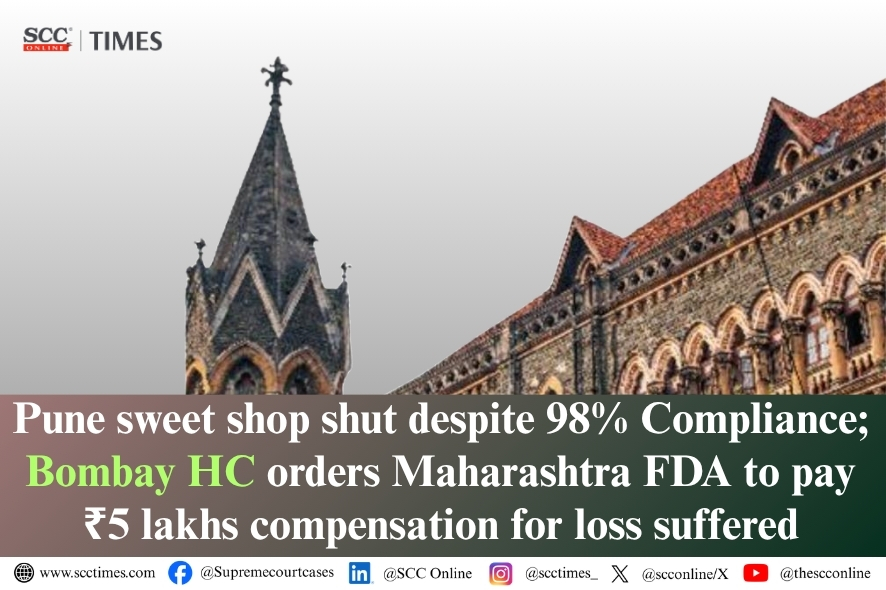
Bombay High Court: Maharashtra FDA Must Pay ₹5 Lakhs Compensation
Summary
- A Pune sweet shop was shut down despite being 98% compliant with regulations.
- The Bombay High Court ordered the Maharashtra FDA to pay ₹5 lakhs in compensation for losses incurred during closure.
- This case sets a precedent for challenging unjustified suspensions of food licences in India.
- Businesses must be given adequate notice and an opportunity to respond before their licences are suspended or revoked.
Unjustified Suspension
The court's decision highlights the need for regulatory bodies to carefully consider the impact of their actions on businesses, particularly when there is no clear justification for suspension.
A Pune-based sweet shop, despite being 98% compliant with regulations, was shut down by the Maharashtra FDA. The Bombay High Court has now ruled that this suspension was unjustified and ordered the Maharashtra FDA to pay ₹5 lakhs in compensation to the shop for losses incurred during the closure period.
The court's decision highlights the need for regulatory bodies to carefully consider the impact of their actions on businesses, particularly when there is no clear justification for suspension.
Legal Context
This case has significant implications for food licence suspension laws in India. The Bombay High Court's ruling sets a precedent for challenging unjustified suspensions of food licences, which may be cited in similar cases where businesses have been unfairly impacted by regulatory actions.
The court's decision also underscores the importance of due process and procedural fairness in regulatory proceedings. Businesses must be given adequate notice and an opportunity to respond before their licences are suspended or revoked.
Why It Matters
The Bombay High Court's ruling has far-reaching implications for businesses operating in the food industry. Regulatory bodies must now ensure that they follow proper procedures when suspending or revoking food licences, and provide adequate compensation to affected businesses.
This decision also highlights the need for regulatory reforms to prevent arbitrary and unjustified actions by regulatory bodies. By holding these bodies accountable, the court's ruling aims to promote a fair and transparent regulatory environment.
Practical Implications
Lawyers should note that the Bombay High Court's ruling sets a precedent for challenging unjustified suspensions of food licences, and may be cited in similar cases where businesses have been unfairly impacted by regulatory actions.
Source
Source: Original reporting via SCC Times
How does this affect you?
Get an AI analysis of this article grounded in your jurisdictions, practice areas, and any policy documents you've uploaded to Wansom.
Wansom is AI and can make mistakes.