
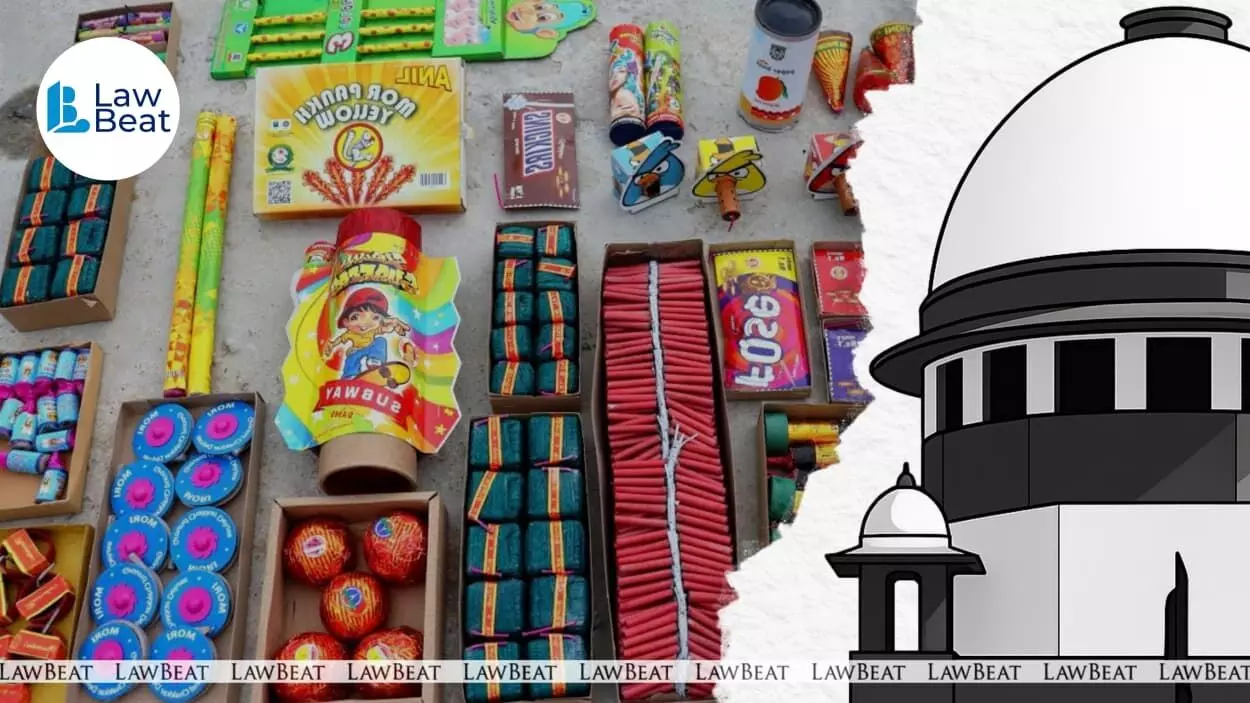
Supreme Court: Green Firecrackers Permitted in Delhi-NCR November 7-8
Summary
- The Supreme Court has permitted the use of green firecrackers in Delhi-NCR on November 7 and 8, 2026.
- Bursting is allowed only between 6 am-7 am and 8 pm-10 pm on both designated days.
- 'No-Cracker Zones' must be established and publicized around hospitals, nursing homes, old-age homes, and educational institutions.
- The ruling, by Justices MM Sundresh and Prasanna B Varale, seeks to balance festive sentiments with environmental and health concerns.
- Previous bans and restrictions on barium-containing crackers and online sales remain relevant precedents.
Supreme Court Sets Diwali Firecracker Rules for Delhi-NCR
Lawyers advising clients involved in event planning, retail, or manufacturing in Delhi-NCR must pay close attention to these detailed Delhi-NCR firecracker rules Diwali.
The Supreme Court has issued specific directives regarding the use of firecrackers in the Delhi-National Capital Region (Delhi-NCR) for Diwali 2026, permitting only green firecrackers on November 7 and 8. This ruling, handed down by a bench comprising Justices MM Sundresh and Prasanna B Varale, establishes precise time windows for bursting these approved crackers. On both the eve of Diwali and the festival day itself, individuals are allowed to use green firecrackers between 6 am and 7 am, and again from 8 pm to 10 pm.
Crucially, the court also mandated the establishment of 'No-Cracker Zones' around sensitive locations. These areas include a 300-meter radius surrounding hospitals, nursing homes, primary and district health centers, and old-age homes, as well as any other notified silence zones. Educational institutions are also to be included in these designated zones. The directive specifies that these areas must be clearly marked and widely publicized to ensure compliance and protect vulnerable populations.
Balancing Tradition with Environmental Concerns
This recent decision follows a series of ongoing legal proceedings concerning the severe air pollution in Delhi-NCR, particularly exacerbated by firecracker use. The Supreme Court had previously indicated its reluctance to impose a complete ban on firecrackers, acknowledging the potential impact on festive sentiments. However, the court also made it clear that unrestricted bursting throughout the day would not be tolerated, recognizing the significant adverse effects on public health and the environment.
In September, prior to the November 2, 2026 hearing, the court had emphasized the need to strike a balance. It noted that while a total prohibition could diminish the celebratory spirit, allowing continuous firecracker use would severely affect residents, especially children, the elderly, and those with health conditions. Consequently, the court has consistently aimed to confine firecracker use to specific, limited timeframes, a principle reiterated in the latest ruling concerning green firecrackers India Supreme Court. The court reiterated that crackers containing barium and those not approved by the Council of Scientific and Industrial Research-National Environmental Engineering Research Institute (CSIR-NEERI) cannot be used, following an assessment period for barium-containing variants that concluded on October 15, 2026.
Strict Compliance and Regulatory Precedents
The current ruling builds upon previous judicial interventions designed to regulate firecracker use in the region. Last year, in 2025, the Supreme Court had, on a test-case basis, allowed the sale and use of approved green crackers in the NCR for a restricted period, subject to specific timings and safeguards. Those 2025 directives explicitly banned crackers containing barium, joined series crackers (known as "laris"), and the online sale of any firecrackers. Furthermore, certified manufacturers of green crackers, specifically those approved by the National Environmental Engineering Research Institute (NEERI) and the Petroleum and Explosives Safety Organisation (PESO), were permitted to produce such items for the Delhi-NCR market, with the strict condition that these products could not be sold within the region itself.
Lawyers advising clients involved in event planning, retail, or manufacturing in Delhi-NCR must pay close attention to these detailed Delhi-NCR firecracker rules Diwali. Compliance officers, in particular, need to ensure that the newly mandated 'No-Cracker Zones' are not only respected but also properly demarcated and communicated to the public. This includes ensuring that no firecrackers are burst within the 300-meter radius of specified sensitive locations, thereby avoiding potential legal penalties and liabilities.
Historical Context and Public Health Imperatives
The Supreme Court's current stance represents an evolution from earlier, more stringent measures. In December 2024, the court had imposed a complete ban on firecrackers across Delhi-NCR, which remained in effect until further orders. This comprehensive prohibition was upheld in April 2025, when a bench led by Justice Abhay S Oka refused to relax the ban on manufacture, storage, and sale. That decision was grounded in concerns over alarming pollution levels and the fundamental right to health, enshrined under Article 21 of the Constitution.
The ongoing judicial oversight underscores the critical importance of public health and environmental protection in the densely populated Delhi-NCR. The court's consistent efforts to regulate firecracker use reflect a complex balancing act between cultural practices and the imperative to mitigate severe air quality issues. The latest directive for Supreme Court green firecrackers Delhi-NCR November 7 8 aims to provide a framework that allows for limited celebration while upholding environmental and health standards, requiring diligent adherence from all stakeholders.
Practical Implications
Lawyers advising clients on event planning, retail, or manufacturing in Delhi-NCR must note the specific dates, timings, and types of firecrackers (green only) permitted by the Supreme Court for Diwali. Compliance officers should ensure 'No-Cracker Zones' around sensitive areas like hospitals are respected and properly marked to avoid legal penalties and liabilities.
Source
How does this affect you?
Get an AI analysis of this article grounded in your jurisdictions, practice areas, and any policy documents you've uploaded to Wansom.
Wansom is AI and can make mistakes.