
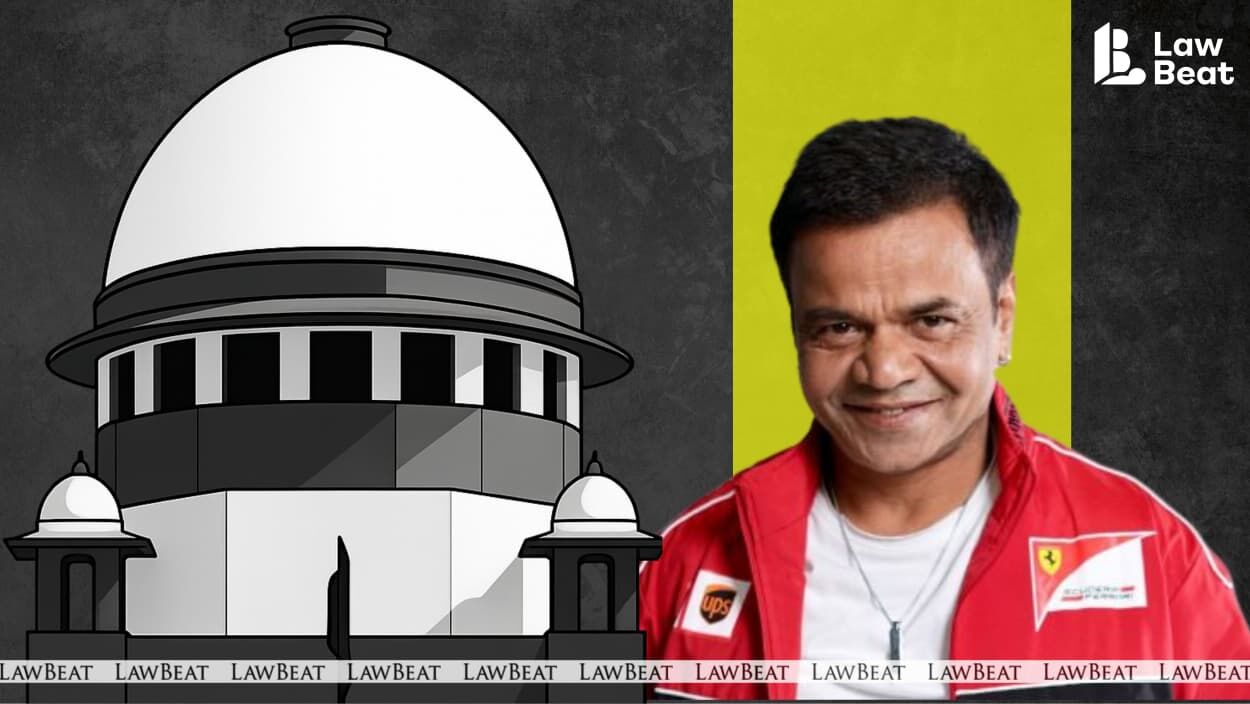
Supreme Court: Rajpal Yadav Gets 2-Week Deposit Extension
Summary
- The Supreme Court granted actor Rajpal Yadav a two-week extension to deposit ₹5 crore in connection with seven cheque bounce cases.
- This extension was given reluctantly, with the Supreme Court noting Yadav's propensity for "drama and acting."
- The Delhi High Court had previously upheld Yadav's conviction, denying probation due to his repeated breaches of court undertakings and disregard for judicial process.
- Yadav was sentenced to three months' simple imprisonment (concurrent) and a fine of ₹1.05 crore per case by the Delhi High Court.
- The cases involve dishonoured cheques under the Negotiable Instruments Act, 1881, stemming from his failure to repay a loan.
Supreme Court's Latest Directive
The ongoing legal battle involving Rajpal Yadav underscores the judiciary's unwavering commitment to enforcing compliance with court orders, particularly in cases involving financial obligations like dishonoured cheques under the Negotiable Instruments Act.
The Supreme Court has reluctantly granted actor Rajpal Yadav a two-week extension to deposit ₹5 crore with its Registry in connection with seven cheque bounce cases. This decision came after Yadav sought more time, despite the Court's earlier directive on September 8, which mandated the deposit within a single day. The bench, comprising Chief Justice of India Surya Kant, Justice Joymalya Bagchi, and Justice V Mohana, extended interim relief from surrender previously granted to Yadav.
The Court's leniency was not without pointed remarks, with the bench observing that Yadav is "perfect in doing drama and acting." These proceedings stem from Yadav's failure to repay a loan, a situation exacerbated by his repeated breaches of undertakings given across various judicial forums, including trial courts and appellate bodies. The petitions, filed by Yadav and his wife, were orally mentioned by AoR Saurabh Trivedi.
Delhi High Court's Firm Stance
This Supreme Court intervention follows the Delhi High Court's decision to uphold Yadav's conviction in the multiple cheque bounce cases, refusing his plea for probation. Justice Swarana Kanta Sharma, who presided over the Delhi High Court proceedings, explicitly stated that Yadav's repeated disregard for judicial processes and consistent breaches of court undertakings disentitled him from any leniency. The High Court had granted Yadav two months' protection from the execution of his sentence to allow him to pursue further legal remedies, acknowledging the possibility of an appeal to a higher court.
The High Court delivered a sharp rebuke regarding the sanctity of legal proceedings, remarking that "Law is not a script that can be rewritten at the will of an actor." It highlighted Yadav's consistent failure to honor commitments to the complainant, M/s Murli Projects Private Limited, and his repeated defaults on undertakings. The court also took note of a statement attributed to Yadav during the proceedings, where he allegedly declared he would "go to jail five more times" rather than pay the complainant, treating this as indicative of his unwillingness to comply with legal obligations.
While affirming the Rajpal Yadav cheque bounce conviction under the Negotiable Instruments Act, 1881, for the dishonoured cheques, the Delhi High Court modified the sentencing. Rajpal Yadav was directed to undergo three months of simple imprisonment for each of the seven cases, with all sentences running concurrently. Additionally, a fine of ₹1.05 crore was imposed for each of the seven cases. His wife, Radha Rajpal Yadav, also facing proceedings, was ordered to pay a fine of ₹5.51 lakh in each of the seven cases, with a default provision of three months' concurrent simple imprisonment. The High Court had reserved its judgment on April 2, following "sharp exchanges" concerning Yadav's inconsistent positions on loan repayment.
Why It Matters
The ongoing legal battle involving Rajpal Yadav underscores the judiciary's unwavering commitment to enforcing compliance with court orders, particularly in cases involving financial obligations like dishonoured cheques under the Negotiable Instruments Act. The Supreme Court's reluctant extension, coupled with its critical observations, signals that even high-profile individuals cannot expect indefinite leniency when repeatedly failing to adhere to judicial directives. This case reinforces the principle that court undertakings are not to be taken lightly and that disregard for the judicial process carries significant consequences.
For legal practitioners, this development serves as a crucial reminder that courts, including the highest judicial authority, will prioritize the sanctity of their orders. Clients involved in similar dishonoured cheque cases Supreme Court, especially those with a history of non-compliance or shifting stances, should be advised that repeated breaches of undertakings will likely result in a firm denial of probation and strict enforcement of penalties, as demonstrated by the Delhi High Court Rajpal Yadav's refusal to grant leniency and the Supreme Court's cautious approach to the ₹5 crore deposit extension.
Practical Implications
This case underscores the judiciary's firm stance against repeated breaches of court undertakings and disregard for judicial process, even for high-profile individuals. Lawyers should advise clients that courts, including the Supreme Court, will enforce strict compliance with orders in Negotiable Instruments Act cases, with significant penalties and denial of leniency for non-adherence.
Source
How does this affect you?
Get an AI analysis of this article grounded in your jurisdictions, practice areas, and any policy documents you've uploaded to Wansom.
Finish Reading the Full Story and the Expert Analysis.
Get the latest legal & regulatory intelligence in India
Wansom is AI and can make mistakes.