
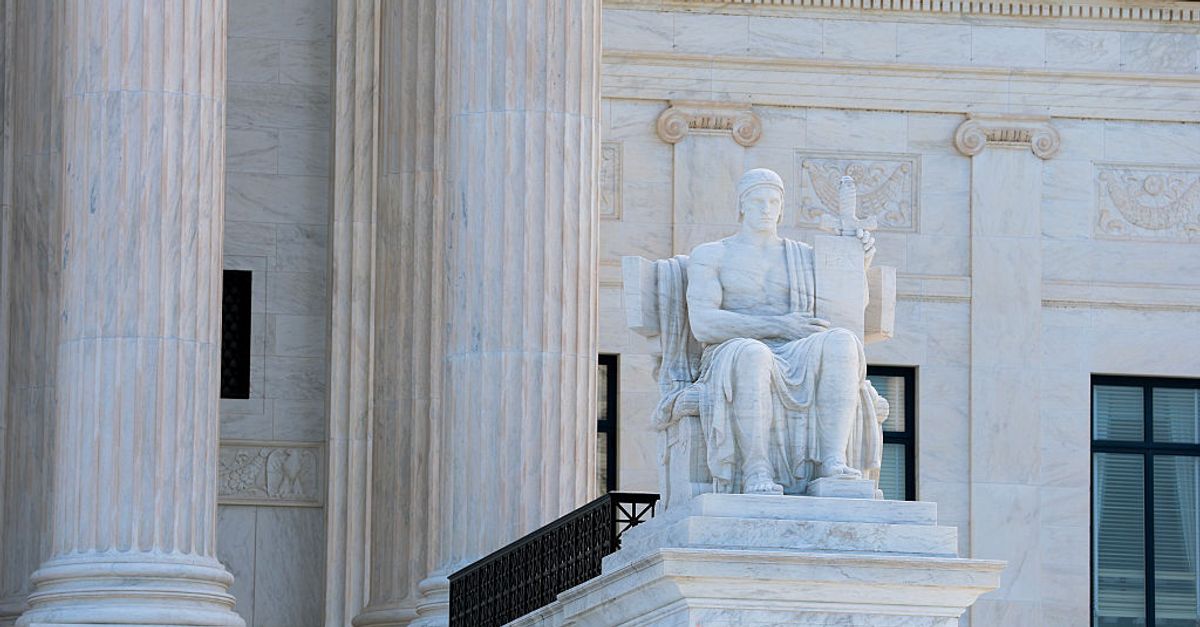
Supreme Court: First Amendment Press Clause Engagement Declines
Summary
- A 2021 study found Supreme Court references to the press in opinions dropped from nearly 1,500 paragraphs (1970-1974) to under 100 (2015-2019).
- This decline indicates the First Amendment's press clause is becoming increasingly inconsequential, even in journalism-related cases.
- First Amendment litigator Floyd Abrams attributes this to the broad interpretation of the freedom of speech clause.
- Abrams noted that the press and other speakers often receive identical legal protections.
- The trend suggests the Supreme Court is less likely to grant distinct rights or additional privileges to the institutional press.
Erosion of Press Clause Recognition
The observed decline in the Supreme Court's explicit references to the press clause carries significant implications for the future of journalism First Amendment rights.
A significant shift in the Supreme Court's engagement with the First Amendment's press clause has been identified, indicating a notable decline in its explicit recognition. A 2021 study by legal scholars RonNell Andersen Jones and Sonja West meticulously tracked the Court's references to the press within its opinions over several decades. Their findings reveal a dramatic decrease in the Court's direct acknowledgment of the press as a distinct entity under the First Amendment.
Specifically, the research highlighted that in a five-year period beginning in 1970, Supreme Court opinions contained nearly 1,500 paragraphs that mentioned the press. This figure plummeted sharply in subsequent years, dropping to fewer than 100 paragraphs between 2015 and 2019. This precipitous decline underscores a broader trend within the Court's First Amendment jurisprudence, where the specific protections afforded to the press appear to have become increasingly marginalized.
Legal Interpretation and the 'Speech' vs. 'Press' Divide
The First Amendment explicitly states that "Congress shall make no law … abridging the freedom of speech, or of the press." Despite this clear textual distinction, the press clause, which constitutes the second part of this protection, has seemingly become less significant in the Court's rulings. This trend persists even in cases directly involving matters of journalism and newsgathering, suggesting a diminishing differentiation between the rights of the press and those of general speakers.
According to renowned First Amendment litigator Floyd Abrams, who co-founded an initiative aimed at revitalizing the press clause, its sidelining is primarily due to the expansive interpretation of the First Amendment's freedom of speech protection. Abrams noted that, in many instances, the press and all other individuals who speak or write are treated identically under the law, receiving the same scope of legal protection. This broad application of the speech clause has effectively blurred the lines, making it challenging to discern how, if at all, the Supreme Court has interpreted the press clause to grant distinct rights to journalists or where it has declined to extend additional privileges to the institutional press.
Implications for Journalistic Protections
The observed decline in the Supreme Court's explicit references to the press clause carries significant implications for the future of journalism First Amendment rights. The data suggests a judicial landscape where arguments for special journalistic protections may find less traction, as the Court increasingly views the press through the same lens as any other speaker or writer. This trend challenges the historical understanding of the press as having a unique role in a democratic society, potentially necessitating a re-evaluation of legal strategies for defending newsgathering activities.
Lawyers advising media clients or litigating First Amendment cases must recognize this evolving judicial perspective. The diminishing distinction between the press clause and the general speech clause indicates that advocating for unique institutional press protections US may be less effective. Instead, legal arguments might need to pivot towards broader speech rights or develop new frameworks to articulate the specific needs and functions of the press within the existing legal paradigm, given the Court's apparent reluctance to carve out additional privileges for journalists.
Practical Implications
Lawyers advising media clients or litigating First Amendment cases should note the Supreme Court's diminishing distinction of the press clause from the general speech clause. This trend suggests that arguments for special journalistic protections may be less effective, requiring a strategic shift towards broader speech rights or a re-evaluation of how newsgathering activities are legally defended.
Source
How does this affect you?
Get an AI analysis of this article grounded in your jurisdictions, practice areas, and any policy documents you've uploaded to Wansom.
Finish this article free. Just your email for instant unlock.
Wansom is AI and can make mistakes.