
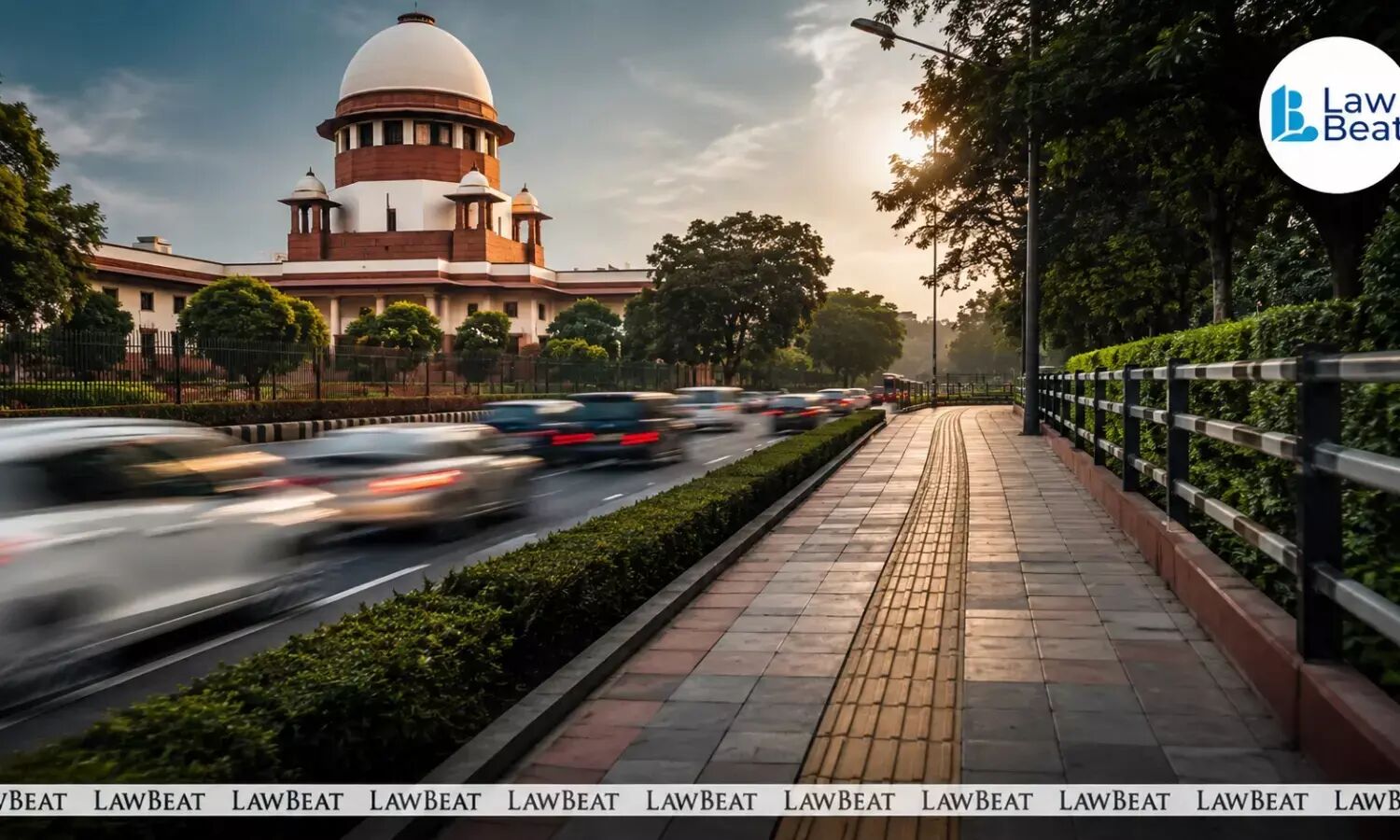
Supreme Court Directs Centre to Ensure Encroachment-Free Walking Spaces Along Every Road in India
Summary
- The Supreme Court has reaffirmed its landmark judgment declaring the right to walk on a properly demarcated footpath as a fundamental right.
- Public authorities must ensure that pedestrian spaces are clearly marked, protected from encroachments, and separated from lanes meant for motor vehicles.
- Citizens have the right to seek constitutional and legal remedies, including compensation, if their right to walk on safe footpaths is violated.
- The judgment emphasizes the importance of separating pedestrian spaces from lanes meant for motor vehicles to ensure safe and accessible footpaths for walkers.
A Fundamental Right to Walk Safely
Without any big investment and construction, just ensure that proper demarcation is done of walkers' space. Wherever there is a road, there should be a walkers' space.
The Supreme Court has reaffirmed its landmark judgment declaring that the right to walk on a properly demarcated footpath is a fundamental right, protected under Articles 19 and 21 of the Constitution. This ruling underscores the importance of ensuring dedicated footpaths for walkers and holds public authorities accountable for providing safe pedestrian infrastructure. The Court emphasized that pedestrians must be able to walk with confidence, knowing their designated space is free from encroachment.
The judgment was delivered in response to an appeal arising from the tragic death of a five-year-old boy who was fatally hit by a tanker while walking to school with his father. The incident highlighted the need for India to adequately recognize and protect pedestrians' rights, which are often overlooked in favor of motorized traffic. By reaffirming its earlier judgment, the Supreme Court has sent a strong message that pedestrian safety is a fundamental right that must be respected.
The Court's directions to the Centre to ensure encroachment-free walking spaces along every road are significant, as they underscore the importance of separating pedestrian spaces from lanes meant for motor vehicles. This separation is crucial for ensuring safe and accessible footpaths for walkers.
Who Is Responsible?
The Supreme Court has made it clear that recognizing a fundamental right also creates a corresponding duty on public authorities to provide dedicated footpaths for walkers. Urban development authorities, municipal corporations, municipalities, and panchayats must ensure that footpaths and other pedestrian infrastructure are properly constructed, maintained, and protected. This responsibility is not limited to major infrastructure projects or significant expenditure; even simple measures such as demarcating walkers' space with a rope can make a significant difference.
The Court has also emphasized that citizens have the right to seek constitutional and legal remedies, including compensation, if their right to walk on safe footpaths is violated. These remedies are independent of those available under the Motor Vehicles Act, 1988, and provide an additional layer of protection for pedestrians.
In light of this judgment, public authorities must take immediate action to ensure that pedestrian spaces are clearly marked, protected from encroachments, and separated from lanes meant for motor vehicles.
Why This Judgment Matters
The Supreme Court's reaffirmation of its landmark judgment is a significant step towards recognizing the fundamental right to walk safely. By emphasizing the importance of dedicated footpaths for walkers, the Court has highlighted the need for public authorities to prioritize pedestrian safety and accessibility.
This judgment also underscores the importance of separating pedestrian spaces from lanes meant for motor vehicles. By doing so, the Court has sent a strong message that pedestrian safety is a fundamental right that must be respected.
In the long term, this judgment has the potential to transform India's urban landscape by prioritizing pedestrian-friendly infrastructure and promoting safe walking spaces.
Practical Implications
Lawyers and compliance officers should note that the Supreme Court has reaffirmed its landmark judgment declaring the right to walk on a properly demarcated footpath as a fundamental right, emphasizing that pedestrians must be able to walk with confidence knowing their designated space is free from encroachment. This ruling underscores the importance of ensuring dedicated footpaths for walkers and holds public authorities accountable for providing safe pedestrian infrastructure.
Source
How does this affect your business?
Get an AI analysis of this article grounded in your jurisdictions, practice areas, and any policy documents you've uploaded to Wansom.
Wansom is AI and can make mistakes.