
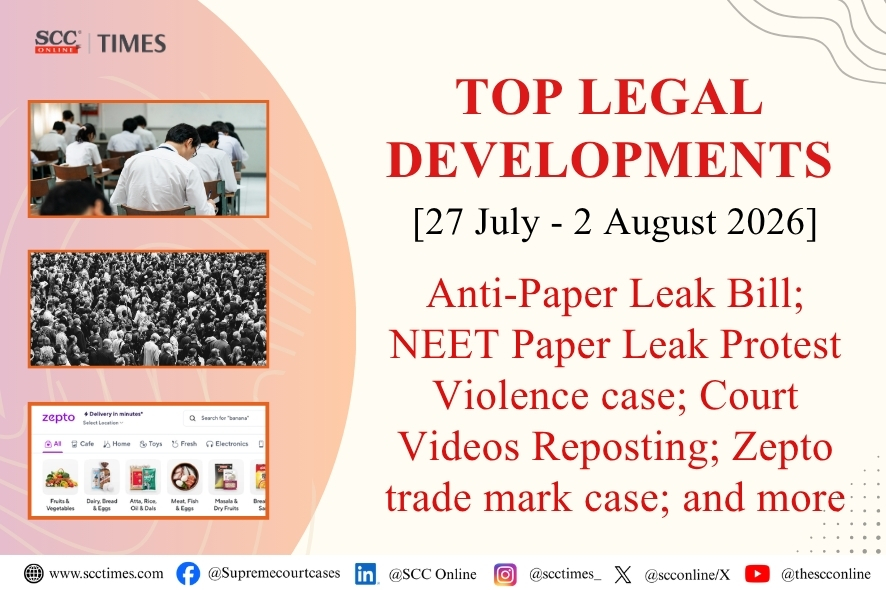
India Supreme Court Prohibits Social Media Sharing of Court Videos
Summary
- The Supreme Court has prohibited the extraction, dissemination, and sharing of court videos on social media without prior permission.
- Individuals must obtain clearance from the Secretary General of the Supreme Court or the Registrar Generals of the jurisdictional High Courts before posting or re-posting court videos.
- The decision aims to prevent the misuse of court proceedings for personal gain or to create a misleading narrative.
- The ruling is closely tied to the Digital Personal Data Protection Act 2023, which regulates the collection, processing, and sharing of personal data.
Court Videos Reposting on Social Media Prohibited
The Supreme Court has prohibited the extraction, dissemination, and sharing of court videos on social media without prior permission.
The Supreme Court of India has issued an interim direction prohibiting the extraction, dissemination, and sharing of court videos on social media without prior permission. This ruling applies to all digital platforms, including social media, and requires individuals to obtain clearance from the Secretary General of the Supreme Court or the Registrar Generals of the jurisdictional High Courts before posting or re-posting court videos. The decision aims to prevent the misuse of court proceedings for personal gain or to create a misleading narrative. This development has significant implications for lawyers, compliance officers, and social media users who frequently share court-related content online.
Legal Context: Digital Personal Data Protection Act 2023
The Supreme Court's ruling on court video reposting is closely tied to the Digital Personal Data Protection Act 2023 (DPDP Act), which regulates the collection, processing, and sharing of personal data. The APAAR Scheme, a government initiative aimed at promoting digital literacy among students, must comply with the DPDP Act's provisions. The Court has clarified that student information cannot be disclosed to private entities or third parties except in accordance with law, emphasizing the importance of informed consent and data protection. This decision underscores the need for organizations to ensure they are complying with relevant data protection regulations.
Why It Matters: Impact on Online Presence and Social Media Strategies
The Supreme Court's prohibition on court video reposting without permission has far-reaching implications for individuals and organizations with an online presence. Lawyers, compliance officers, and social media managers must now consider the potential consequences of sharing court-related content without proper clearance. This development highlights the importance of understanding and adhering to relevant laws and regulations when engaging in online activities. As digital platforms continue to play a significant role in shaping public discourse, it is essential for users to be aware of their responsibilities and obligations under Indian law.
Practical Implications
Lawyers and compliance officers should be aware that the Supreme Court has prohibited the extraction, dissemination, and sharing of court videos on social media without prior permission, which may impact their online presence and social media strategies.
Source
How does this affect your business?
Get an AI analysis of this article grounded in your jurisdictions, practice areas, and any policy documents you've uploaded to Wansom.
Wansom is AI and can make mistakes.