
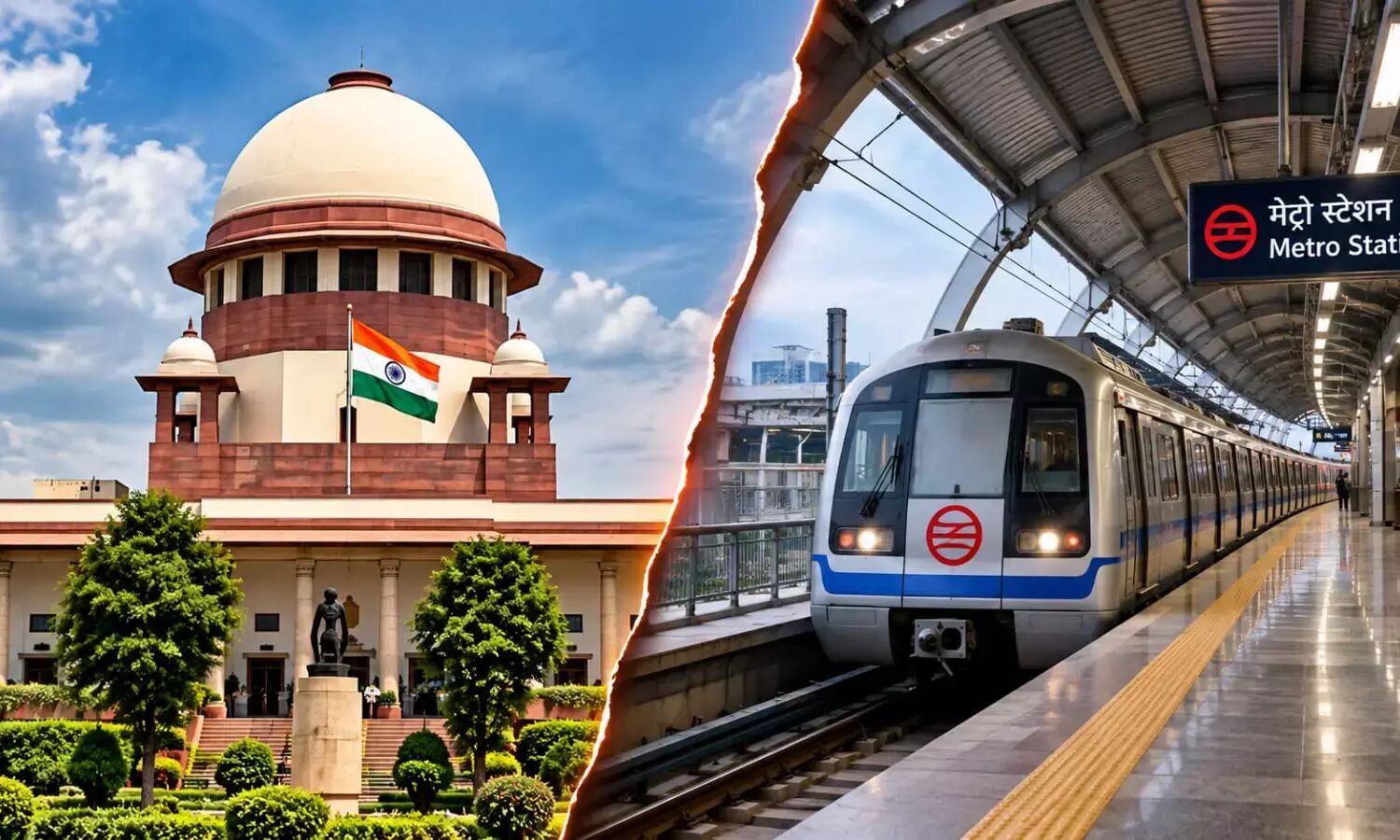
Supreme Court: Delhi Metro Station Closure Protests Challenged, SC Questions Restrictions
Summary
- The Supreme Court questioned the Centre's plan to close 57 Delhi Metro stations ahead of Cockroach Janta Party protests.
- Chief Justice of India Surya Kant expressed concern that the restrictions would significantly impact citizens' daily lives and livelihoods.
- Solicitor General Tushar Mehta defended the closures, citing past CJP protest violations, injuries to police, and security risks.
- The CJP protests, scheduled for October 10 against the Chief Election Commissioner, have not received official permission.
- The Court asked the Centre to reconsider the restrictions, with the Solicitor General assuring that he would discuss the matter with the government.
Supreme Court Examines Delhi Metro Restrictions
The Court's proactive questioning of the Centre's proposed measures, particularly the impact on daily commuters, sets a significant precedent for balancing law and order with fundamental citizen rights in India.
The Supreme Court recently addressed a petition challenging the proposed closure of 57 Delhi Metro stations, a measure implemented by the Centre in anticipation of upcoming protests. These restrictions, affecting a significant portion of the capital's 289 metro stations, were slated to precede demonstrations by the Cockroach Janta Party (CJP) on October 10. The CJP protests in Delhi are specifically aimed at Chief Election Commissioner Gyanesh Kumar concerning the SIR row, and notably, they have not received the necessary official permissions.
During the urgent hearing, Chief Justice of India (CJI) Surya Kant, presiding over a bench that included Justices Joymalya Bagchi and V Mohana, expressed significant concern regarding the impact of these Delhi Metro restrictions on the daily lives of ordinary citizens. He highlighted that while some individuals, such as lawyers, might have personal vehicles, essential workers like court staff and clerks rely heavily on public transport for their livelihood. The Court urged the Centre to reconsider its decision, asking for immediate action to mitigate the disruption to public access and movement.
Centre Cites Security Risks and Past Incidents
Solicitor General Tushar Mehta, representing the Centre, vigorously defended the decision to impose the metro station closures, emphasizing that the government's primary concern was to prevent citizens' lives from being put at risk. He argued that such measures were crucial for maintaining law and order in the national capital. SG Tushar Mehta detailed past incidents involving the Cockroach Janta Party, specifically referencing protests on June 20th related to the NEET Paper leak. He informed the bench that despite receiving permission for a one-day protest, the demonstration extended for 17 days, leading to numerous penal violations.
Mehta further recounted that during these previous CJP protests, demonstrators marched to the Parliament, which he described as a "sovereign place," resulting in injuries to over 200 police officers. He also cited disturbing reports of lady police officers being molested and abused "yesterday," in connection with another unpermitted protest. The Solicitor General clarified that the current restrictions were not paralyzing the entire city or banning the internet across Delhi, but rather constituted a "proportional order" focused on a particular area, such as Raisina Road, in response to calls for people to "reach Delhi." He stressed the necessity of granting law enforcement agencies sufficient leeway to manage public order effectively.
Balancing Public Order with Citizen Rights
The legal challenge to the 57 Delhi Metro stations closure was brought before the Supreme Court by CPI(M) General Secretary MA Baby and other petitioners, represented by Senior Advocate Kapil Sibal. CJI Surya Kant initially questioned why the petitioners had not approached the Delhi High Court, to which the bench was informed that a similar petition was already before the High Court but had been adjourned until Monday. This procedural aspect underscored the judiciary's careful consideration of the appropriate forum for such grievances.
The Court's deliberations highlighted the inherent tension between the state's responsibility to maintain public order and the fundamental rights of citizens, including their right to free movement and access to public facilities. CJI Surya Kant specifically suggested that instead of blanket closures, authorities could utilize existing infrastructure, such as CCTV cameras at metro stations, to conduct frisking and maintain security while allowing public access. SG Mehta acknowledged this, stating that the approach would depend on the evolving situation, but reiterated the need for enforcement agencies to have flexibility in managing potential metro station security risks. The bench also observed that protests conducted without proper permission are not in accordance with the law, adding another layer to the complex issue of public assembly.
Judicial Scrutiny of Executive Restrictions
This Supreme Court Delhi Metro station closure challenge underscores the critical role of the judiciary in scrutinizing executive actions that restrict public access and movement, even when justified by security concerns. The Court's proactive questioning of the Centre's proposed measures, particularly the impact on daily commuters, sets a significant precedent for balancing law and order with fundamental citizen rights in India. The case demonstrates that government-imposed restrictions on essential public services, such as the metro, are subject to judicial review, especially when they disproportionately affect the populace.
The outcome, where the Centre was asked to reconsider and the Solicitor General assured the Court of discussions with the government, indicates a judicial inclination towards less restrictive alternatives where possible. This scenario could influence future governmental responses to protests, encouraging authorities to explore options that minimize disruption to public life while still ensuring safety. It reinforces the principle that while security is paramount, the state must also uphold the right of citizens to avail public facilities, even amidst potential public order disturbances.
Practical Implications
Lawyers and compliance officers should note the Supreme Court's scrutiny of executive actions that restrict public access and movement, even for security reasons. This case highlights the judiciary's role in balancing law and order with fundamental rights, and could set precedents for challenging similar government-imposed restrictions on public services during protests or other events. Be aware of the potential for judicial intervention if such measures disproportionately impact citizens' daily lives or access to essential services.
Source
How does this affect you?
Get an AI analysis of this article grounded in your jurisdictions, practice areas, and any policy documents you've uploaded to Wansom.
Finish Reading the Full Story and the Expert Analysis.
Get the latest legal & regulatory intelligence in India
Wansom is AI and can make mistakes.