
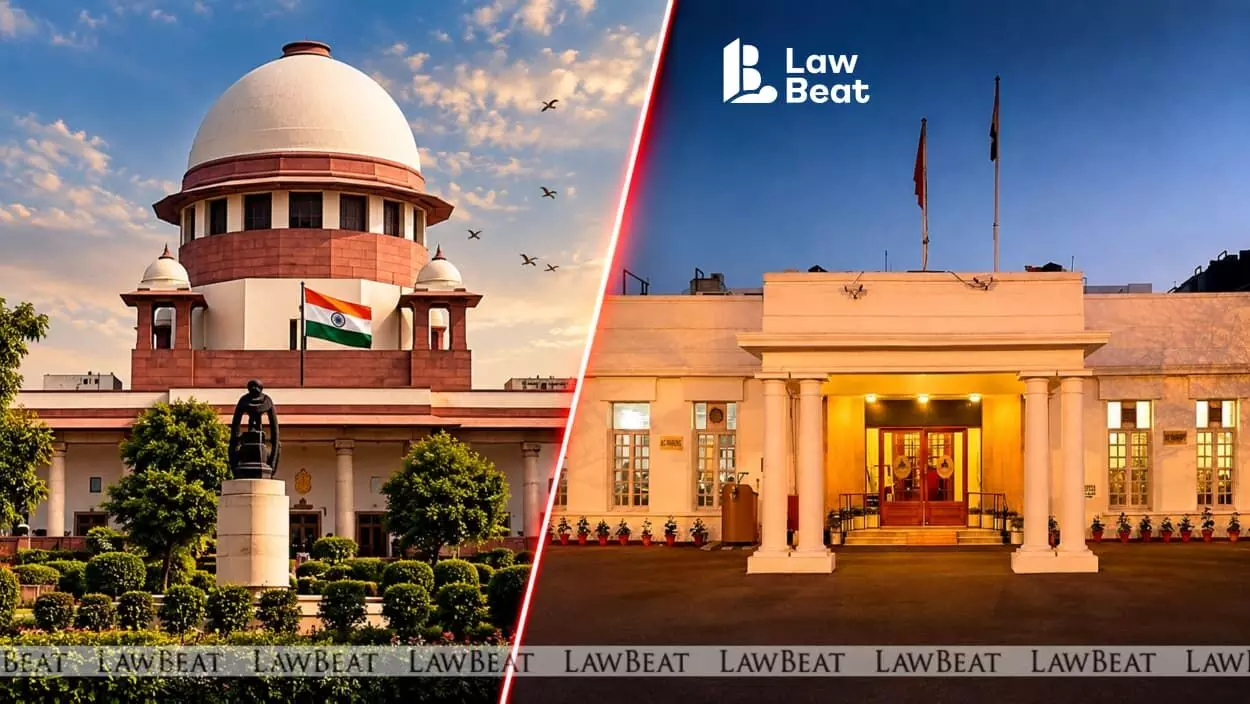
Supreme Court: Delhi Gymkhana Eviction Can Proceed, Needs Final Order Permission
Summary
- The Supreme Court has allowed eviction proceedings against the Delhi Gymkhana Club to continue.
- No final eviction order can be passed without the Supreme Court's prior permission.
- The Central government seeks to repossess the 27.3-acre property for public security and defense infrastructure purposes.
- The club's management was taken over by the government in 2022 following NCLT findings of financial irregularities.
- The NCLAT upheld the government takeover but mandated remedial measures and fresh elections by mid-2025; however, these elections have not yet taken place, and the government-appointed management remains in control.
Judicial Oversight in Eviction Proceedings
The Supreme Court's recent intervention, requiring its prior permission for any final eviction order, establishes a significant precedent for cases involving government-initiated land resumptions and corporate disputes.
The Supreme Court has permitted the continuation of eviction proceedings initiated by the Central government against the Delhi Gymkhana Club, a prominent institution in Lutyens' Delhi. However, a crucial condition has been imposed: no final eviction order may be issued by the Estate Officer without first obtaining explicit permission from the apex court. This interim directive was issued by a Bench comprising Justices Dipankar Datta and Sheel Nagu, who are currently hearing appeals related to the contentious dispute over the club's management and the proposed resumption of its land.
The ongoing legal challenge involves appeals filed by both the Central government and former members of the club's general committee. These appeals contest various aspects of a judgment previously rendered by the National Company Law Appellate Tribunal (NCLAT). The Supreme Court's decision underscores a commitment to judicial oversight in high-stakes government actions, particularly those involving significant land assets and corporate governance disputes.
The Government's Case for Land Resumption
The eviction proceedings stem from an order issued by the Land & Development Office (L&DO), operating under the Ministry of Housing and Urban Affairs. This order invoked Clause 4 of the perpetual lease deed that governs the club's 27.3-acre premises. This specific clause grants the government the right to re-enter and terminate the lease if the property is deemed necessary for a public purpose. The Central government asserts that the land, situated in a strategically sensitive area of the national capital, is required for critical public security-related uses and to bolster defense infrastructure.
The government's position further emphasizes urgent public interest considerations, citing national security and the need for integrated governance infrastructure in adjacent government land areas within Lutyens’ Delhi. Should the re-entry proceed, the entire 27.3-acre parcel, encompassing all buildings, lawns, structures, and fittings, would legally vest in the President of India through the L&DO. The Delhi Gymkhana Club, in response, has challenged this directive, arguing that such an order would severely disrupt its operations and lead to the significant displacement of its approximately 14,000 members and over 500 employees, many of whom rely on the club for their livelihood. The club has also separately approached the Delhi High Court to contest the government's directive to vacate its premises by June 5, 2026. The Delhi High Court has refused interim relief against the Centre's order to vacate by June 5, 2026, and is still hearing legal challenges regarding the eviction, with the Supreme Court extending protection against a final eviction order until its December 10, 2026, hearing.
Corporate Governance and Management Takeover
The current dispute also has roots in a corporate governance battle that predates the eviction proceedings. In April 2022, the National Company Law Tribunal (NCLT) ruled in favor of a petition brought by the Ministry of Corporate Affairs under Sections 241 and 242 of the Companies Act. This ruling led to the suspension of the Delhi Gymkhana Club's elected General Committee, following allegations of financial irregularities and nepotism. Subsequently, the NCLT authorized the Centre to appoint 15 directors to manage the club's affairs.
The government's takeover of the club's management was largely upheld by the National Company Law Appellate Tribunal (NCLAT) in its judgment on October 21, 2024. While affirming the takeover, the NCLAT also directed the government-appointed committee to finalize all necessary remedial measures by March 31, 2025, and mandated that fresh elections be conducted within three months following this deadline to reinstate an elected management. However, as of November 2026, these elections have not yet been held, and the government-appointed management continues to oversee the club's affairs. The club maintains that its current management, appointed by the Ministry of Corporate Affairs, functions as a temporary arrangement, but the elections mandated by the NCLAT to establish an elected governing body have not yet occurred.
Implications for Due Process
The Supreme Court's recent intervention, requiring its prior permission for any final eviction order, establishes a significant precedent for cases involving government-initiated land resumptions and corporate disputes. This Supreme Court Delhi Gymkhana interim order signals that even in matters deemed critical for national security or public interest, the judiciary will ensure a thorough review before irreversible actions are taken. The directive to the Estate Officer overseeing the Estate Officer eviction Delhi Gymkhana proceedings highlights the Court's role in safeguarding due process, particularly when government entities are involved in actions that could profoundly impact private institutions.
This ongoing legal saga, encompassing the NCLAT Delhi Gymkhana Club dispute and the broader implications of the Companies Act 241 242 Delhi Gymkhana proceedings, demonstrates the complex interplay between corporate governance, land rights, and public interest claims. The requirement for the Supreme Court's explicit consent before a final eviction order can be executed provides a critical layer of judicial scrutiny, ensuring that all legal avenues are exhausted and that the rights of all parties are adequately considered in this high-profile case.
Practical Implications
This ruling indicates that even in high-profile government-initiated eviction proceedings, the Supreme Court is exercising oversight, requiring prior permission for final orders. Lawyers advising entities facing similar government actions, especially those involving land resumption or corporate governance disputes, should note this precedent for seeking interim relief and ensuring due process before final decisions are implemented.
Source
How does this affect you?
Get an AI analysis of this article grounded in your jurisdictions, practice areas, and any policy documents you've uploaded to Wansom.
Finish Reading the Full Story and the Expert Analysis.
Get the latest legal & regulatory intelligence in India
Wansom is AI and can make mistakes.