
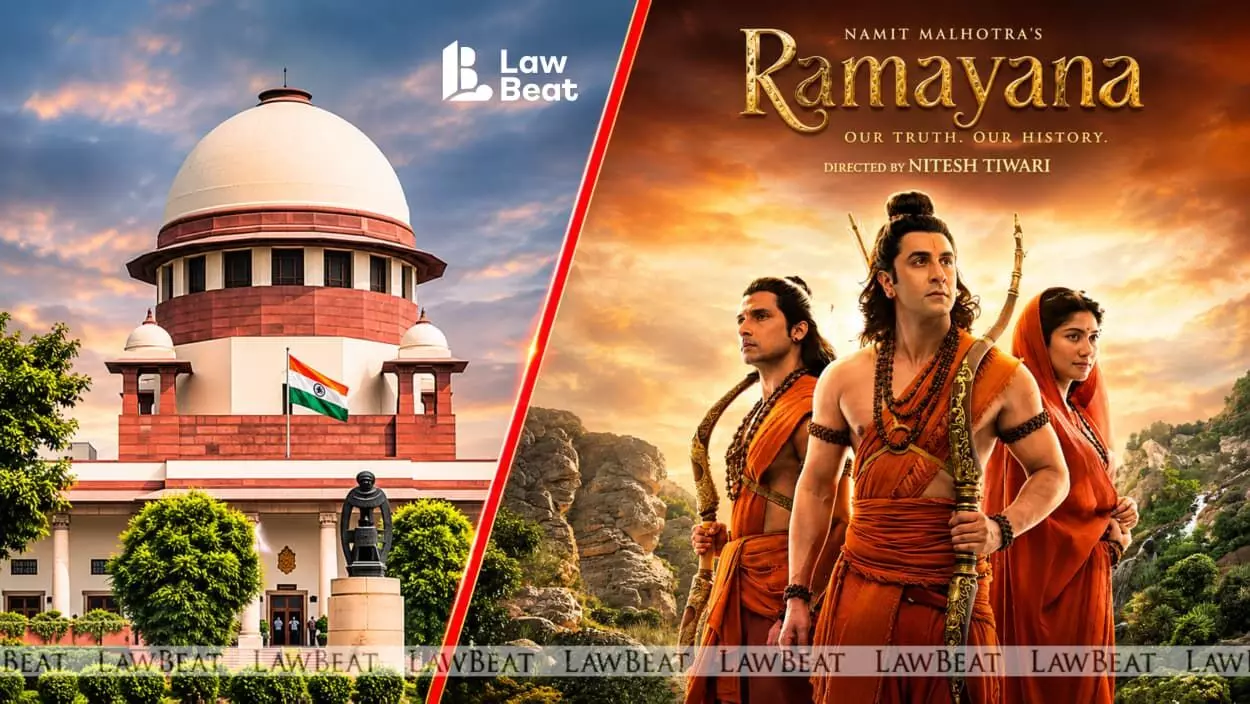
Supreme Court Declines Ramayana Movie Plea for Urgent Hearing
Summary
- The Supreme Court of India declined an urgent hearing for a petition challenging the release of the film "Ramayana: Rise of a Legend."
- The petition alleged that the Ranbir Kapoor-starrer movie distorted facts related to the Ramayana epic.
- Chief Justice of India Surya Kant stated there was no urgency because the film had already been released in theaters on November 5, 2026.
- The court advised the petitioners to create their own film if they held a counter-view, rather than wasting court time.
- The bench, including CJI Kant, Justice Bagchi, and Justice Mohana, heard the matter on November 27, 2026.
Supreme Court Declines Urgent Hearing
Lawyers should advise clients that courts will likely dismiss 'urgent' petitions if the event sought to be prevented has already occurred, highlighting the critical need for proactive and timely legal action before the fact.
India's Supreme Court recently declined to grant an urgent hearing for a petition that sought to challenge the release of the film "Ramayana: Rise of a Legend." The petition, filed on November 27, 2026, alleged that the Ranbir Kapoor-starrer movie contained several distortions of facts pertaining to the ancient epic. The court's decision effectively dismissed the immediate challenge to the film, which had already been released in theaters.
The bench, comprising Chief Justice of India (CJI) Surya Kant, Justice Bagchi, and Justice Mohana, questioned the necessity of an expedited review, noting that the movie was already accessible to the public. The petitioners' counsel emphasized that the alleged factual inaccuracies could mislead a new generation, urging the court to consider the matter promptly. However, the court maintained its stance that the urgency was no longer present given the film's theatrical run.
Judicial Rationale and Observations
CJI Surya Kant articulated the court's position, stating that since the film had already premiered, those interested had already viewed it. He remarked, "Movie has already been released. People who wanted to watch, they have already seen." The Chief Justice further advised the petitioners that if they held a differing perspective on the epic, they were free to produce their own cinematic interpretation, rather than consuming the court's time with a challenge to an already released work.
The bench firmly conveyed to the counsel, "They have made a movie as they understand. You make your movie as you want. Don't waste time of the Court." Despite the counsel's plea for an immediate listing, the court reiterated that its primary concern was the urgency of the matter, which it deemed absent. The justices highlighted that the film was available in theaters, allowing viewers to form their own opinions, whether critical or commendatory.
About the Film
The movie at the center of the petition, "Ramayana: Rise of a Legend," is also known by its alternative title, "Ramayana: Part 1." Directed by Nitesh Tiwari and produced by Namit Malhotra, the film features a prominent cast portraying key figures from the Hindu epic. Ranbir Kapoor takes on the role of Lord Rama, while Sai Pallavi portrays Sita, and Yash appears as Ravana.
The ensemble cast further includes notable actors such as Sunny Deol, Ravie Dubey, Lara Dutta, Arun Govil, Kajal Aggarwal, Rakul Preet Singh, and Vivek Oberoi. The film made its theatrical debut on November 5, 2026, preceding the Supreme Court's hearing by more than three weeks.
Legal Context and Timeliness
This ruling underscores the Supreme Court's emphasis on the timeliness of legal challenges, particularly for injunctive relief. The court's refusal to entertain an urgent plea after the contested event—the movie's release—had already occurred, highlights a critical aspect of judicial procedure. It suggests that once a film is in the public domain, the nature of the legal challenge shifts from preventing its release to addressing potential damages or other remedies, which typically do not warrant an urgent hearing.
Lawyers should advise clients that courts will likely dismiss 'urgent' petitions if the event sought to be prevented has already occurred, highlighting the critical need for proactive and timely legal action before the fact. The court's remarks indicate a reluctance to intervene in matters of artistic expression once they have been publicly presented, especially when the alleged harm is subjective and open to diverse interpretations by the audience.
Practical Implications
This ruling underscores the Supreme Court's emphasis on the timeliness of legal challenges, particularly for injunctive relief. Lawyers should advise clients that courts will likely dismiss 'urgent' petitions if the event sought to be prevented (e.g., a movie release) has already occurred, highlighting the critical need for proactive and timely legal action before the fact.
Source
Source: Original reporting via Live Law
How does this affect you?
Get an AI analysis of this article grounded in your jurisdictions, practice areas, and any policy documents you've uploaded to Wansom.
Finish Reading the Full Story and the Expert Analysis.
Get the latest legal & regulatory intelligence in India
Wansom is AI and can make mistakes.