
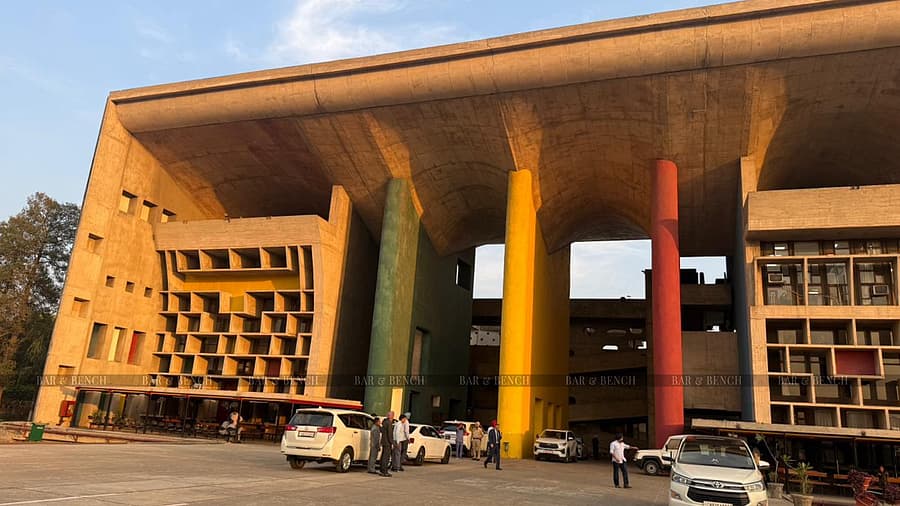
Punjab Haryana High Court: Judges Infrastructure Shortage Halts New Appointments
Summary
- The Punjab and Haryana High Court cannot recommend new judges due to a lack of courtrooms and other infrastructure.
- The court has a sanctioned strength of 85 judges, but significantly fewer court halls are available.
- The High Court expressed concern that government officials appear unaware of the urgent need for expansion.
- The Union government is currently reviewing a financial plan to create additional infrastructure for the High Court.
- Inadequate parking facilities also contribute to the High Court's urgent need for expansion.
Critical Infrastructure Shortage Halts Judicial Appointments
Lawyers practicing in the Punjab & Haryana High Court should be aware that the current lack of courtrooms is directly impeding the appointment of new judges, which could exacerbate existing case backlogs and lead to further delays in litigation and judicial processes.
The Punjab and Haryana High Court recently conveyed to the Central government that a severe lack of essential infrastructure, particularly courtrooms, is directly preventing it from proposing candidates for elevation to judicial positions. This significant disclosure emerged during proceedings in the case of Vinod Dhattewal and others vs Union of India and others, where a bench comprising Chief Justice Ashwani Kumar Mishra and Justice Sanjiv Berry underscored the pressing necessity for the High Court's expansion. The court's inability to recommend new judges due to the existing Punjab Haryana High Court courtroom shortage highlights a critical impediment to maintaining judicial strength.
The High Court's observations were made while reviewing minutes from a recent meeting, chaired by the Union Home Secretary, concerning the development of additional facilities. The court expressed concern that the bureaucratic process appeared to be following a mere routine, suggesting that officials might not fully grasp the urgent requirements facing the High Court. This perceived disconnect between administrative procedures and on-the-ground judicial needs has brought the issue of Punjab Haryana High Court judges infrastructure to the forefront.
Urgent Need for High Court Expansion
During the hearing, the court explicitly stated that it is currently unable to recommend names for new judges, despite a sanctioned strength of 85 judicial officers. The bench noted that making this situation formally public would be "very embarrassing for the government," indicating the gravity of the infrastructure deficit. This stark reality underscores the immediate demand for High Court expansion India, which is currently being addressed by the Union government through the consideration of a financial plan for comprehensive infrastructure development.
In its subsequent official order, the High Court formally documented that while it possesses a sanctioned strength of 85 judges, the actual number of available court halls is considerably lower. Beyond the critical shortage of courtrooms, the order also highlighted that the existing parking facilities are proving to be inadequate for the current operational demands. These combined deficiencies led the court to reiterate its urgent need for substantial additional infrastructure to support its functions effectively.
Implications for Justice Delivery
The current state of Indian judicial appointments infrastructure, particularly in the Punjab and Haryana High Court, carries significant implications for the administration of justice. The direct consequence of insufficient courtrooms is the inability to fill judicial vacancies, which can exacerbate existing case backlogs and lead to further delays in litigation and judicial processes. Lawyers practicing in the Punjab & Haryana High Court should be aware that the current lack of courtrooms is directly impeding the appointment of new judges, which could exacerbate existing case backlogs and lead to further delays in litigation and judicial processes.
The court's directive to Additional Solicitor General Satya Pal Jain to personally engage with the matter underscores the seriousness with which the judiciary views this infrastructure crisis. Without prompt and effective measures to address the Punjab Haryana High Court courtroom shortage, the efficiency and capacity of the judicial system to deliver timely justice will remain severely compromised, impacting countless litigants awaiting resolution of their cases.
Practical Implications
Lawyers practicing in the Punjab & Haryana High Court should be aware that the current lack of courtrooms is directly impeding the appointment of new judges, which could exacerbate existing case backlogs and lead to further delays in litigation and judicial processes.
Source
How does this affect you?
Get an AI analysis of this article grounded in your jurisdictions, practice areas, and any policy documents you've uploaded to Wansom.
Finish Reading the Full Story and the Expert Analysis.
Get the latest legal & regulatory intelligence in India
Wansom is AI and can make mistakes.