
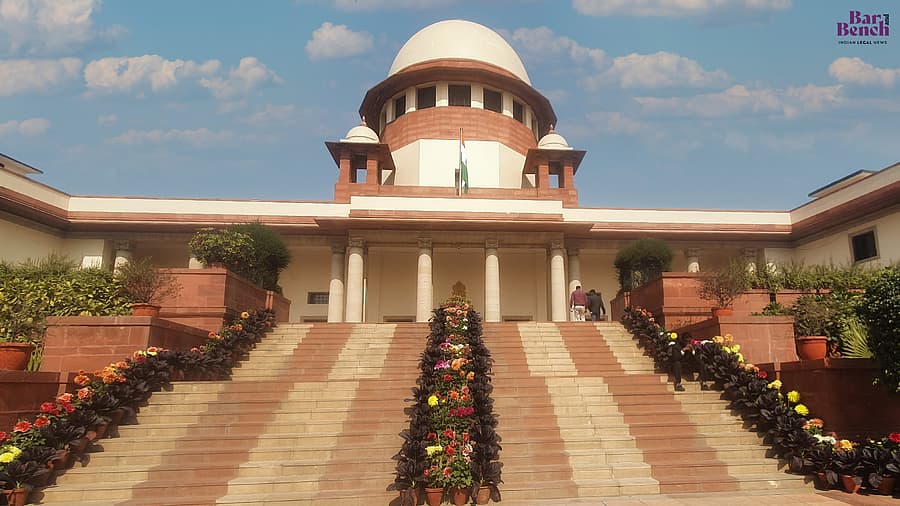
Supreme Court: Contempt Plea Over Thiruparankundram Lamp Order Disregard
Summary
- A contempt of court petition has been filed in the Supreme Court against Tamil Nadu officials.
- The petition alleges non-compliance with a November 20 Supreme Court order to light the Karthigai Deepam at Thiruparankundram.
- Officials, including the Madurai District Collector, are accused of deliberate violation despite assuring the Madras High Court of compliance on November 24.
- The Supreme Court had permitted the one-time lighting of the lamp under stringent safeguards, designating the District Collector as the nodal officer.
- Advocate V Ramasubbu filed the petition, seeking action against four specific officials.
What Happened
The filing of a Supreme Court contempt Thiruparankundram lamp petition against high-ranking state functionaries, including the Madurai District Collector, signals a serious challenge to the authority of the judiciary.
A contempt of court petition has been lodged with the Supreme Court, accusing several Tamil Nadu officials of deliberately disregarding judicial directives concerning the ceremonial lighting of the Karthigai Deepam. The plea, filed by advocate V Ramasubbu, specifically targets the alleged failure to illuminate the lamp at the Deepathoon, located atop the Thiruparankundram hill in Madurai. This action follows a Supreme Court order issued on November 20, which permitted the lighting of the lamp.
The petition highlights a significant point of contention: despite the Supreme Court's clear directive, officials reportedly failed to comply. Furthermore, the filing emphasizes that state officials had previously provided an assurance to the Madras High Court on November 24, indicating their intent to adhere to the Supreme Court's instructions. The petitioner contends that the officials have consistently demonstrated a willful disobedience of orders from constitutional courts.
Legal Context
The Supreme Court's directive on November 20, issued by a bench comprising Justices Aravind Kumar and Vipul M Pancholi, specifically authorized the lighting of the Karthigai Deepam at the Deepathoon. This permission was granted as a singular, one-time arrangement, contingent upon the implementation of stringent safeguards. Crucially, the apex court had designated the Madurai District Collector as the primary nodal officer, entrusting this individual with the responsibility for coordinating and overseeing the entire ceremony.
The current contempt petition seeks judicial action against several key figures. These include Madurai District Collector Nishant Krishna, Police Commissioner S Rajendiran, Dr. TG Vinay, who serves as the Commissioner for the Hindu Religious and Charitable Endowments (HR&CE) Department, and G Selvi, the temple's Executive Officer. The core of the complaint revolves around the alleged non-compliance with the Supreme Court's specific instructions, particularly after an assurance of adherence was conveyed to the Madras High Court by Senior Advocate Gopal Sankaranarayanan on November 24, acting on behalf of state officials.
Why It Matters
This case underscores the critical importance of adherence to judicial mandates, particularly when they involve government officials. The filing of a Supreme Court contempt Thiruparankundram lamp petition against high-ranking state functionaries, including the Madurai District Collector, signals a serious challenge to the authority of the judiciary. The allegation of deliberate violation, especially after an explicit assurance of compliance was given to the Madras High Court, raises significant questions about accountability within the state administration.
The Supreme Court's initial order was precise, outlining both the permission for the one-time lighting and the specific role of the District Collector as the nodal officer responsible for its execution. The subsequent alleged failure to follow through, despite assurances, could have far-reaching implications for how judicial orders are perceived and implemented by public servants. This situation highlights the potential for severe consequences for officials found to be in contempt, reinforcing the principle that court directives must be respected and executed without exception.
Practical Implications
This case highlights the serious implications of non-compliance with judicial orders, particularly for government officials. Lawyers should advise clients, especially public servants, on the strict adherence required for court directives to avoid contempt proceedings and potential penalties, even when assurances of compliance have been given to lower courts.
Source
How does this affect you?
Get an AI analysis of this article grounded in your jurisdictions, practice areas, and any policy documents you've uploaded to Wansom.
Finish Reading the Full Story and the Expert Analysis.
Get the latest legal & regulatory intelligence in India
Wansom is AI and can make mistakes.