
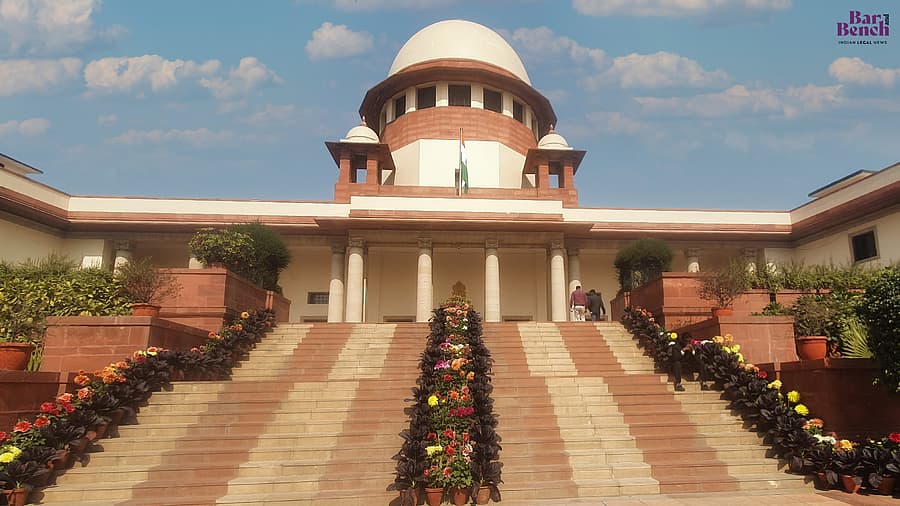
Supreme Court: Contempt Plea Filed Against TN Officials Over Deepam Lighting
A contempt of court petition has been filed before the Supreme Court of India, alleging that Tamil Nadu officials deliberately disobeyed judicial orders concerning the lighting of the Karthigai Deepam at the Deepathoon atop the Thiruparankundram hill in Madurai. The petition, filed by advocate V Ramasubbu, specifically claims that officials violated the Supreme Court's November 20 order to light the lamp, despite having assured the Madras High Court on November 24 that the directions would be complied with.
This development underscores the serious implications of non-compliance with judicial orders, particularly those issued by the Supreme Court, and highlights the judiciary's power to enforce its directives through contempt proceedings. For legal practitioners, it serves as a stark reminder of the imperative for government officials and other parties to strictly adhere to court mandates. It also illustrates the mechanism available to aggrieved parties to seek redress when such orders are flouted, reinforcing the rule of law and the supremacy of judicial pronouncements in India.
The legal context involves the Supreme Court's inherent power to punish for contempt of court under Article 129 of the Constitution of India and the Contempt of Courts Act, 1971. The petition alleges "wilful disobedience" of a Supreme Court order, which is a direct ground for initiating contempt proceedings. The prior order, issued by a Bench of Justices Aravind Kumar and Vipul M Pancholi on November 20, permitted the lighting of the lamp as a one-time arrangement with stringent safeguards, designating the District Collector as the nodal officer. The subsequent assurance given to the Madras High Court by Senior Advocate Gopal Sankaranarayanan on behalf of the State officials further complicates the matter, as it suggests a clear understanding and commitment to comply.
The key parties involved are the petitioner, advocate V Ramasubbu, and the alleged contemnors: Madurai District Collector Nishant Krishna, Police Commissioner S Rajendiran, Hindu Religious and Charitable Endowments (HR&CE) Department Commissioner Dr TG Vinay, and temple Executive Officer G Selvi. The Supreme Court of India is the forum where the contempt plea has been filed, and a Bench of Justices Aravind Kumar and Vipul M Pancholi issued the original order. The Madras High Court was also involved in receiving assurances from the State.
Attorneys advising government bodies or officials must emphasize the critical importance of immediate and scrupulous compliance with all court orders, especially those from the Supreme Court. Any deviation or perceived non-compliance can lead to severe consequences, including contempt proceedings against individual officials, which can carry penalties such as fines or imprisonment. It is crucial to document all steps taken to comply with orders and to seek immediate legal clarification from the court if compliance presents unforeseen challenges. The outcome of this specific contempt plea is not yet reported, but its filing itself signals a significant legal challenge for the named officials.
How does this affect you?
Get an AI analysis of this article grounded in your jurisdictions, practice areas, and any policy documents you've uploaded to Wansom.
Finish Reading the Full Story and the Expert Analysis.
Get the latest legal & regulatory intelligence in India
Wansom is AI and can make mistakes.