
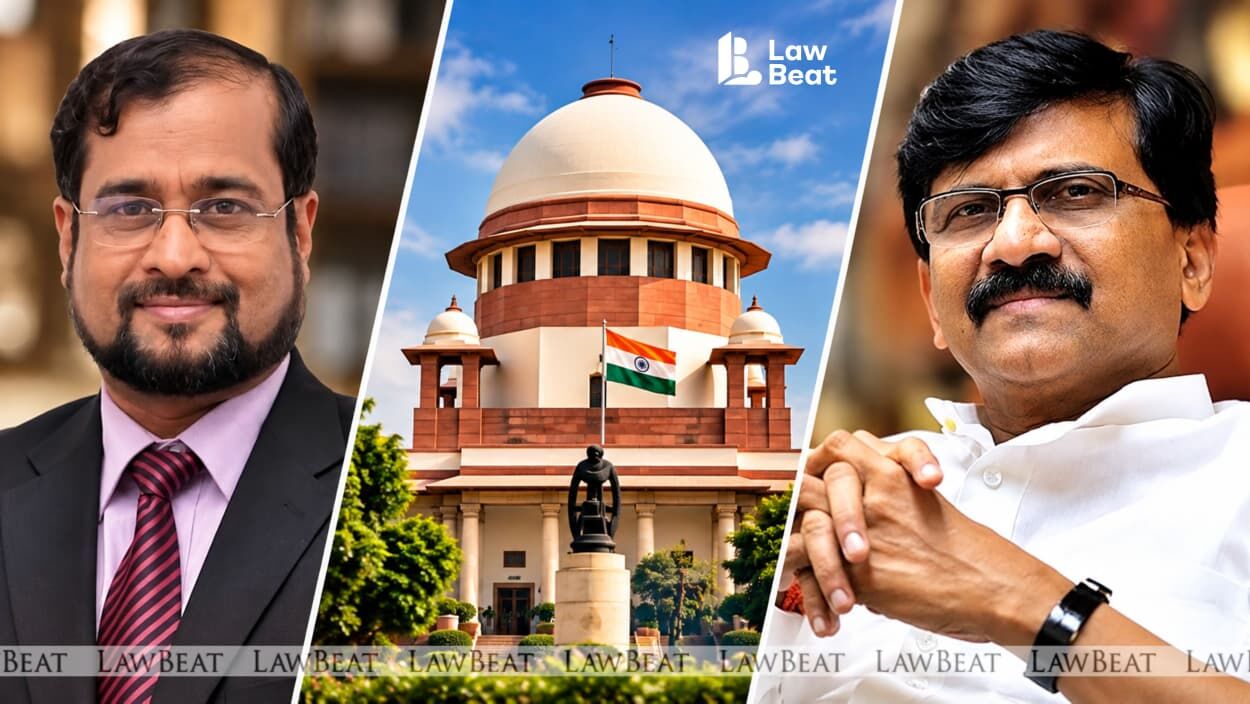
Supreme Court: Contempt Notice Issued to Sanjay Raut, Nikhil Wagle
Summary
- The Supreme Court of India has issued a contempt notice to journalist Nikhil Wagle and Rajya Sabha MP Sanjay Raut.
- The action follows a criminal contempt petition by the Supreme Court Bar Association over disparaging remarks against CJI Surya Kant.
- Nikhil Wagle's alleged contempt involved a social media post, while Sanjay Raut made claims about judges attending political events and misrepresenting a badminton event.
- The proceedings are based on Article 129 of the Constitution and Sections 2(c)(i) and 15(1)(b) of the Contempt of Courts Act, 1971, with the Attorney General's consent.
- This case underscores the judiciary's strict enforcement of laws against scandalizing the court and diminishing its authority.
Judicial Scrutiny Over Public Commentary
This case serves as a critical reminder for public figures and legal professionals regarding the severe implications of making disparaging remarks against the judiciary, particularly the Chief Justice of India and the Supreme Court.
The Supreme Court of India has issued a contempt notice to journalist Nikhil Wagle and Rajya Sabha MP Sanjay Raut, a prominent leader of the Uddhav Sena faction. This action stems from a criminal contempt petition filed by the Supreme Court Bar Association (SCBA), alleging that both individuals made disparaging remarks concerning Chief Justice of India (CJI) Surya Kant, thereby committing gross criminal contempt against the Supreme Court.
During the issuance of the notice, CJI Surya Kant remarked that "People don't understand that they are being trapped," highlighting the gravity of the situation. Solicitor General Tushar Mehta, in support of the SCBA's petition, added that while many individuals understand the implications, attempts to undermine the judiciary are made, though not always successfully. The CJI further emphasized the court's expectation of better judgment, noting that those who frequently criticize the judiciary often seek its intervention for their own relief.
The Allegations and Their Context
The contempt proceedings were initiated following specific statements made by Wagle and Raut. Nikhil Wagle's alleged contemptuous act involved a post on his X (formerly Twitter) account, @waglenikhil, which contained the phrase "**** you CJI!" This comment was made in the context of a report detailing the Chief Justice of India's decision to decline a meeting with a delegation of political parties, including Rahul Gandhi.
Sanjay Raut is accused by the SCBA of deliberately and intentionally making scandalous statements and false allegations against the CJI. These remarks, which were disseminated by IANS on X accompanied by a video, included claims that judges attend political programs of the ruling party and accept dinners hosted by Chief Ministers. Raut also reportedly referenced photographs of judges playing badminton with political figures in London, using these images to impute allegations against the CJI and other judges. The SCBA asserts that these statements were knowingly false, contrary to records, and designed to scandalize and diminish the authority of the Supreme Court.
Legal Framework for Contempt
The criminal contempt proceedings against Sanjay Raut and Nikhil Wagle have been instituted under a robust legal framework designed to protect the integrity of the Indian judiciary. Specifically, the petition invokes Article 129 of the Constitution of India, which grants the Supreme Court the power to punish for contempt of itself. This is read in conjunction with Sections 2(c)(i) and 15(1)(b) of the Contempt of Courts Act, 1971, which define criminal contempt as the publication of any matter or the doing of any other act which scandalizes or tends to scandalize, or lowers or tends to lower the authority of, any court.
Crucially, the initiation of these criminal contempt proceedings required the prior written consent of the Attorney General for India, R Venkataramani, which was duly granted. The petition also references Rule 3(c) of the Rules to Regulate Proceedings for Contempt of the Supreme Court, 1975, further solidifying the procedural basis for the court's action. This legal architecture underscores the strict enforcement of criminal contempt laws in India, particularly when statements are perceived to scandalize the court or diminish its authority.
Why It Matters
This case serves as a critical reminder for public figures and legal professionals regarding the severe implications of making disparaging remarks against the judiciary, particularly the Chief Justice of India and the Supreme Court. The Supreme Court's decision to issue a contempt notice against a journalist and a prominent politician underscores its commitment to upholding the dignity and authority of the judicial institution. The CJI's refusal to meet the political delegation, which sparked some of the controversial comments, was based on the principle of separation of powers and judicial propriety, as the issues raised were already sub judice.
The court's firm stance highlights that even public figures face legal action for statements perceived to scandalize or diminish the authority of the court. The allegations against Raut, concerning judges' alleged participation in political events and the misrepresentation of a private badminton event in London, are considered deliberate attempts to undermine judicial impartiality. This development reinforces the judiciary's resolve to counter any attempts to erode public trust or interfere with its independent functioning, emphasizing that the boundaries of public commentary concerning judicial matters are strictly enforced under Indian law.
Practical Implications
This case serves as a critical reminder for legal professionals and their clients regarding the severe implications of making disparaging remarks against the judiciary, particularly the Chief Justice of India and the Supreme Court. It underscores the strict enforcement of criminal contempt laws under the Contempt of Courts Act, 1971, and Article 129 of the Constitution, emphasizing that even public figures face legal action for statements perceived to scandalize or diminish the authority of the court. Lawyers should advise clients on the boundaries of public commentary concerning judicial matters to avoid similar proceedings.
Source
How does this affect you?
Get an AI analysis of this article grounded in your jurisdictions, practice areas, and any policy documents you've uploaded to Wansom.
Finish Reading the Full Story and the Expert Analysis.
Get the latest legal & regulatory intelligence in India
Wansom is AI and can make mistakes.