
India Supreme Court: Stays Interim Relief in Disciplinary Case
Summary
- The India Supreme Court ruled that High Courts must exercise extreme caution when granting interim relief in disciplinary matters.
- Interlocutory orders should not effectively grant the final relief requested in a writ petition.
- The Supreme Court set aside an Allahabad High Court order that had reinstated government officer Yadvendra Singh at an interim stage.
- Singh faced disciplinary proceedings under the Uttar Pradesh Government Servants (Discipline and Appeal) Rules, 1999, for objectionable online content.
- The Court stated that the validity of an inquiry report and the impact of an apology must be decided on merits in main proceedings, not through a preliminary "roving inquiry."
What Prompted the Supreme Court's Intervention
The Supreme Court emphasized that High Courts must exercise extreme caution to ensure that such interlocutory orders do not effectively amount to the final relief sought in a writ petition.
The Supreme Court of India recently intervened in a case originating from the Allahabad High Court, which had issued significant interlocutory orders concerning a government officer, Yadvendra Singh. Singh faced disciplinary proceedings following an anonymous complaint filed on November 8, 2024, alleging he posted objectionable content targeting the government, constitutional bodies, and authorities. A preliminary inquiry was conducted, and after receiving Singh's response, he was suspended under Rule 4(1) of the Uttar Pradesh Government Servants (Discipline and Appeal) Rules, 1999, with formal disciplinary proceedings initiated under Rule 7.
On June 3, 2025, a chargesheet detailing four specific allegations was issued against Singh. The Commissioner, Varanasi Division, appointed an inquiry officer to oversee the process. Singh subsequently tendered an unconditional apology for his posts on June 6, 2025, and later participated in an oral hearing before the inquiry officer on August 14, 2025. Despite his apology, the inquiry officer's report, submitted on September 24, 2025, concluded that all charges against Singh were proven. This led to a show-cause notice under Rule 9(4) of the Rules, granting him 15 days to respond. Ultimately, on January 17, 2026, a penalty order was issued under Rule 3, reverting Singh to the position of 'District Backward Class Welfare Officer'.
Singh then sought relief from the Allahabad High Court, which, on July 1, 2026, stayed the January 17, 2026 punishment order, indicating the matter warranted further consideration. Subsequently, on August 13, 2026, the High Court modified its initial order, permitting Singh to resume his previous role as 'Deputy Director, Backward Class Welfare', the post he held prior to the penalty. The State of Uttar Pradesh challenged both the July 1 and August 13 orders before the Supreme Court, particularly as contempt proceedings were pending due to non-implementation of the High Court's August 13 directive.
The Supreme Court's Directive on Interim Relief
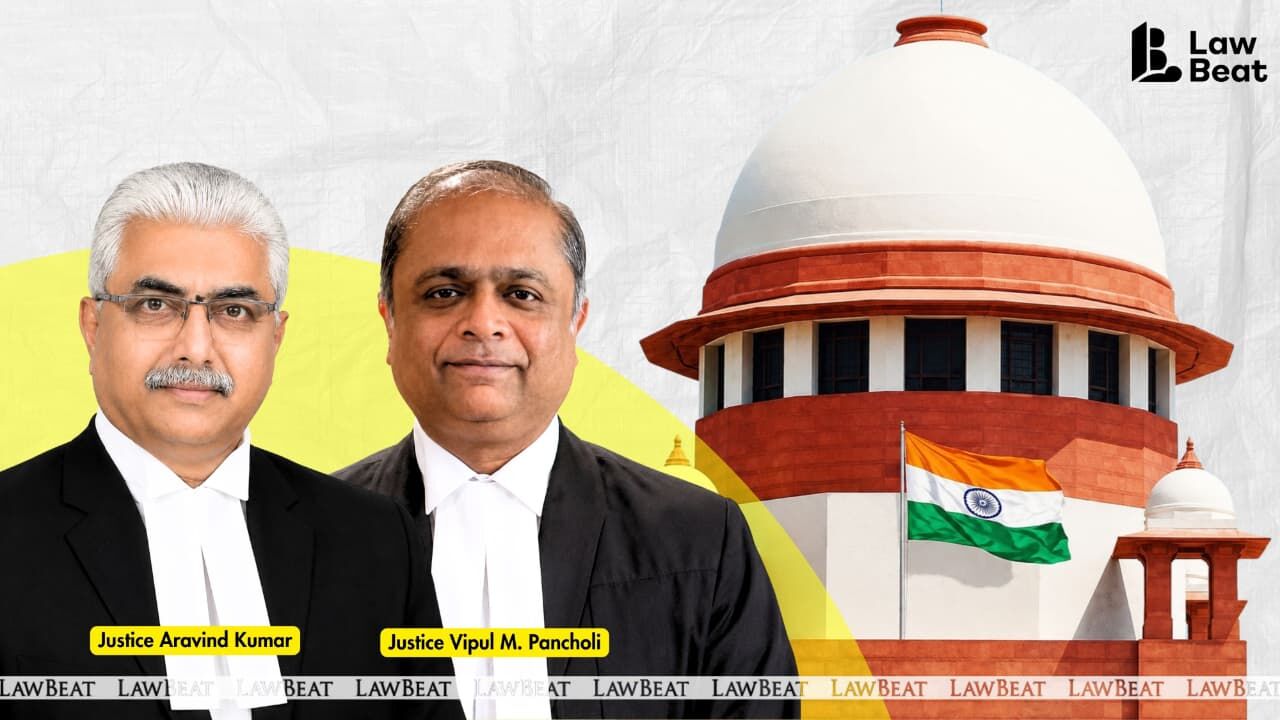
In its review of the State of Uttar Pradesh's plea, the Supreme Court, through a bench comprising Justices Aravind Kumar and Vipul M Pancholi, delivered a clear directive regarding the granting of interim relief in disciplinary matters. The Court emphasized that High Courts must exercise extreme caution to ensure that such interlocutory orders do not effectively amount to the final relief sought in a writ petition. Specifically, the Supreme Court found that the Allahabad High Court had erred by granting the primary relief of restoring Yadvendra Singh to his former position at an interim stage of the judicial review process.
The apex court underscored that the validity of a departmental inquiry report, especially in situations where an unconditional apology has been tendered, should be thoroughly adjudicated on its merits during the main proceedings. It cautioned against conducting a "roving inquiry" at the preliminary or interim stage, asserting that such an approach could prejudice the rights of either party involved. This ruling reinforces the principle that courts should refrain from pre-judging the outcome of disciplinary proceedings through interim orders that grant the ultimate relief.
Legal Context and Implications for Disciplinary Proceedings
The disciplinary action against Yadvendra Singh was conducted under the framework of the Uttar Pradesh Government Servants (Discipline and Appeal) Rules, 1999, which govern the process from suspension (Rule 4(1)) and initiation of proceedings (Rule 7) to the issuance of show-cause notices (Rule 9(4)) and the imposition of penalties (Rule 3). The Supreme Court acknowledged Singh's unconditional apology on June 6, 2025, noting it effectively constituted an admission of guilt for the objectionable posts. However, the Court clarified that whether this apology was sufficient to negate the inquiry officer's finding that the charges were proven is a substantive issue to be determined during the full hearing of the pending writ petition.
The Court's decision highlights a critical aspect of judicial review in disciplinary proceedings in India: while courts can review procedural fairness, they should generally avoid substituting their judgment for that of the disciplinary authority or granting relief that bypasses the full adjudicatory process. The ruling implies that immediate reinstatement or similar significant relief should be rare at the interlocutory stage, reserving such decisions for a comprehensive examination of all rival contentions and the complete record. This directive provides crucial guidance for High Courts when considering interlocutory orders in disciplinary matters, ensuring a balanced approach that respects both the rights of the employee and the authority of the disciplinary body.
Practical Implications
Lawyers advising clients in disciplinary proceedings, whether employees or government bodies, must be aware of the Supreme Court's clear directive for High Courts to exercise extreme caution in granting interim relief that effectively amounts to final relief. This ruling impacts the strategy for seeking or opposing interlocutory orders in such cases, making it harder to obtain immediate reinstatement or similar relief at an early stage of judicial review.
Source
How does this affect you?
Get an AI analysis of this article grounded in your jurisdictions, practice areas, and any policy documents you've uploaded to Wansom.
Finish Reading the Full Story and the Expert Analysis.
Get the latest legal & regulatory intelligence in India
Wansom is AI and can make mistakes.