
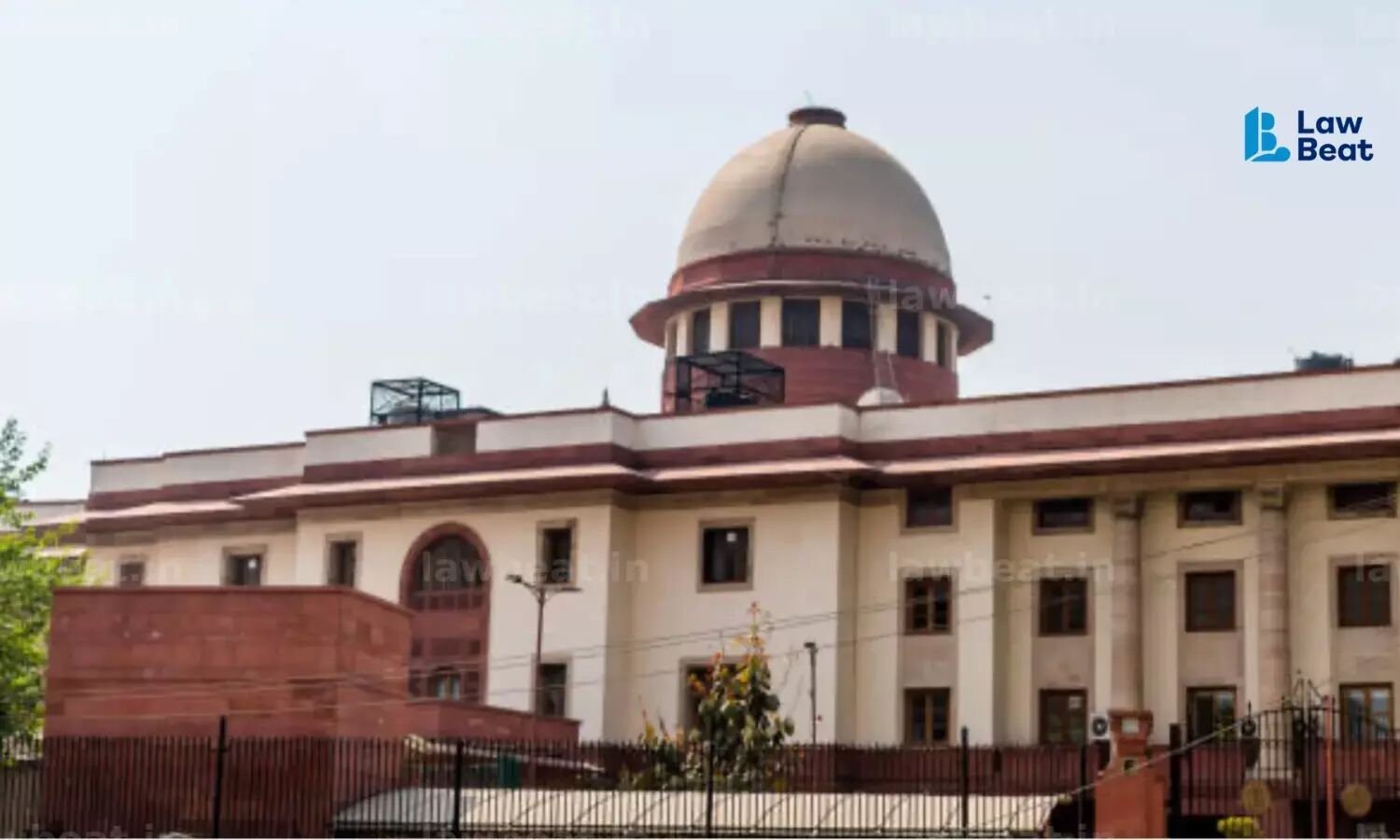
Supreme Court: Refuses Housing Transfer Petitions, Prioritizes Legal Framework
Summary
- The Supreme Court has refused to entertain new transfer petitions for individual stalled housing projects.
- The Court is overwhelmed by numerous applications and wants to prioritize a pending "lead case" on real estate disputes.
- The lead case's ruling will establish principles for High Courts to resolve similar disputes.
- The amicus curiae's role is limited to specific developer companies already under Supreme Court cognizance, not all projects.
- Petitioners are advised to await the lead case outcome or seek remedies in High Courts.
Supreme Court Declines New Housing Petitions
The Supreme Court refuses housing transfer petitions directly related to individual projects, emphasizing the critical need to prioritize the establishment of a comprehensive legal framework rather than engaging in piecemeal adjudication.
The Supreme Court of India has signaled a significant shift in its approach to disputes arising from stalled housing projects across the nation, indicating its inability to address every individual case. A bench led by Chief Justice of India Surya Kant, alongside Justice Joymalya Bagchi and Justice V Mohana, recently declined to entertain a series of transfer petitions. These petitions sought the Supreme Court's direct intervention in various residential developments that petitioners claimed had been abandoned, with counsel highlighting ongoing proceedings in different High Courts as evidence of the widespread issue. The Court's decision underscores a strategic move to manage its caseload and focus on broader legal principles.
The Court expressed significant concern over the escalating volume of applications, including interlocutory applications (IAs), miscellaneous applications (MAs), and contempt petitions, which it noted were diverting crucial judicial resources. This influx, according to the Chief Justice, risks impeding the final adjudication of a pivotal "lead case" concerning real estate disputes that is currently ready for disposition. The Supreme Court refuses housing transfer petitions directly related to individual projects, emphasizing the critical need to prioritize the establishment of a comprehensive legal framework rather than engaging in piecemeal adjudication.
Guiding Principles from a Pending Lead Case
Central to the Supreme Court's current strategy is a pending "lead case real estate" matter, the outcome of which is expected to establish comprehensive guiding principles for resolving such disputes. CJI Surya Kant affirmed that once these principles are articulated, High Courts across the country will be adequately equipped to resolve similar disputes involving homebuyers and developers in their respective jurisdictions. This approach aims to streamline the judicial process and prevent the Supreme Court from becoming perpetually bogged down by an endless stream of individual project complaints, ensuring a more efficient resolution mechanism for "stalled housing projects India."
Justice Joymalya Bagchi further clarified the specific and inherently limited scope of the court-appointed amicus curiae in these ongoing proceedings. He explained that the amicus is tasked with examining complaints pertaining only to a select group of developer companies, specifically those for which the Court had already taken specific cognizance. The role of the amicus cannot be expanded to encompass every single stalled housing project in India, reinforcing the idea that "High Court jurisdiction housing disputes" remains crucial for the vast majority of cases not directly tied to the identified developer groups.
Implications for Real Estate Litigation
The Supreme Court's firm stance carries significant implications for "India real estate litigation strategy," particularly for those representing homebuyers or developers. The Bench underscored that allowing individual homebuyers to continuously approach the apex court would inevitably lead to a cascade of similar litigants from the same projects, making a definitive and timely resolution increasingly difficult. This would not only unduly burden the Court itself but also the amicus curiae, whose resources are already focused on specific, pre-identified cases, thereby hindering their effectiveness.
Consequently, the Court explicitly advised petitioners to either await the impending decision in the overarching lead case, which promises to set a precedent, or to pursue appropriate legal remedies within the respective High Courts. This directive aims to manage the judicial workload effectively and ensure that the Supreme Court can focus on establishing foundational legal principles rather than adjudicating every specific instance of "stalled housing projects India." The Court's remarks highlight a strategic effort to ensure judicial efficiency and a structured, scalable approach to resolving complex real estate issues nationwide, impacting future "CJI Surya Kant real estate" related judgments.
Practical Implications
Lawyers representing homebuyers or developers in India should advise clients against filing new transfer petitions, IAs, MAs, or contempt petitions directly with the Supreme Court for every stalled project. Instead, they should either await the outcome of the SC's pending lead case, which will set guiding principles, or pursue remedies in the respective High Courts, as the amicus curiae's scope is also limited.
Source
How does this affect you?
Get an AI analysis of this article grounded in your jurisdictions, practice areas, and any policy documents you've uploaded to Wansom.
Finish Reading the Full Story and the Expert Analysis.
Wansom is AI and can make mistakes.