
Bombay HC: Quashes Religious Conversion 'Outraging Feelings' BNS Case
Summary
- The Bombay High Court quashed criminal proceedings related to alleged religious conversion.
- Accused individuals were alleged to have induced and pressured a couple to convert to Christianity.
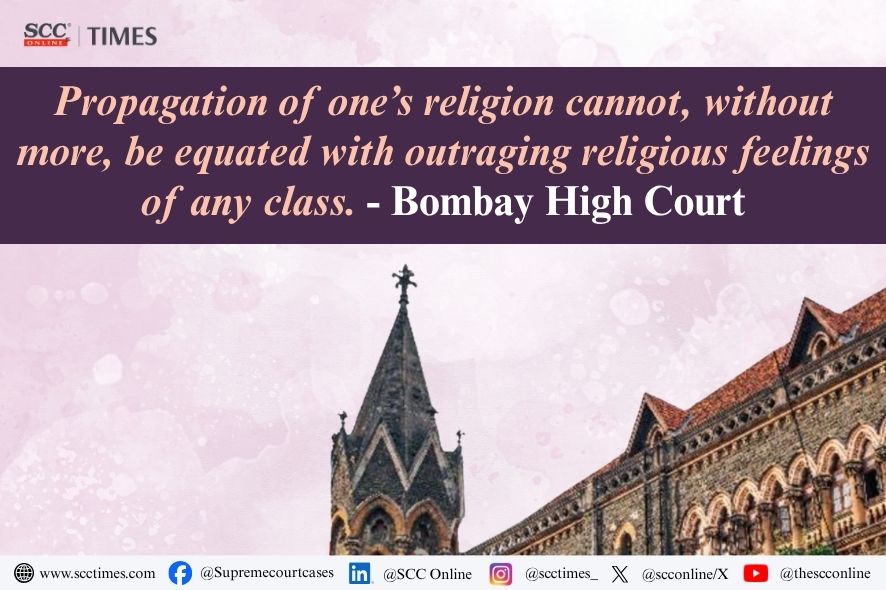
- The court ruled that mere promotion of religion or persuasion to convert does not amount to outraging religious feelings.
- This interpretation applies to Sections 299 and 302 of the Bharatiya Nyaya Sanhita (BNS).
- The decision sets a precedent for quashing similar criminal proceedings under these BNS sections.
The High Court's Decision
Lawyers defending clients accused under Sections 299 and 302 of the Bharatiya Nyaya Sanhita should leverage this Bombay High Court ruling, which clarifies that mere promotion or persuasion for religious conversion does not automatically constitute outraging religious feelings, providing a strong precedent for quashing similar criminal proceedings.
The Bombay High Court recently delivered a significant ruling, opting to quash criminal proceedings that had been initiated against certain individuals. These proceedings stemmed from accusations alleging that the accused had engaged in inducing and pressuring a complainant and their spouse to convert to Christianity. The court's decision provides crucial clarity on the interpretation of specific provisions within the Bharatiya Nyaya Sanhita (BNS) concerning religious offenses. This outcome is particularly relevant for understanding the scope of "outraging religious feelings" in the context of religious conversion.
In its pronouncement, the Bombay High Court established that the mere act of promoting a religion or attempting to persuade someone to convert does not inherently constitute "outraging religious feelings" under Sections 299 and 302 BNS. This interpretation directly addresses the core of the allegations, which centered on whether the accused's actions, described as inducement and pressure, crossed the threshold into a criminal offense. The ruling underscores a distinction between active proselytization and actions that genuinely offend religious sentiments, thereby quashing criminal proceedings related to this specific religious conversion case.
Legal Framework Under the BNS
The criminal proceedings in question were brought under Sections 299 and 302 of the Bharatiya Nyaya Sanhita (BNS). These sections are designed to address offenses related to religious feelings, specifically targeting actions that are deemed to outrage or insult the religion or religious beliefs of any class. The Bombay High Court's recent judgment offers a vital interpretation of these provisions, particularly in the context of religious conversion activities in India, clarifying the scope of "Bharatiya Nyaya Sanhita religious feelings."
By ruling that promoting religion or persuading individuals to change their faith does not automatically amount to outraging religious feelings, the court has set a precedent for how these sections should be applied. This clarifies that the intent and nature of the act are paramount, distinguishing between legitimate religious propagation, which is protected under constitutional rights, and malicious acts intended solely to insult or offend. The ruling helps define the boundaries of what constitutes a criminal offense under the BNS regarding religious expressions and conversions, emphasizing that promoting religion not outraging feelings India is a key legal principle.
Implications for Religious Freedom
This decision by the Bombay High Court carries substantial weight for individuals and organizations involved in religious activities across India, particularly concerning allegations of religious conversion. The quashing of criminal proceedings based on the principle that promoting religion does not equate to outraging religious feelings under Sections 299 and 302 BNS provides a significant legal safeguard. It reinforces the idea that the state must differentiate between genuine efforts to share religious beliefs and actions that are truly malicious or coercive, impacting future Bombay HC criminal proceedings conversion cases.
The ruling offers a strong precedent for future cases where individuals face criminal proceedings for religious conversion activities. Lawyers defending clients accused under Sections 299 and 302 of the Bharatiya Nyaya Sanhita should leverage this Bombay High Court ruling, which clarifies that mere promotion or persuasion for religious conversion does not automatically constitute outraging religious feelings, providing a strong precedent for quashing similar criminal proceedings. This judicial clarity is crucial for upholding the constitutional right to freedom of religion while also ensuring that laws intended to protect religious sentiments are not misused to stifle legitimate religious expression or peaceful persuasion. The judgment helps to delineate the scope of criminal liability in matters of faith and conversion, ensuring a more nuanced application of the law.
Practical Implications
Lawyers defending clients accused under Sections 299 and 302 of the Bharatiya Nyaya Sanhita (BNS) should leverage this Bombay High Court ruling, which clarifies that mere promotion or persuasion for religious conversion does not automatically constitute outraging religious feelings, providing a strong precedent for quashing similar criminal proceedings.
Source
How does this affect you?
Get an AI analysis of this article grounded in your jurisdictions, practice areas, and any policy documents you've uploaded to Wansom.
Finish Reading the Full Story and the Expert Analysis.
Wansom is AI and can make mistakes.