
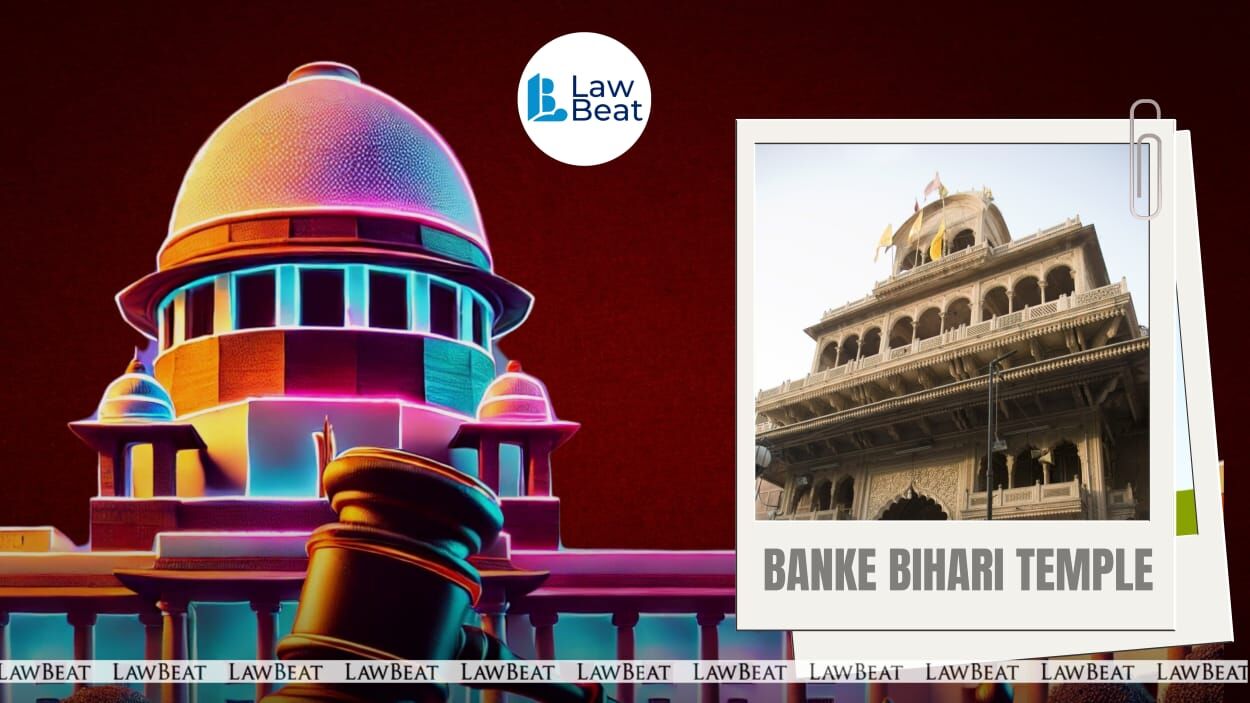
Supreme Court: Banke Bihari Temple Donation Transparency Mandated
Summary
- The Supreme Court has mandated that all donations to the Shri Banke Bihari Temple in Vrindavan must go directly into official donation boxes or the online treasury to prevent siphoning.
- The Court issued a stern warning that any obstruction by 'sevayats' or others to this transparent donation process will be viewed seriously.
- A court-appointed committee, now including nominated Goswamis, is overseeing the temple's daily functioning and will consider suggestions for improvements.
- The State Government has been directed to prepare a comprehensive development plan for the area around the temple, including land acquisition for infrastructure and devotee facilities.
- The Supreme Court is also hearing petitions challenging the constitutional validity of the Uttar Pradesh Shri Bankey Bihari Ji Temple Trust Act, 2025, which aims to regulate temple management.
Court Mandates Donation Transparency
The management committee has been explicitly tasked with establishing a transparent mechanism for both receiving and meticulously accounting for all donations, whether physical or digital, to prevent any future malpractice and uphold the integrity of the temple's finances.
The Supreme Court of India has issued a stringent directive aimed at ensuring complete financial transparency for donations made to the revered Shri Banke Bihari Temple in Vrindavan. This ruling comes in response to serious allegations of funds being siphoned off by individuals, prompting the apex court to mandate a robust and verifiable system for all offerings. A bench comprising Chief Justice of India Surya Kant, Justice Joymalya Bagchi, and Justice V Mohana, heard a series of petitions from the temple's management committee, underscoring the gravity of the situation.
During the proceedings, Senior Advocate Maninder Singh presented a status report from a high-powered committee appointed by the court to oversee the temple's daily operations. This report highlighted critical issues, including video evidence showing three individuals at the 'Golak' (traditional donation box) collecting cash directly from devotees and placing it into their own plastic bags, rather than allowing it to enter the designated temple treasury. Taking a stern view of these revelations, the Court declared that "every penny of donation must come to the donation boxes or online temple treasury."
The bench issued a clear warning, stating that any obstruction created by 'sevayats' or other individuals preventing donations from reaching the official temple channels would be treated with extreme seriousness. The management committee has been explicitly tasked with establishing a transparent mechanism for both receiving and meticulously accounting for all donations, whether physical or digital, to prevent any future malpractice and uphold the integrity of the temple's finances. This directive aims to restore public trust and ensure that every offering contributes directly to the temple's intended purposes.
Enhanced Oversight and Development Directives
Beyond immediate financial transparency, the Supreme Court's directives extend to broader governance and the comprehensive development of the area surrounding the Shri Banke Bihari Temple. The court-appointed committee, which is already supervising the temple's day-to-day functioning, was previously instructed to collaborate with the Goswamis, the traditional custodians of the temple. In a May order, the bench further directed this committee to consider suggestions from the Goswamis.
Specifically, the Court approved the nomination of two members each from the two prominent groups of Goswamis—Rajat Goswami and Shailendra Goswami from the Shayan Bhog group, and Gopesh Goswami and Himanshu Goswami from the Raj Bhog group. These nominated individuals are expected to collectively offer recommendations for improving and maintaining the temple's religious practices and its daily operations. This move aims to integrate traditional wisdom with modern management practices under judicial oversight. The Court also noted that the traditional 'Dehri Pujan', an age-old guru-shishya ritual, had been discontinued, a point raised by Senior Advocate Shyam Divan as a concern that should be addressed.
Furthermore, the Supreme Court has called upon the State Government to actively participate in developing social and civic infrastructure in and around the temple complex. This ambitious plan necessitates the acquisition of land to facilitate road widening, regulate commercial activities in the vicinity, and provide essential amenities for devotees and local residents alike. These include hotels, 'dharamshalas' (rest houses), drinking water facilities, restrooms, dedicated facilities for women and children, emergency exits, public transport options, and electric vehicles for the elderly, ailing, women, and children. The Court has mandated the preparation of a specific, comprehensive development plan for the entire area, signaling a significant state involvement in the region's urban planning.
Legal Challenges to Temple Governance
The Supreme Court's ongoing engagement with the Shri Banke Bihari Temple management also encompasses a batch of petitions challenging the constitutional validity of the Uttar Pradesh Shri Bankey Bihari Ji Temple Trust Act, 2025. This Act seeks to establish a regulatory framework for the temple's management and development within Vrindavan, indicating a broader governmental effort to formalize the governance of religious endowments in the region. The legal challenge to this Act highlights the complex interplay between traditional religious practices, state regulation, and judicial oversight in India.
The Court's firm stance on donation transparency and its proactive directives for comprehensive development underscore a clear intent to ensure accountability and proper administration of significant religious sites. The ongoing legal proceedings, including the challenge to the Uttar Pradesh Act, reflect a critical juncture for religious endowments governance in India, where the judiciary is actively shaping the future operational and financial frameworks of such institutions. This judicial intervention sets a precedent for strict oversight, emphasizing that public offerings to sacred institutions must be managed with utmost integrity and transparency.
Practical Implications
This Supreme Court directive sets a precedent for strict judicial oversight on the financial transparency and governance of religious endowments in India. Lawyers advising temple trusts must ensure robust, auditable donation management systems are in place to mitigate compliance risks. It also signals increased state involvement in land acquisition and development around major religious sites.
Source
How does this affect you?
Get an AI analysis of this article grounded in your jurisdictions, practice areas, and any policy documents you've uploaded to Wansom.
Wansom is AI and can make mistakes.