
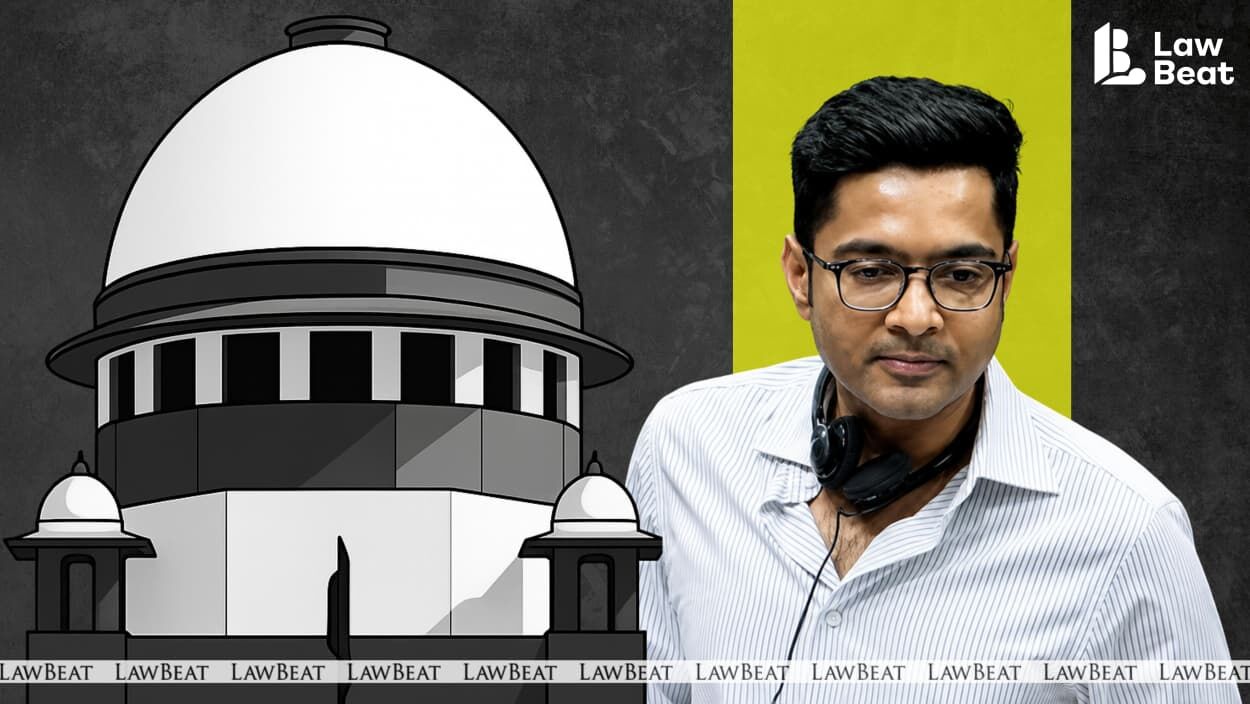
Supreme Court: Abhishek Banerjee Seeks Rebel MPs Disqualification Ruling
Summary
- The Supreme Court has issued notice on TMC leader Abhishek Banerjee's plea for an expedited decision on the disqualification of 20 rebel MPs who aligned with the NCPI.
- Speaker Om Birla has issued notices to the rebel MPs, whose actions the TMC claims constitute voluntarily giving up party membership under anti-defection law.
- The Court is also reviewing a challenge by Shiv Sena (UBT) leader Arvind Sawant against the Lok Sabha Speaker's recognition of six MPs merging with a rival faction.
- Senior Advocate Kapil Sibal has separately petitioned the Supreme Court, questioning the interpretation of the Tenth Schedule that allows legislators to avoid disqualification through political party mergers.
- These cases collectively highlight the Supreme Court's scrutiny of the anti-defection law and the Speaker's role in disqualification proceedings, potentially setting new precedents.
Supreme Court Addresses Disqualification Delay
The confluence of these cases — Abhishek Banerjee's demand for expedited disqualification decisions, Arvind Sawant's challenge to a legislative merger, and Kapil Sibal's fundamental questioning of the Tenth Schedule's interpretation — signals a pivotal moment for India's anti-defection law.
The Supreme Court has recently taken up a petition filed by Trinamool Congress (TMC) leader Abhishek Banerjee, seeking to compel Lok Sabha Speaker Om Birla to promptly decide on the disqualification proceedings against twenty rebel Members of Parliament. These MPs, originally elected on the TMC symbol, are accused by their former party of having voluntarily relinquished their membership by aligning with the Nationalist Citizens Party of India (NCPI), a political entity active in the eastern region of India, including West Bengal, Tripura, and Assam, with its headquarters in Howrah, West Bengal. The TMC contends that this alignment triggers disqualification under the nation's anti-defection statutes.
During recent proceedings, a bench led by Chief Justice of India Surya Kant was informed by Solicitor General Tushar Mehta that Speaker Birla has already issued notices to the implicated rebel MPs. Subsequently, a bench comprising Justices Joymalya Bagchi and V Mohana issued notice to the other respondents involved in the matter. Banerjee's plea specifically challenges what he describes as an undue delay in the Speaker's decision-making process, urging the court to direct a resolution in line with constitutional anti-defection provisions. The dispute originated after the twenty Lok Sabha MPs publicly announced their affiliation with the NCPI, subsequently seeking separate recognition within the House and participating in NDA parliamentary activities as an NCPI group.
Broader Scrutiny on Legislative Mergers
This development concerning the TMC MPs is not an isolated incident, as the Supreme Court is simultaneously grappling with other significant challenges to legislative integrity and the anti-defection law. In a related matter, the apex court has also issued notice on a petition from Shiv Sena (UBT) leader and Lok Sabha MP Arvind Sawant. Sawant's plea contests a July 18 decision by the Lok Sabha Speaker, which recognized the actions of six Shiv Sena (UBT) MPs who sought to merge with a rival Shiv Sena faction led by Maharashtra Deputy Chief Minister Eknath Shinde.
Sawant, who serves as the parliamentary party leader for Shiv Sena (UBT), has characterized a circular from the Joint Secretary of the Lok Sabha Secretariat as unconstitutional, illegal, and perverse. He argues that the 2024 Lok Sabha election campaign prominently featured allegations of Eknath Shinde's unlawful usurpation of Balasaheb Thackeray's legacy through illegal means and orchestrated defections. These parallel cases underscore a growing judicial focus on the mechanisms of party splits and legislative mergers.
The Tenth Schedule Under Judicial Lens
Further highlighting the critical examination of India's anti-defection framework, the Supreme Court is also considering a petition filed by Senior Advocate Kapil Sibal. This petition directly challenges the prevailing interpretation of the Tenth Schedule to the Constitution, which is the anti-defection law. Enacted in 1985 through the 52nd Amendment, the Tenth Schedule was designed to curb political defections. However, Sibal's plea specifically targets a provision within this law that allows legislators to avoid disqualification by claiming protection under a political party merger.
Sibal has voiced significant concerns that this particular interpretation is rendering the anti-defection law ineffective, thereby altering the very composition of Parliament through what he terms "so-called political mergers." During a hearing before a Bench led by Chief Justice of India Surya Kant, Sibal remarked on the gravity of the situation, stating, "What is happening in this country? If this continues, 10th Schedule will become...There is a another plea listed." His petition argues that allowing splinter groups to bypass the anti-defection law through the merger route undermines the original intent of the constitutional amendment.
Implications for Legislative Integrity
The confluence of these cases — Abhishek Banerjee's demand for expedited disqualification decisions, Arvind Sawant's challenge to a legislative merger, and Kapil Sibal's fundamental questioning of the Tenth Schedule's interpretation — signals a pivotal moment for India's anti-defection law. The Supreme Court's active engagement in these matters indicates a deep concern regarding the efficacy of existing provisions designed to ensure party discipline and prevent opportunistic defections.
The outcomes of these proceedings could significantly redefine the powers of the Lok Sabha Speaker in disqualification cases, clarify the boundaries of what constitutes a legitimate political merger versus a defection, and ultimately impact the stability and integrity of legislative bodies. Legal professionals advising political parties and legislators will need to closely monitor these developments, as they are poised to establish crucial precedents affecting strategies for maintaining party cohesion and interpreting constitutional safeguards against political horse-trading.
Practical Implications
This development indicates the Supreme Court's active scrutiny of the anti-defection law (Tenth Schedule) and the Speaker's role in disqualification proceedings. Lawyers advising political parties or legislators must monitor these cases for potential precedents impacting strategies for party discipline, defections, and the interpretation of legislative mergers.
Source
How does this affect you?
Get an AI analysis of this article grounded in your jurisdictions, practice areas, and any policy documents you've uploaded to Wansom.
Wansom is AI and can make mistakes.