
Supreme Court Article 142: Wrongful Termination Leads to ₹10 Lakh Compensation
Summary
- The Supreme Court awarded Rs 10 lakh each to two former school employees for wrongful termination.
- The Court invoked Article 142 to ensure complete justice, despite deficiencies in the employees' initial pleadings.
- The school's termination orders were vitiated by its failure to lead evidence and provide inquiry reports.
- The employer disregarded a binding judicial direction from the Bombay High Court to present evidence.
- This ruling emphasizes strict adherence to procedural safeguards in disciplinary proceedings.
What Happened
This ruling by the Supreme Court serves as a powerful reminder of the judiciary's commitment to ensuring complete justice, particularly in cases of wrongful termination where procedural integrity is compromised.
The Supreme Court recently directed a private educational institution in Maharashtra to pay 10 lakh rupees each to two former employees, Prithviraj S Singh, a senior clerk, and Shivadatta R Singh, a head clerk. This significant compensation was awarded following their wrongful termination nearly two decades ago. The employees had faced departmental proceedings alongside the then in-charge headmaster, stemming from allegations of public money misappropriation and related misconduct. An inquiry committee was established under the Maharashtra Employees of Private Schools (Conditions of Service) Rules, 1981, though the employees had raised objections regarding its composition, leading to the replacement of one member.
The termination orders issued by the school were ultimately deemed invalid by the Supreme Court. A key reason for this invalidation was the school's failure to present evidence to substantiate the charges against the employees, despite having been explicitly granted the opportunity to do so by the Bombay High Court. Furthermore, the school neglected to provide the employees with the final inquiry reports before imposing the severe penalty of termination. These procedural lapses formed the core of the Supreme Court's decision to intervene and ensure complete justice.
Legal Context
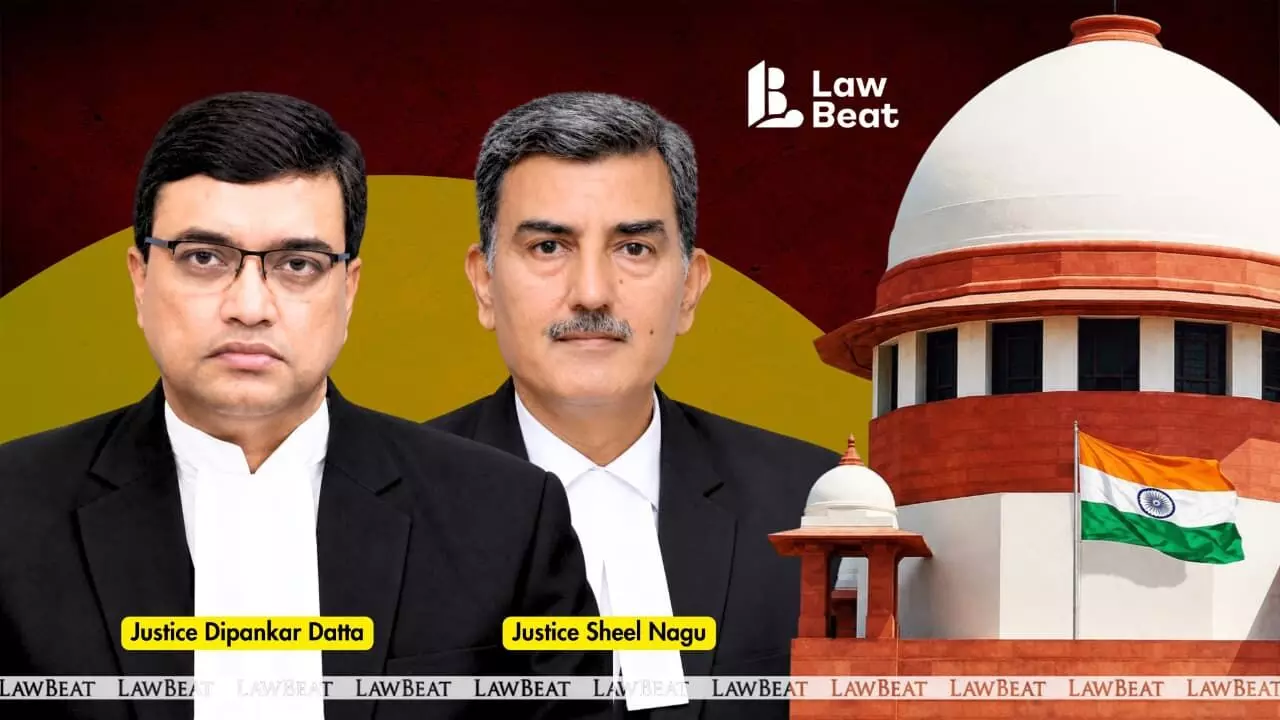
The Supreme Court, through a bench comprising Justices Dipankar Datta and Sheel Nagu, invoked its extraordinary powers under Article 142 of the Constitution of India to deliver this judgment. This constitutional provision allows the Court to pass any decree or order necessary for doing complete justice in any cause or matter pending before it. The Court emphasized that such powers are particularly relevant when an employer demonstrates a disregard for binding judicial directions and fails to uphold fundamental procedural safeguards during disciplinary proceedings. The failure to furnish final inquiry reports to an employee before their termination constitutes a critical procedural flaw, rendering the disciplinary action unsustainable.
While acknowledging that the employees' initial writ petitions before the Bombay High Court were inadequately drafted and did not specifically articulate these crucial grounds—such as the school's failure to lead evidence or the non-supply of inquiry reports—the Supreme Court still proceeded to grant relief. The Court underscored the general principle that parties are strictly obligated to plead their case with necessary averments to support the relief sought, and courts are typically not bound to entertain pleas lacking such assertions. However, the bench made a critical distinction: an order or action that flagrantly disregards an explicit judicial direction from a competent court falls into an exceptional category and cannot be upheld, even if the initial pleadings were deficient. The school's non-compliance with a consent order from the Bombay High Court, dated March 17, 2005, which permitted it to approach the School Tribunal to lead evidence, was a significant factor.
Why It Matters
This ruling by the Supreme Court serves as a powerful reminder of the judiciary's commitment to ensuring complete justice, particularly in cases of wrongful termination where procedural integrity is compromised. The invocation of Article 142, despite the employees' initial pleading deficiencies, highlights the Court's willingness to look beyond technicalities when fundamental rights and judicial directives are blatantly disregarded. The Court noted that the school's counsel offered no justification for failing to comply with the Bombay High Court's consent order, which resulted in a complete absence of substantive evidence before the tribunal to support the charges against the employees.
The decision reinforces the critical importance for employers, especially those in the education sector, to adhere rigorously to established disciplinary procedures. Specifically, the judgment underscores that the failure to furnish inquiry reports to an employee prior to imposing a major penalty like termination, alongside the failure to present evidence when directed by a court, constitutes a serious procedural infirmity. This case demonstrates that the Supreme Court will not hesitate to exercise its extraordinary powers to rectify such injustices, ensuring that employees subjected to wrongful termination receive appropriate compensation, even if their initial legal representation was imperfect.
Practical Implications
This ruling underscores that the Supreme Court may invoke Article 142 to ensure complete justice in wrongful termination cases, even if initial pleadings are deficient. Employers and their legal counsel must ensure strict adherence to disciplinary procedures, including furnishing inquiry reports and leading evidence, as failure to do so, especially in disregard of judicial directions, can lead to significant compensation awards and compliance exposure.
Source
How does this affect you?
Get an AI analysis of this article grounded in your jurisdictions, practice areas, and any policy documents you've uploaded to Wansom.
Finish Reading the Full Story and the Expert Analysis.
Get the latest legal & regulatory intelligence in India
Wansom is AI and can make mistakes.