
Supreme Court: Grants Anticipatory Bail in Property Dispute Criminal Proceedings
Summary
- The Supreme Court granted anticipatory bail to Mukesh Kumar alias Mukesh Kumar Sarraf in a property dispute case.
- The Court ruled that criminal proceedings cannot be utilized as a strong-arm tactic to enforce civil liabilities arising from commercial transactions.
- The case involved a Rs 60 lakh advance for property, which led to dishonored cheques and an FIR under various IPC sections and Section 138 of the Negotiable Instruments Act.
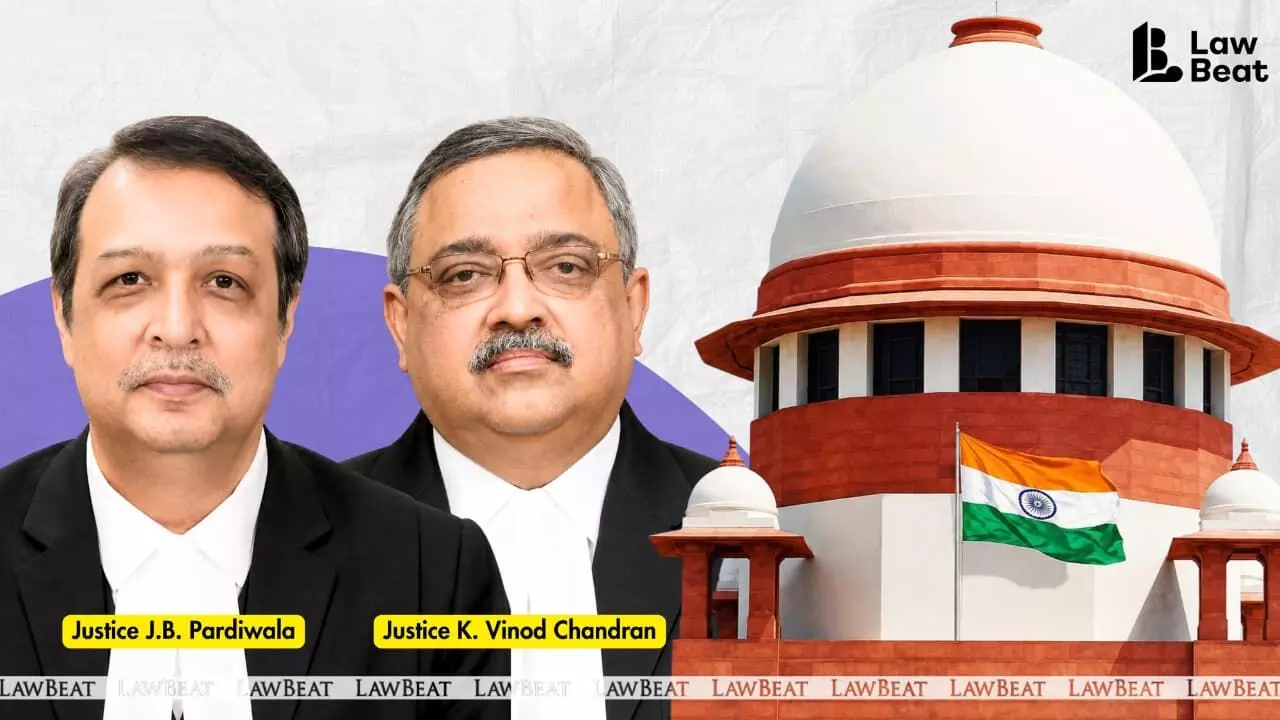
- Justices J B Pardiwala and K Vinod Chandran criticized the Patna High Court for exceeding its jurisdiction by involving tax departments in a bail application.
- The Supreme Court emphasized that courts should focus on culpability in bail matters and avoid an adversarial role, especially when commercial disputes are criminalized.
A Landmark Ruling on Commercial Disputes
The bench observed that criminal proceedings cannot be employed as a strong-arm tactic to enforce civil liabilities or recover money arising from commercial dealings.
The Supreme Court recently intervened in a significant case, granting anticipatory bail to Mukesh Kumar alias Mukesh Kumar Sarraf, thereby underscoring a crucial principle regarding the criminalization of commercial disputes in India. This decision arose from a property dispute where a financial transaction was alleged to have been improperly converted into criminal proceedings. The apex court's ruling effectively overturned a May 7, 2026, order from the Patna High Court, which had previously rejected Sarraf's application for anticipatory bail.
The underlying matter involved an FIR registered in 2024 at the Buxar Nagar Police Station in Bihar. The complainant had accused Sarraf and co-accused individuals of offenses under various sections of the Indian Penal Code, specifically Sections 406, 420, 467, 468, and 471, read with Section 34. Additionally, charges were filed under Section 138 of the Negotiable Instruments Act, pertaining to dishonored cheques. The complainant's grievance stemmed from an advance payment of Rs 60 lakh made to Sarraf for the purchase of a property. Subsequent inquiries revealed that the property in question was encumbered by disputes and legal issues, prompting the complainant to demand a refund of the substantial sum.
In an attempt to settle the matter, Mukesh Kumar Sarraf issued five cheques, each valued at Rs 12 lakh, totaling the full Rs 60 lakh. However, all these cheques were dishonored when presented for encashment, directly leading to the registration of the aforementioned FIR and initiating criminal proceedings against him. The Supreme Court's decision to grant anticipatory bail in this property dispute highlights its stance against using criminal law as a primary tool for resolving what are fundamentally civil liabilities.
Judicial Scrutiny and the Limits of Criminal Law
In their pronouncement, Justices J B Pardiwala and K Vinod Chandran of the Supreme Court delivered a strong message regarding the appropriate scope of criminal law, particularly in cases involving financial and commercial transactions. The bench observed that criminal proceedings cannot be employed as a strong-arm tactic to enforce civil liabilities or recover money arising from commercial dealings. This observation came as the Court reviewed the Patna High Court's handling of the anticipatory bail application, finding that the lower court had regrettably "gone overboard" in its approach.
The Supreme Court specifically disapproved of the Patna High Court's directive for the Income Tax Department and the Sales Tax Department to furnish details of Sarraf's assessed and paid taxes to the district court. The apex court pointed out that such a direction was unwarranted, noting that even the State did not support this measure. The Justices emphasized that when considering anticipatory bail applications, courts should either grant or reject them based on the culpability of the accused, rather than issuing orders that involve tax departments, which possess their own robust mechanisms for addressing tax evasion and ensuring compliance.
The ruling clarified that courts must exercise considerable caution during bail hearings, refraining from adopting an adversarial stance against the accused unless there are clear and compelling circumstances that necessitate such an approach. The Supreme Court prima facie determined that the present case represented an instance where a commercial transaction was being improperly converted into a criminal liability, reinforcing the principle that criminal law is not a suitable instrument for the enforcement of civil liabilities.
Precedent for Civil Liabilities and Bail Applications
The Supreme Court's decision sets a significant precedent, particularly for cases involving Section 138 of the Negotiable Instruments Act bail and the broader issue of criminal proceedings being used to enforce civil liabilities. The petitioner's counsel had challenged the Patna High Court's rejection on several grounds, including the alleged lack of jurisdiction for police investigation into a Section 138 NI Act matter, an unexplained delay of over three years in registering the FIR, and the fundamental argument that the dispute, arising from financial transactions and monetary dealings, was inherently civil in nature.
By granting anticipatory bail, the Supreme Court affirmed these arguments, signaling a clear judicial stance against the criminalization of commercial disputes in India. The Court reiterated that its primary concern in bail applications is the culpability of the accused, not to act as an enforcement arm for civil claims. This ruling provides crucial guidance for legal practitioners, reinforcing the idea that criminal law should not be leveraged as a means to recover debts or settle property disputes that are fundamentally civil in character.
This judgment serves as a vital reminder that while respondents' counsel might raise concerns about criminal antecedents, as they did in this case, the core nature of the dispute—whether it is truly criminal or merely a commercial disagreement—must guide judicial discretion, especially in matters of anticipatory bail. The Supreme Court's intervention in the Mukesh Kumar Sarraf anticipatory bail case ensures that the legal system maintains a clear distinction between civil and criminal remedies, preventing the misuse of criminal processes for debt recovery.
Practical Implications
This ruling clarifies that criminal proceedings cannot be used to recover money from commercial transactions, providing a strong precedent for lawyers to argue against the criminalization of civil disputes, particularly when seeking anticipatory bail for clients involved in property or financial disagreements. Lawyers should advise clients that criminal law is not a tool for enforcing commercial liabilities and be prepared to challenge judicial overreach in bail applications.
Source
How does this affect you?
Get an AI analysis of this article grounded in your jurisdictions, practice areas, and any policy documents you've uploaded to Wansom.
Finish Reading the Full Story and the Expert Analysis.
Get the latest legal & regulatory intelligence in India
Wansom is AI and can make mistakes.