
Supreme Court: Abhishek Upadhyay FIR Quash Plea Listed For Hearing
Summary
- Journalist Abhishek Upadhyay has petitioned the Supreme Court to quash an FIR filed against him.
- The FIR, alleging a road rage incident, includes stringent provisions of the SC/ST (Prevention of Atrocities) Act.
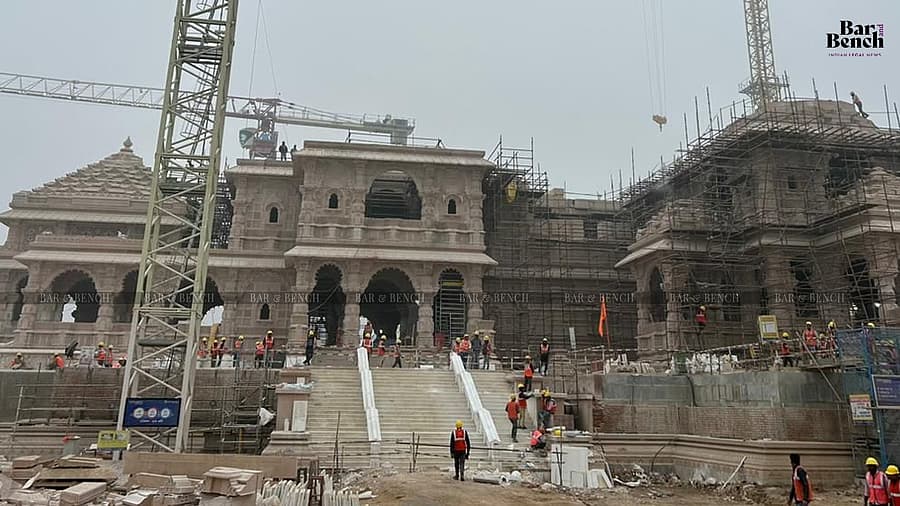
- Upadhyay claims the FIR is a retaliatory "counter blast" for his investigative reports on Ram Mandir donation theft and alleged Uttar Pradesh administration corruption.
- His reporting detailed an IAS officer's alleged ₹20 crore agricultural land purchase in Bhadohi in 2023, where the officer's profession was listed as "business."
- A Supreme Court bench agreed to list the matter for hearing on August 25, subject to the petitioner curing defects in the writ petition.
Journalist Seeks Supreme Court Intervention
The allegation that an FIR, particularly one involving a stringent law like the SC/ST Act, is being used as a "counter blast" against investigative reporting highlights a critical challenge faced by journalists.
Journalist Abhishek Upadhyay has approached the Supreme Court of India with a plea to quash a First Information Report (FIR) that has been lodged against him. The FIR, which reportedly arose from a road rage incident, notably includes provisions from the stringent Scheduled Castes and Scheduled Tribes (Prevention of Atrocities) Act. Upadhyay asserts that this particular FIR, among others, is not a legitimate legal action but rather a retaliatory measure, or a "counter blast," aimed at silencing him due to his investigative reporting.
His journalistic work has focused on sensitive subjects, including alleged financial irregularities concerning donations to the Ram Mandir in Ayodhya, as well as broader claims of corruption within the Uttar Pradesh administration. The Supreme Court has responded swiftly to the urgent request; a bench comprising Chief Justice of India Surya Kant and Justice V Mohana has agreed to schedule the matter for hearing on August 25. This listing, however, is conditional upon Upadhyay's legal team rectifying any identified defects in the filed writ petition.
Allegations of Retaliation for Investigative Reporting
The journalist's contention that the FIR constitutes a "counter blast" is directly linked to his recent investigative publications. One significant report by Upadhyay brought to light alleged theft of donations intended for the Ram Mandir in Ayodhya, a project of national prominence. In addition to this, he investigated and reported on alleged corruption within the Uttar Pradesh government, specifically implicating an IAS officer reportedly close to the state's Chief Minister.
This particular report detailed the alleged purchase of agricultural land in Bhadohi in 2023, purportedly valued at approximately ₹20 crore. A key detail highlighted in Upadhyay's reporting was that the IAS officer's profession was recorded as "business" in documents related to this transaction. Upadhyay's legal counsel informed the Supreme Court that multiple FIRs have been registered against the journalist, with the latest being under the severe SC/ST Act. The counsel also cited recent police actions, including a raid on Upadhyay's residence on the 20th of the month and another police visit at 5 o'clock the day before the Supreme Court mention, emphasizing the perceived pressure on the journalist.
Supreme Court's Prompt Listing and Legal Context
The Supreme Court's decision to promptly list Abhishek Upadhyay's writ petition for hearing underscores the potential gravity of the allegations presented. The bench, led by Chief Justice of India Surya Kant and including Justice V Mohana, acknowledged the urgency of the journalist's plea. They agreed to schedule the hearing for August 25, provided that any procedural deficiencies in the submitted petition are addressed. This immediate listing reflects the judiciary's potential concern regarding the implications of such cases on fundamental rights and the freedom of the press.
The invocation of the Scheduled Castes and Scheduled Tribes (Prevention of Atrocities) Act in the FIR is particularly noteworthy. This legislation is designed to safeguard marginalized communities from specific offenses and carries stringent provisions, including non-bailable clauses. For a journalist facing charges under such an act, especially when alleging that the action is in retaliation for reporting, it raises serious questions about the potential misuse of legal instruments to suppress media scrutiny and investigative journalism.
Implications for Media Freedom in India
This case carries substantial weight for the broader landscape of media freedom in India. The allegation that an FIR, particularly one involving a stringent law like the SC/ST Act, is being used as a "counter blast" against investigative reporting highlights a critical challenge faced by journalists. Such actions, if proven to be retaliatory, can create a chilling effect, potentially deterring media professionals from pursuing stories that expose alleged corruption or wrongdoing within powerful circles.
The Supreme Court's willingness to hear this writ petition quickly signals its recognition of the potential impact on the constitutional right to freedom of speech and expression, which inherently includes press freedom. The outcome of Upadhyay's plea could establish important precedents regarding the protection afforded to journalists when their work leads to legal challenges. It will be closely watched by legal practitioners advising media organizations, as it could clarify the grounds for quashing FIRs perceived as malicious or intended to stifle legitimate journalistic inquiry, thereby contributing to the ongoing discourse about the balance between accountability, law enforcement, and the vital role of an independent press in a democratic society.
Practical Implications
This case is critical for lawyers advising journalists or media organizations, as it involves the Supreme Court's intervention in a potential retaliatory FIR, particularly under the stringent SC/ST Act, against a journalist for investigative reporting. The outcome could establish important precedents regarding the protection of journalistic freedom and the grounds for quashing such FIRs in India.
Source
How does this affect you?
Get an AI analysis of this article grounded in your jurisdictions, practice areas, and any policy documents you've uploaded to Wansom.
Wansom is AI and can make mistakes.