
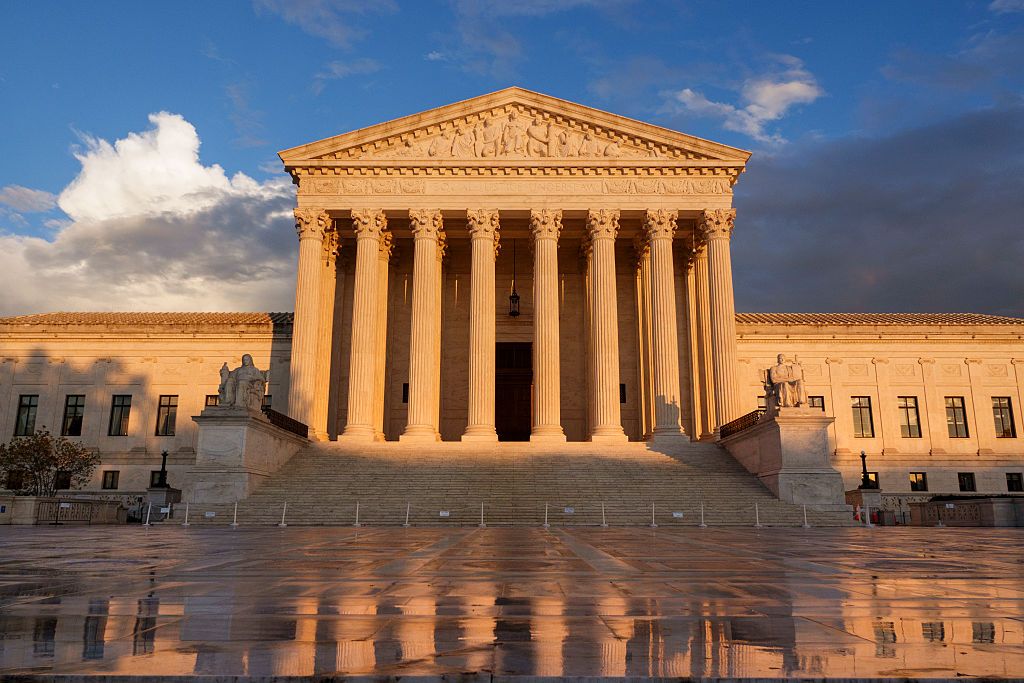
SCOTUS: Sun Valley Orchards Administrative Power Limits Eyed
Summary
- The Supreme Court recently heard arguments in Department of Labor v. Sun Valley Orchards, indicating a readiness to limit agencies' adjudicative powers.
- Justices appear open to restricting agencies' ability to impose fines or penalties through internal processes without robust judicial review.
- The case addresses the constitutional distinction between Article III judicial power and Article I executive power.
- The Court has previously invalidated administrative schemes, such as the 1978 Bankruptcy Code, for overstepping adjudicative boundaries.
- This case aligns with recent decisions like Loper Bright Enterprises v. Raimondo, signaling a broader effort to curb administrative state authority.
Supreme Court Considers Agency Adjudication Limits
A ruling limiting agencies' ability to impose fines or penalties through internal adjudicative processes could significantly alter the landscape of administrative enforcement.
The Supreme Court recently heard arguments in the case of Department of Labor v. Sun Valley Orchards, signaling a potential shift in the balance of power between federal agencies and the judiciary. During the proceedings, the justices appeared receptive to imposing significant Sun Valley Orchards administrative power limits, particularly concerning the authority of agencies to levy fines or penalties through their internal adjudicative processes. This openness suggests a requirement for more robust judicial review of such administrative actions.
The core of the dispute, which involves employers, centers on the extent to which executive branch entities can exercise functions traditionally associated with courts. The Court's apparent inclination to rein in these powers could have far-reaching implications for how federal agencies conduct enforcement and resolve disputes, potentially reshaping the landscape of administrative law.
The Constitutional Divide
At the heart of the matter lies a fundamental constitutional question: how to delineate the judicial power exclusively vested in the federal courts under Article III of the Constitution from the executive power allocated to the executive branch under Article I. Historically, the Supreme Court has acknowledged the permissibility of executive branch officials, who do not possess the lifetime tenure and other protections afforded to Article III judges, resolving questions in proceedings that closely resemble traditional trials.
However, the Court has also, on multiple occasions, invalidated administrative schemes deemed to have overstepped these boundaries. A prominent example is the invalidation of the initial version of the 1978 Bankruptcy Code, which was struck down because it assigned excessive adjudicative responsibilities to non-Article III bankruptcy “judges.” Despite these interventions, the Court has consistently struggled to articulate precise guidelines defining the exact limits of such administrative powers, leaving a degree of ambiguity that this current case may seek to clarify.
Broader Implications for Administrative Power
The arguments in Department of Labor v. Sun Valley Orchards are not occurring in isolation but rather within a broader context of judicial scrutiny over the administrative state. Recent Supreme Court decisions, including Loper Bright Enterprises v. Raimondo and Trump v. Slaughter, demonstrate a clear and increasing willingness by the Court to curtail the powers traditionally exercised by federal agencies. This trend suggests a concerted effort to redefine the scope of agency authority and ensure greater accountability to the judiciary.
A ruling limiting agencies' ability to impose fines or penalties through internal adjudicative processes could significantly alter the landscape of administrative enforcement. Such an outcome would likely create new grounds for challenging agency actions and necessitate a re-evaluation of compliance strategies for businesses and individuals to mitigate exposure to administrative penalties. The implications extend beyond this specific case, potentially impacting the operational framework of numerous federal agencies and the balance of power within the federal government.
Practical Implications
Lawyers and compliance officers should closely monitor the outcome of Department of Labor v. Sun Valley Orchards, as a ruling limiting agencies' ability to impose fines or penalties through internal adjudicative processes could significantly alter the landscape of administrative enforcement. This may create new grounds for challenging agency actions and necessitate a re-evaluation of compliance strategies to mitigate exposure to administrative penalties.
Source
How does this affect you?
Get an AI analysis of this article grounded in your jurisdictions, practice areas, and any policy documents you've uploaded to Wansom.
Finish Reading the Full Story and the Expert Analysis.
Get the latest legal & regulatory intelligence in United States
Wansom is AI and can make mistakes.