
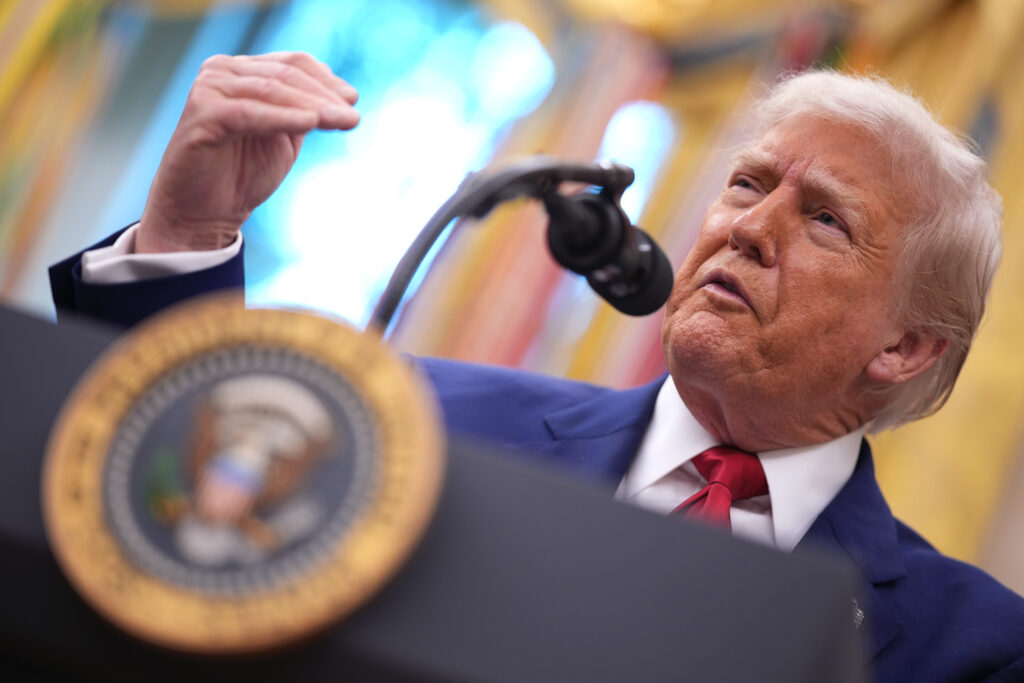
Will Scharf: Warns of Prosecution Over Trump Investigation Threats
Summary
- The President publicly labeled Democrats planning investigations as "SLEAZEBAGS" and ordered the Department of Justice to investigate them.
- Attorney General Todd Blanche declined to rule out prosecuting members of Congress for scheduling hearings.
- White House Counsel Will Scharf sent a letter to Rep. Robert Garcia, threatening criminal prosecutions for Democrats investigating former President Trump.
- These actions raise significant ethical questions about the politicization of legal roles within the executive branch.
- The threats pose a direct challenge to congressional oversight and the separation of powers.
What Happened
The explicit threats of criminal prosecution, originating from both the President and his top legal advisors, carry significant implications for the ability of Congress to conduct its constitutionally mandated oversight functions.
The President of the United States recently issued a strong statement on Truth Social, characterizing Democrats who plan to investigate his administration as "SLEAZEBAGS" who "should go to jail." This declaration, made on a Saturday, was accompanied by a direct instruction to the Department of Justice, with the President stating, "I am ordering the Department of Justice to look into this criminal act, immediately!" This public directive set a contentious tone regarding potential congressional oversight.
Following the President's remarks, Attorney General Todd Blanche addressed the issue on Sunday. When questioned about the possibility of prosecuting members of Congress for the act of scheduling hearings, Blanche notably declined to rule out such an action. This stance from the nation's chief law enforcement officer raised immediate concerns about the independence of the Department of Justice and the potential for legal processes to be used against legislative functions.
Further escalating the situation, White House Counsel Will Scharf dispatched a letter on Monday to Representative Robert Garcia, who is slated to become the incoming chair of the House Oversight Committee. In this communication, Scharf issued a warning of potential criminal prosecutions against any Democrat who might attempt to investigate former President Trump. This direct threat from the White House's top lawyer to a key figure in congressional oversight underscored the administration's aggressive posture towards accountability efforts.
Legal and Ethical Concerns
The actions taken by both Attorney General Todd Blanche and White House Counsel Will Scharf have ignited significant debate regarding the appropriate ethical boundaries for government lawyers, particularly in high-stakes political environments. The Attorney General's refusal to dismiss the notion of prosecuting members of Congress for their oversight duties suggests a blurring of lines between legitimate legislative inquiry and prosecutable offenses, a position that critics argue could undermine the foundational principles of a functioning democracy. Such a stance contributes to a broader discussion about the potential for the Department of Justice to be perceived as engaging in political interference, rather than operating as an impartial arbiter of justice.
The White House Counsel's letter, specifically threatening criminal prosecutions against congressional members for investigating a former president, further compounds these ethical dilemmas. The role of the White House Counsel is traditionally to advise the President and the executive branch on legal matters, ensuring adherence to the law. However, issuing such threats against the legislative branch raises serious questions about the weaponization of legal offices for political ends. This situation highlights the critical importance of maintaining the independence of legal counsel within government, preventing their roles from being perceived as instruments of political retaliation.
These incidents collectively contribute to a growing body of concern regarding the conduct of government lawyers. The implication that scheduling hearings could be deemed a criminal act, or that investigating a former president could lead to prosecution, challenges established norms of legal practice and governmental checks and balances. The ethical implications for lawyers like Blanche and Scharf, who hold positions of immense public trust, are profound, suggesting a potential disregard for the professional standards expected of those sworn to uphold the law impartially.
Implications for Oversight
The explicit threats of criminal prosecution, originating from both the President and his top legal advisors, carry significant implications for the ability of Congress to conduct its constitutionally mandated oversight functions. The President's public call for the Department of Justice to investigate Democrats for planning inquiries, coupled with Attorney General Todd Blanche's subsequent refusal to rule out prosecuting legislators for merely scheduling hearings, creates an environment where legitimate oversight could be stifled. This posture could deter members of Congress from pursuing investigations into the executive branch or former administrations, fearing legal repercussions rather than focusing on their duties to ensure transparency and accountability.
The letter from White House Counsel Will Scharf to Representative Robert Garcia, the incoming chair of the House Oversight Committee, directly targets the very mechanism of congressional scrutiny. By threatening criminal charges against any Democrat investigating former President Trump, Scharf's communication could be interpreted as an attempt to obstruct or intimidate the legislative branch. Such actions undermine the separation of powers and the system of checks and balances designed to prevent abuses of authority. The integrity of congressional investigations, which are crucial for maintaining governmental accountability, is severely jeopardized when legal threats are wielded as a political tool.
This series of events underscores a concerning trend where legal offices within the government appear to be leveraged to protect political interests rather than uphold the rule of law impartially. The potential for these actions to lead to a chilling effect on congressional oversight is substantial, as legislators might hesitate to initiate inquiries that could expose them to legal challenges. The independence of institutions like the Department of Justice and the White House Counsel's office is paramount for a healthy democracy, and any perceived politicization of these roles risks eroding public trust and the fundamental ability of government to hold itself accountable.
Practical Implications
This article highlights the increasing politicization of legal roles within the US government, specifically the White House Counsel and Attorney General, and the potential for legal offices to be used to obstruct legitimate oversight. Lawyers should be aware of the implications for institutional independence and the ethical boundaries of legal representation in high-stakes political contexts, particularly concerning potential abuses of power or attempts to weaponize the justice system.
Source
How does this affect you?
Get an AI analysis of this article grounded in your jurisdictions, practice areas, and any policy documents you've uploaded to Wansom.
Finish Reading the Full Story and the Expert Analysis.
Get the latest legal & regulatory intelligence in United States
Wansom is AI and can make mistakes.