
Delhi Police: Sumita Hazarika Detention Near Supreme Court
Summary
- Supreme Court advocate-on-record Sumita Hazarika was among several lawyers detained by Delhi Police.
- The detentions occurred near the Supreme Court on a Saturday amidst heightened security for CJP protests.
- At least four advocates, including two AORs, were reportedly picked up and transported in a police vehicle.
- One detained lawyer alleged that police personnel did not disclose their destination or wear name tags.
- Unverified reports circulated among lawyers claiming approximately 100 detentions, with some taken to Yamuna Sports Complex.
What Transpired
This incident, involving the detention of Supreme Court advocates like Sumita Hazarika, serves as a critical reminder for legal professionals in India regarding the potential for detention during public demonstrations.
On a recent Saturday, Delhi Police took several lawyers into custody near the Supreme Court, an area under heightened security due to anticipated protests by the Cockroach Janta Party (CJP) at Jantar Mantar. Among those detained was Supreme Court advocate-on-record (AOR) Sumita Hazarika. This incident unfolded amidst a backdrop of increased vigilance in the capital, particularly around sensitive government institutions.
Reports circulating among the legal community indicated that a minimum of four advocates, including two AORs, were apprehended. These individuals were reportedly picked up from locations adjacent to the Supreme Court and from lawyers' chambers before being transported away in a police vehicle. The circumstances surrounding their detention immediately raised questions within legal circles regarding the protocol followed by law enforcement.
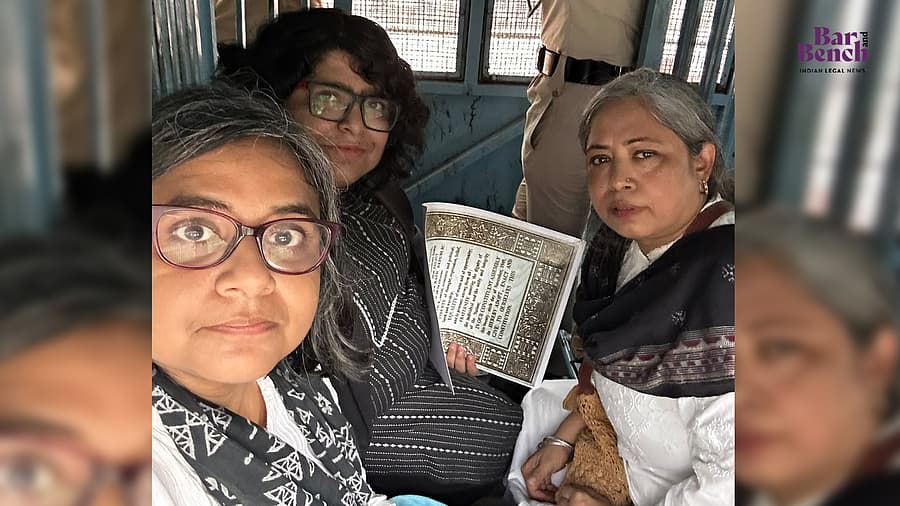
One of the lawyers who was detained conveyed through a message that the police personnel had not informed them of their destination. The message explicitly stated, "Two AORs- Sumita Hazarika and myself and two other lawyers have picked up in Vajra van by police personnel two of whom have no name tags. Don’t know where they are taking us." A photograph shared by the advocates depicted three women seated inside a police vehicle, with uniformed officers also present, corroborating aspects of the account.
Context and Allegations
The detentions occurred during a period of elevated security measures across Delhi, specifically in anticipation of demonstrations organized by the CJP. While the main protest was slated for Jantar Mantar, the police action extended to areas near the Supreme Court, indicating a broad scope of security operations. This proactive approach by law enforcement led to the apprehension of legal professionals who were in the vicinity.
Concerns were immediately voiced by the detained lawyers regarding the conduct of the police. The allegation that officers lacked name tags and failed to disclose the destination of those taken into custody points to potential procedural irregularities. Such actions can undermine transparency and due process, particularly when dealing with members of the legal fraternity who are often involved in upholding these very principles.
Unverified Reports and Broader Implications
Beyond the confirmed detentions, additional messages circulated among lawyers, suggesting a significantly larger scale of police action. These unverified claims indicated that approximately 100 advocates had been detained and subsequently transported to the Yamuna Sports Complex. However, the total number of individuals taken into custody and the specific grounds cited by the police for these actions could not be independently verified at the time.
This incident, involving the detention of Supreme Court advocates like Sumita Hazarika, serves as a critical reminder for legal professionals in India regarding the potential for detention during public demonstrations. It underscores the necessity for lawyers to understand their rights and the limits of police authority when participating in or observing protests, especially near sensitive government institutions. The unfolding situation highlights ongoing tensions between the right to protest and state security measures.
Practical Implications
This incident serves as a critical reminder for legal professionals in India regarding the potential for detention during public demonstrations, necessitating an understanding of their rights and the limits of police authority when participating in or observing protests near sensitive government institutions.
Source
How does this affect you?
Get an AI analysis of this article grounded in your jurisdictions, practice areas, and any policy documents you've uploaded to Wansom.
Finish Reading the Full Story and the Expert Analysis.
Get the latest legal & regulatory intelligence in India
Wansom is AI and can make mistakes.