
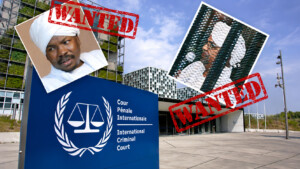
Sudanese Civil Society Demands ICC Arrest Warrants for Al Bashir, Haroun
Summary
- Sudanese civil society groups have formally urged the international community to secure the arrest and transfer of ICC indictees Ahmed Haroun and Omar Al Bashir.
- The appeal was prompted by Haroun's recent high-profile media appearance, which victims and activists viewed as a provocation.
- General Abdelfattah El Burhan is held responsible for obstructing international justice by failing to comply with UN Security Council Resolution 1593.
- Haroun faces 20 counts of crimes against humanity and 22 counts of war crimes, while Al Bashir is accused of war crimes, crimes against humanity, and genocide, all related to the Darfur conflict.
- The groups demand stronger international action, including an end to impunity and enforcement of UN resolutions, as essential for peace in Sudan.
Renewed Calls for Justice
The persistent legal risks associated with non-compliance with international justice obligations by state actors are starkly highlighted by these developments.
A coalition of Sudanese civil society organizations, human rights groups, and prominent public figures has issued an urgent appeal to the global community, demanding the immediate arrest and transfer of International Criminal Court (ICC) indictees, including Ahmed Haroun and former dictator Omar Al Bashir, to The Hague. This collective plea was formalized in a memorandum dispatched to key international officials, including the UN Security Council, the UN secretary-general, the European Commission, and the ICC prosecutor, among others. The initiative underscores a profound frustration with the perceived lack of progress in securing justice for victims of Sudan's conflicts.
The catalyst for this renewed push was a recent high-profile media appearance by Ahmed Haroun, a former leader of the now-disbanded National Congress Party and a person wanted by the ICC. His four-hour podcast interview ignited significant outrage among Sudanese activists and victims, who viewed it as a direct affront. Signatories to the memorandum condemned Haroun's platform use, accusing him of attempting to discredit the December revolution, openly endorsing the ongoing conflict, advocating for perpetual military rule, and actively undermining efforts towards a ceasefire, all while promoting the resurgence of the previous regime. Haroun has faced ICC charges since April 2007, encompassing 20 counts of crimes against humanity and 22 counts of war crimes stemming from alleged atrocities committed in Darfur during 2003 and 2004. Similarly, Omar Al Bashir faces ICC charges for war crimes, crimes against humanity, and genocide.
Obstruction of International Justice
The memorandum explicitly holds General Abdelfattah El Burhan, Sudan's de facto head of state and commander-in-chief of the Sudanese Armed Forces, both politically and legally accountable for what the groups describe as the obstruction of international justice. The signatories assert that Sudanese authorities have deliberately failed to uphold their legal obligations under UN Security Council Resolution 1593, a pivotal resolution adopted in 2005 that referred the situation in Darfur to the ICC. This alleged non-compliance is seen as a direct challenge to the international legal framework established to address grave crimes.
Furthermore, the civil society groups condemn the military authorities for several other actions, including the alleged release of internationally wanted suspects, among them Al Bashir and Haroun. They also point to the creation and integration of armed militias and the rejection of crucial peace initiatives and humanitarian truces. These actions, according to the memorandum, have significantly exacerbated Sudan's humanitarian crisis, which is now characterized as the world's worst, amidst the brutal conflict between the Sudanese Armed Forces and the Rapid Support Forces (RSF) that commenced in April 2023. The persistent legal risks associated with non-compliance with international justice obligations by state actors are starkly highlighted by these developments.
Demands for Global Accountability
In their comprehensive appeal, the organizations implore the international community to take more decisive action. They urge for unequivocal statements condemning the de facto authorities' failure to meet their obligations, alongside strengthened protection measures for victims. A specific call was made for the enforcement of UN Security Council Resolution 1325, which focuses on safeguarding women from sexual violence and other abuses in conflict zones. The overarching demand is for an end to impunity and the implementation of firm measures, targeting both individuals and institutions, to prevent the erosion of the Security Council's authority and the integrity of international justice in conflict-affected regions, including Darfur, Kordofan, and Wad Madani.
The memorandum concludes by emphasizing that achieving justice for victims and ending impunity are not merely desirable outcomes but are indispensable prerequisites for establishing a just, inclusive, and lasting peace within Sudan. This sentiment aligns with previous international calls for accountability; for instance, the United States had previously urged for accountability regarding atrocities against Sudanese civilians, following reports of Ahmed Haroun's arrest. Massad Boulos, a senior adviser to US President Donald Trump for Arab and African affairs, acknowledged Haroun's arrest on X, noting that the US had sanctioned Haroun, a former Minister of State for the Interior and a key figure in the former ruling National Congress Party, for his involvement in atrocities. Lawyers and compliance officers should monitor the international community's response to these renewed calls for the arrest of ICC indictees, as increased pressure on Sudan could lead to further sanctions or diplomatic actions impacting legal and business operations in the region.
Practical Implications
Lawyers and compliance officers should monitor the international community's response to these renewed calls for the arrest of ICC indictees, as increased pressure on Sudan could lead to further sanctions or diplomatic actions impacting legal and business operations in the region. This development underscores the persistent legal risks associated with non-compliance with international justice obligations by state actors.
Source
How does this affect you?
Get an AI analysis of this article grounded in your jurisdictions, practice areas, and any policy documents you've uploaded to Wansom.
Finish Reading the Full Story and the Expert Analysis.
Get the latest legal & regulatory intelligence in Sudan
Wansom is AI and can make mistakes.