
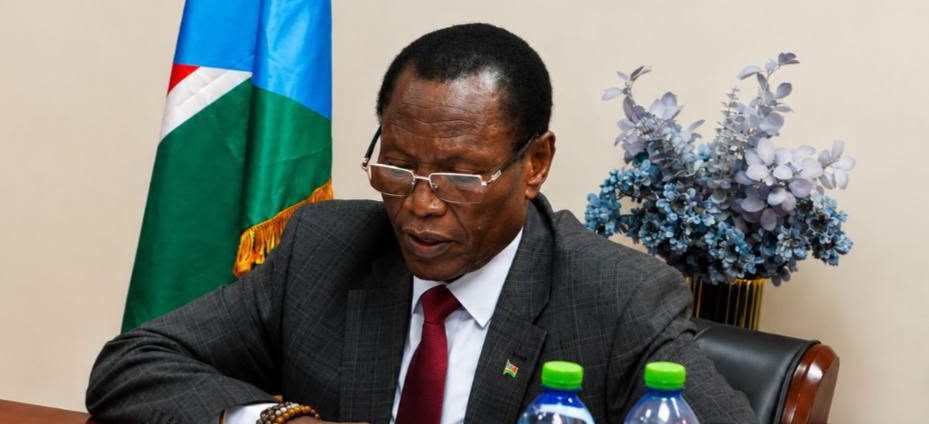
South Sudan: Summons Western Envoys for 'Inappropriate' Election Statement
Summary
- South Sudan summoned the ambassadors of Germany, Japan, Norway, and the United States over a joint statement concerning upcoming December elections.
- The diplomatic statement urged South Sudanese leaders to revive political dialogue, reject violence, and strengthen accountability.
- Foreign Minister James Pitia Morgan described the envoys' statement as inappropriate and divisive, emphasizing national ownership and non-interference.
- The summons followed a public dispute between Vice President Rebecca Nyandeng de Mabior and the presidency regarding national direction and leadership.
- The government reaffirmed its commitment to the 2018 peace agreement and preparations for the December elections amidst rising tensions.
Diplomatic Row Over Election Statement
South Sudanese have waited far too long to see a future of peace and prosperity, which could still be achieved if the right decisions are made by the country's leaders.
South Sudan recently summoned the ambassadors representing Germany, Japan, Norway, and the United States, following a joint statement issued by the four nations. The diplomatic intervention, which occurred on a Thursday, centered on the envoys' call for South Sudanese leaders to revitalize political dialogue, reject violence, and enhance accountability in the lead-up to the December elections. Foreign Minister James Pitia Morgan conveyed the government's strong disapproval, characterizing the statement as both inappropriate and divisive, particularly given the nation's ongoing preparations for the crucial electoral process.
The joint statement, released on Wednesday after the ambassadors met with Vice President Rebecca Nyandeng de Mabior in Juba, underscored the urgent need for authentic inter-party dialogue to pave South Sudan's path to peace. The diplomats specifically urged political leaders to abandon violence as a means of resolving disagreements and advocated for public revenues to be directed towards essential services and robust accountability mechanisms. They asserted that such measures were vital for fostering conditions conducive to private investment, bolstering security, and upholding the rule of law. The envoys articulated a shared hope for a future of peace and prosperity in South Sudan, noting that its citizens had endured a prolonged wait for such a reality, which they believed remained attainable if the country's leaders made appropriate decisions.
Internal Political Discord Precedes Diplomatic Intervention
The diplomatic intervention by the South Sudan Germany Japan Norway US ambassadors emerged against a backdrop of escalating internal political tensions, notably an unusually public disagreement between Vice President Nyandeng and the presidency. This discord became evident after remarks made by Nyandeng on August 21 at a requiem Mass for veteran politician Kosti Manibe Ngai in Juba. During her address, Nyandeng openly questioned the nation's trajectory and whether the current leadership benefited from the same level of oversight and counsel that characterized the era of the late Sudan Peoples Liberation Movement (SPLM) leader, Dr. John Garang, during the liberation struggle. She also raised concerns about the efficacy of senior government roles if they failed to improve the lives of ordinary South Sudanese, revealing that she sometimes went up to two years without meeting President Salva Kiir.
Two days later, President Kiir's office issued a robust response, defending his record in the liberation struggle and dismissing any attempts to attribute the movement's achievements to a select few individuals. The presidency emphasized the collective nature of the liberation struggle, highlighting Kiir's enduring involvement and his relationship with Garang. It also pointed to the upcoming December elections, suggesting that those who perceived government failures should present their case directly to the voters. This public dispute was subsequently followed by controversy surrounding a planned trip by Nyandeng to Kenya for official engagements, including a public lecture on August 25. Despite her office submitting a request for presidential clearance on August 13, the necessary approval was not granted by her scheduled departure date of August 24, leading to the cancellation of her trip, though neither party publicly linked the delay to her earlier critical remarks.
Government's Stance on Diplomatic Norms
During the summons, Foreign Minister James Pitia Morgan underscored the South Sudanese government's firm stance on national ownership and adherence to established diplomatic norms. He specifically highlighted the principle of non-interference in the internal affairs of South Sudan, asserting that sensitive political matters should be addressed through appropriate and recognized diplomatic channels. This emphasis on diplomatic non-interference reflects the government's perspective on how international partners should engage with its domestic political processes.
Minister Morgan also took the opportunity to reaffirm the government's unwavering commitment to the provisions of the 2018 peace agreement and its ongoing preparations for the December elections. He called upon all political stakeholders, as well as regional and international partners, to actively contribute to maintaining a peaceful and conducive environment essential for the successful execution of the electoral process. The summoned South Sudan Germany Japan Norway US ambassadors were afforded the opportunity to articulate the rationale and intentions behind their joint statement.
Implications for Stability and Governance
The recent South Sudan summons Western envoys election statement signals escalating political and diplomatic tensions within the country as it approaches the critical December elections. This incident, coupled with the public disagreements between high-ranking officials and the government's firm stance on diplomatic non-interference, could significantly impact the stability of the operating environment for foreign businesses and investments in the region. The calls for South Sudan election political dialogue, accountability, and rule of law by the Western envoys, while framed as supportive, have clearly been perceived as an overstep by Juba.
For lawyers advising clients with interests in South Sudan, these developments necessitate a thorough assessment of potential political risks. Such risks include the possibility of policy shifts, disruptions to governance, or changes in the regulatory landscape, particularly those related to calls for greater accountability and adherence to the rule of law. The government's commitment to the 2018 peace agreement and the electoral process remains a key factor, but the underlying tensions suggest a complex and potentially volatile period ahead for the nation's political future.
Practical Implications
This incident signals escalating political and diplomatic tensions in South Sudan ahead of the December elections, which could impact the stability of the operating environment for foreign businesses and investments. Lawyers advising clients in the region should assess potential political risks, including policy shifts or disruptions related to calls for accountability and rule of law.
Source
Source: Original reporting via {source}
How does this affect you?
Get an AI analysis of this article grounded in your jurisdictions, practice areas, and any policy documents you've uploaded to Wansom.
Finish this article free. Just your email for instant unlock.
Wansom is AI and can make mistakes.