
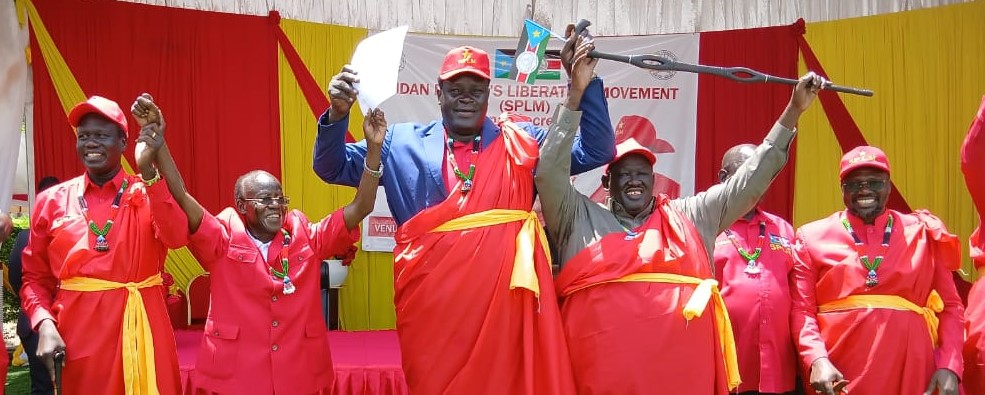
South Sudan SPLM Absorbs Agwelek-Kit-Gwang Faction: Lt. Gen. Johnson Olony's Allegiance Shift
Summary
- The SPLM has formally absorbed members of the Agwelek-Kit-Gwang faction, integrating its members into the ruling party.
- Lt. Gen. Johnson Olony declared his allegiance to President Salva Kiir's party ahead of elections scheduled for December 22, 2026.
- The integration raises concerns about the neutrality of the armed forces in South Sudan and whether conditions exist for credible elections.
- The SPLM's move may potentially violate constitutional provisions requiring a distinction between military and partisan functions.
- South Sudan is due to hold its first elections since gaining independence in 2011 under the 2018 Revitalized Agreement on the Resolution of the Conflict in South Sudan (R-ARCSS).
What Happened
The integration raises concerns about the neutrality of the armed forces and whether conditions exist for credible elections.
The Sudan Peoples Liberation Movement (SPLM) has formally absorbed members of the Agwelek-Kit-Gwang faction, marking a significant shift in Lt. Gen. Johnson Olony's political alignment. The move was announced at a ceremony at the SPLM House in Juba on Saturday, where Olony declared his allegiance to President Salva Kiir's party ahead of elections scheduled for December 22, 2026. This development brings an end to the faction's separate political identity and integrates its members into the ruling party. SPLM Secretary General James Wani Igga welcomed the new members, calling for peace, unity, and political dialogue as the country prepares for the elections. The integration follows months of political engagements between the SPLM leadership and representatives of the Agwelek-Kit-Gwang faction that began in early 2024.
Legal Context
The absorption of the Agwelek-Kit-Gwang faction into the SPLM raises concerns about the neutrality of the armed forces in South Sudan. Article 151(2) of the Transitional Constitution provides that the South Sudan Peoples Defence Forces (SSPDF) shall be a non-partisan national institution, while Article 152 requires a distinction between military and partisan political functions. Section 15(2)(a) of the Political Parties Act further stipulates that members of the organized forces and law-enforcement agencies shall not be members of any political party. The integration of Lt. Gen. Johnson Olony's Agwelek forces into the SSPDF in January 2025 has already sparked questions about the blurring of lines between military and partisan functions. This development may potentially violate these constitutional provisions, which aim to maintain the neutrality of the armed forces.
Why It Matters
The absorption of the Agwelek-Kit-Gwang faction into the SPLM marks a significant shift in Lt. Gen. Johnson Olony's political alignment ahead of the December 22, 2026 elections. This development raises questions about the neutrality of the armed forces and whether President Salva Kiir's camp is genuinely committed to holding free and fair elections. The integration also highlights the challenges facing South Sudan as it prepares for its first elections since gaining independence in 2011 under the 2018 Revitalized Agreement on the Resolution of the Conflict in South Sudan (R-ARCSS). The vote has been postponed repeatedly, with opposition groups, civil society organisations, and international observers questioning whether conditions exist for credible elections.
Practical Implications
This development raises concerns about the neutrality of the armed forces in South Sudan, as Lt. Gen. Johnson Olony's entry into the ruling SPLM may blur the lines between military and partisan political functions, potentially violating Article 151(2) of the Transitional Constitution.
Source
How does this affect you?
Get an AI analysis of this article grounded in your jurisdictions, practice areas, and any policy documents you've uploaded to Wansom.
Wansom is AI and can make mistakes.