
South Sudan: Dismisses Election Prerequisites to UN Security Council
Summary
- South Sudan informed the UN Security Council that preparations for December 2026 elections are manageable despite challenges.
- Ambassador Sabino Edward Nyawella Amaikwey stated that a national census and permanent constitution are not legal prerequisites for the vote.
- The government defended recent amendments to the R-ARCSS, which removed the census and constitution as election conditions.
- Insecurity, economic pressures, and international sanctions were identified as the main obstacles to the electoral process.
- The government rejected allegations of obstructing UNMISS and criticized aspects of the UN Secretary-General's report.
Government's Stance on December Elections
By asserting that a national census and a permanent constitution are not legal prerequisites for the vote, and by unilaterally amending the R-ARCSS to remove these conditions, the government signals a determination to proceed with elections despite widespread concerns from UN officials, peace monitors, and opposition groups.
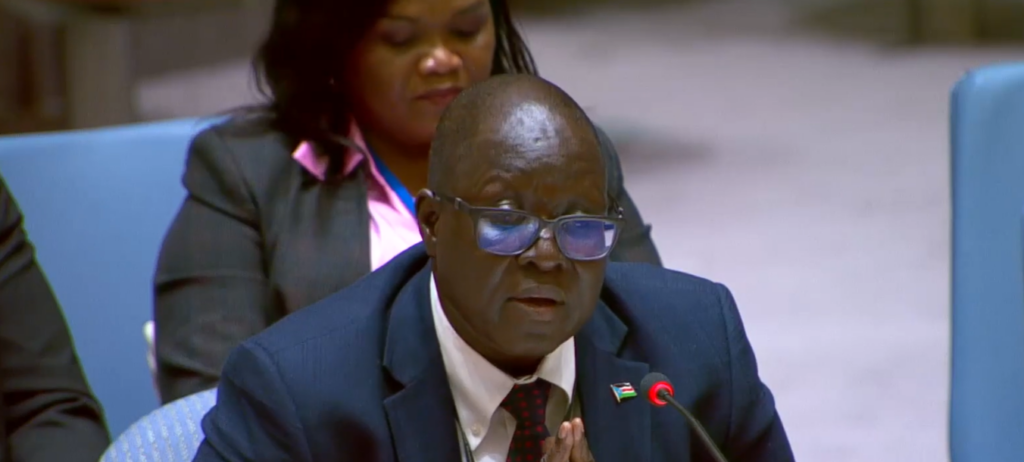
South Sudan recently presented its position to the United Nations Security Council, asserting that while challenges persist, preparations for the planned December 2026 elections are manageable. Ambassador Sabino Edward Nyawella Amaikwey, the nation's Deputy Permanent Representative to the UN, conveyed the government's unwavering commitment to enabling its citizens to elect their leaders on schedule. He acknowledged existing difficulties but expressed confidence that these could be overcome through sustained national efforts and collaboration with regional and international partners. This declaration came in response to prior warnings from UN officials and the country's peace monitor, who had informed the Security Council that crucial political, security, and institutional conditions necessary for credible, peaceful, and inclusive elections by December remained unfulfilled.
Amaikwey specifically identified ongoing insecurity caused by armed groups, severe economic constraints, and the impact of international sanctions as the primary impediments to the electoral process. He emphasized that these principal obstacles are well-understood, further highlighting the need for greater clarity regarding the benchmarks required for the lifting of these restrictive measures. Despite these acknowledged hurdles, the government remains resolute in its determination to proceed with the South Sudan December 2026 elections as planned.
Legal and Procedural Disputes
A key point of contention addressed by the South Sudanese government at the UN Security Council involved the legal framework for the upcoming vote. Ambassador Amaikwey firmly dismissed concerns that the absence of a national census or a permanent constitution should necessitate a delay in the December 2026 elections. He argued that neither of these elements constitutes a legal prerequisite for holding elections, underscoring that the immediate priority is the compilation of a credible voter register. Amaikwey referenced the country's independence referendum as a precedent, demonstrating that democratic choice can be exercised effectively without an immediate prior census. This stance directly challenges the notion that these are essential South Sudan election prerequisites UN Security Council members might expect.
The government also defended recent amendments to the 2018 Revitalized Peace Agreement (R-ARCSS), rejecting claims that these changes were unilateral. Amaikwey explained that these modifications were undertaken within the established framework of the accord, following prolonged delays in its implementation. He contended that the temporary absence of certain leaders, whether due to personal choice or ongoing legal processes, could not indefinitely suspend an agreement designed to benefit the entire nation. This statement implicitly referred to the detention and ongoing trial of suspended First Vice President Riek Machar, whose arrest in March 2025 has exacerbated political divisions and raised significant concerns among both regional and international partners regarding the future stability of the peace agreement. The South Sudan parliament's recent R-ARCSS amendments elections, specifically removing the completion of a permanent constitution and a population census as conditions for the vote, have drawn criticism from opposition groups and some international partners, highlighting the controversial nature of these South Sudan electoral law changes.
Obstacles and International Relations
Beyond the legal arguments, South Sudan's representative, Sabino Edward Nyawella Amaikwey UN, also addressed broader operational and diplomatic challenges. He criticized certain aspects of the UN Secretary-General’s latest report, advocating for future reporting to be based on what he termed "verified facts and balanced analysis." Specifically, Amaikwey objected to the report's characterization of some armed groups as "armed youths," suggesting that organized entities like the "White Army" should be identified consistently when evidence permits.
Furthermore, the government rejected allegations that it was deliberately obstructing the operations of the UN Mission in South Sudan (UNMISS). Amaikwey clarified that any restrictions on movement were implemented with the intention of protecting UN personnel operating in insecure areas, rather than to impede the mission's work. He attributed some operational shortcomings to inherent capacity constraints, which he stated have been further exacerbated by the existing international sanctions regime. Despite these various challenges and points of contention, the government reiterated its commitment to the full implementation of the peace agreement and to fostering continued cooperation with the United Nations, the African Union, and the Intergovernmental Authority on Development (IGAD).
Why It Matters
The firm position articulated by South Sudan at the UN Security Council regarding its December 2026 elections carries significant implications for the nation's political trajectory and its relationship with the international community. By asserting that a national census and a permanent constitution are not legal prerequisites for the vote, and by unilaterally amending the R-ARCSS to remove these conditions, the government signals a determination to proceed with elections despite widespread concerns from UN officials, peace monitors, and opposition groups. This approach, particularly the South Sudan electoral law changes, creates a high-risk political environment, potentially deepening existing divisions and inviting further scrutiny from international partners.
The ongoing detention and trial of suspended First Vice President Riek Machar, coupled with the government's justification for proceeding with the agreement's implementation despite his absence, underscores the fragility of the peace process. The government's criticism of UN reporting and its defense against allegations of obstructing UNMISS also highlight a strained relationship with key international bodies. For stakeholders and observers, these developments emphasize the complex interplay of domestic political will, legal interpretations, and international oversight in shaping South Sudan's path toward stability and democratic governance. The government's insistence on holding the South Sudan December 2026 elections under these conditions will undoubtedly be a critical test of its commitment to an inclusive and credible political transition.
Practical Implications
The South Sudanese government's firm stance on proceeding with December elections, specifically its legal argument that a census and permanent constitution are not prerequisites, and its unilateral amendments to the R-ARCSS, signals a high-risk political environment. Lawyers advising clients operating in South Sudan must monitor these developments closely for implications on political stability, potential legal challenges to the election process, and the ongoing impact of international sanctions on operational capacity and compliance.
Source
How does this affect your business?
Get an AI analysis of this article grounded in your jurisdictions, practice areas, and any policy documents you've uploaded to Wansom.
Wansom is AI and can make mistakes.