
US Criticizes South Sudan Election Funding Pledges as 'Insincere'
Summary
- The U.S. accused South Sudan's leaders of using election promises to attract donor funding while failing to address humanitarian, economic, and security crises.
- U.S. Ambassador Jennifer Locetta stated that leaders made "insincere commitments on elections" for years instead of pursuing genuine peace and reforms.
- Between April and July, 418 people were killed, 400 injured, 122 abducted, and over 420,000 displaced by conflict in South Sudan.
- The U.S. criticized 86 UNMISS restrictions, including 84 movement limitations, imposed by the South Sudanese government.
- The U.S. insists that if elections proceed, they must be peaceful and financed by South Sudan's own resources, not external donor support.
US Slams South Sudan's Election Pledges
For clients involved in aid, investment, or operations within South Sudan, this development underscores the critical need for enhanced due diligence.
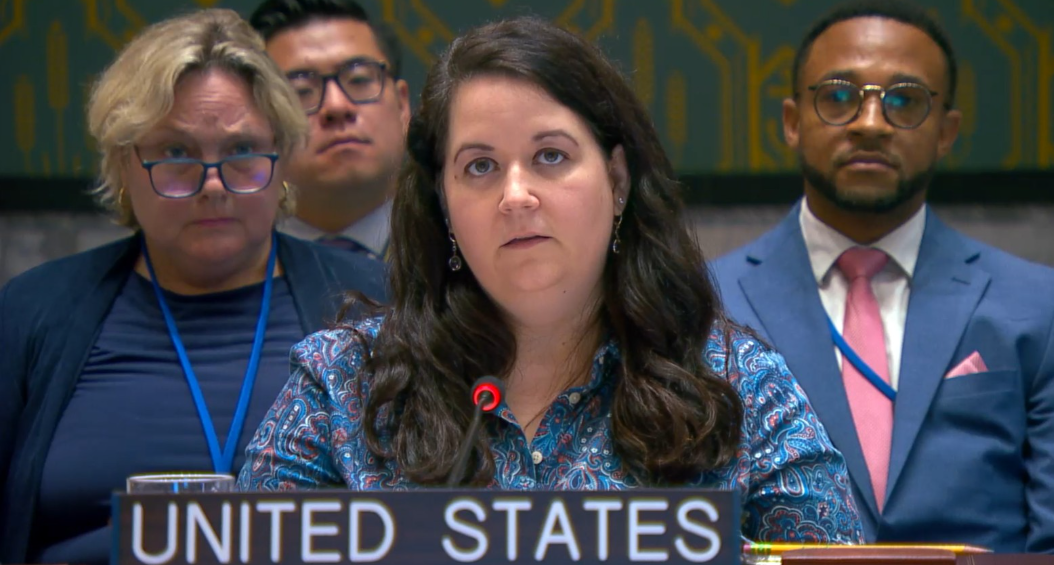
The United States has issued one of its most forceful public rebukes of South Sudan's leadership, accusing Juba of leveraging promises of elections to secure international donor funding while neglecting the nation's severe humanitarian, economic, and security crises. Speaking before the U.N. Security Council, U.S. Ambassador Jennifer Locetta, the Alternative Representative for Special Political Affairs, asserted that South Sudanese leaders have, for years, offered what she termed "insincere commitments on elections" rather than pursuing genuine peace and essential reforms. This pattern, she noted, persists even as the country anticipates elections slated for December.
Ambassador Locetta's remarks highlighted a consistent strategy by Juba to divert the international community's attention with these election pledges. She emphasized that this approach has allowed the underlying crises to deepen, rather than fostering the stability and development envisioned when South Sudan gained independence in 2011. The US Security Council South Sudan statement underscores Washington's growing frustration with the perceived lack of progress and accountability from the nation's political elite.
Escalating Crises and Operational Obstacles
Beyond the political posturing, Ambassador Locetta detailed a grim reality on the ground, pointing to a continuous rise in violence against civilians. U.N. figures cited by Locetta reveal a devastating period between April and July, during which at least 418 individuals were killed, 400 injured, 122 abducted, and over 420,000 displaced by ongoing conflict. This violence was exemplified by renewed fighting in Akobo shortly before Independence Day, involving the South Sudan Peoples Defence Forces (SSPDF) and the Sudan Peoples Liberation Movement-in-Opposition (SPLM-IO).
Further compounding the challenges, the U.S. envoy criticized the South Sudanese government for imposing UNMISS restrictions South Sudan, hindering the peacekeeping mission's vital work. Between April and July, the U.N. Mission in South Sudan (UNMISS) documented 86 violations of its Status of Forces Agreement, with 84 of these instances involving authorities restricting the mission's movements. Despite these significant obstacles, UNMISS has continued its mandate, protecting civilians, escorting humanitarian convoys, and actively working to de-escalate violence in conflict-affected regions, even as public resources are reportedly not being utilized for the benefit of citizens.
Conditions for Legitimate Elections and Lasting Peace
The United States articulated clear expectations should the South Sudan December elections proceed. Ambassador Locetta stressed that any elections must be conducted under peaceful conditions and, crucially, financed using the country's own resources rather than relying on external donor support. This stance forms a core part of the US criticism South Sudan election funding, pushing for self-reliance and accountability.
Achieving lasting peace in South Sudan, Locetta argued, necessitates direct political dialogue. However, she noted that such efforts are severely hampered by the current situation of suspended First Vice President Riek Machar, whose SPLM-IO is the second-largest signatory to the 2018 peace agreement. The fact that Riek Machar house arrest South Sudan continues, alongside his ongoing trial, makes meaningful dialogue exceedingly difficult. The U.S. urged South Sudanese leaders to prioritize peace over power and accountability over impunity, calling for an end to violence, a resumption of dialogue among peace agreement signatories, and full cooperation with UNMISS.
Implications for International Engagement
The strong US criticism South Sudan election funding and governance failures signals increased political risk and potential for heightened international scrutiny on resource allocation and leadership in the country. For clients involved in aid, investment, or operations within South Sudan, this development underscores the critical need for enhanced due diligence. The U.S. position, articulated by Jennifer Locetta South Sudan, suggests that international partners will be increasingly wary of commitments not backed by genuine reform and transparent resource management.
This firm stance from Washington implies that the international community may become less inclined to provide financial support if South Sudan's leaders continue to use election promises as a diversion. The emphasis on internal financing for elections and the call for leaders to choose accountability over impunity highlight a shift towards demanding tangible progress and responsible governance, rather than accepting superficial pledges. This could significantly impact the operational environment and funding landscape for various stakeholders in South Sudan.
Practical Implications
This signals increased political risk and potential for heightened international scrutiny on governance and resource allocation in South Sudan, impacting due diligence for clients involved in aid, investment, or operations in the country.
Source
Source: Original reporting via Reuters
How does this affect you?
Get an AI analysis of this article grounded in your jurisdictions, practice areas, and any policy documents you've uploaded to Wansom.
Wansom is AI and can make mistakes.