
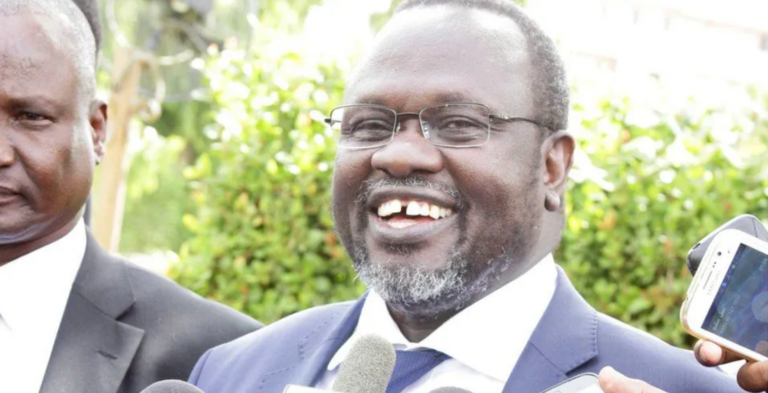
South Sudan Special Court: Riek Machar Trial Recording Ruling Postponed
Summary
- The Special Court delayed its ruling on a defense application for independent audio or video recording in the Riek Machar trial.
- Judges cited involvement in constitutional panel proceedings as the reason for not preparing the decision for the 108th session.
- The defense argues independent recordings would ensure an accurate account of the trial, while prosecutors opposed parts of the request and questioned its procedure.
- The court is expected to deliver its ruling on the South Sudan Riek Machar trial recording application on Wednesday, August 19.
- Machar and seven co-defendants face charges including treason, murder, and crimes against humanity related to a March 2025 incident in Nasir where 257 SSPDF soldiers were allegedly killed.
Court Delays Ruling on Recording Application
The court's eventual ruling on the Riek Machar court recording application will establish a crucial precedent regarding media access and the documentation of sensitive trials.
The Special Court overseeing the high-profile trial of suspended First Vice President Riek Machar and seven co-defendants recently postponed its decision on a defense request concerning the independent recording of proceedings. During what was scheduled as its 108th session, the court was expected to rule on an application by the defense team to permit its own audio or video recordings of the trial. However, Judge Stephen Simon Binjigwa, a member of the three-judge panel, announced that the judges had been unable to finalize their judgment.
Judge Simon explained that the panel's involvement in separate constitutional panel proceedings prevented them from preparing the necessary decision. The defense's application specifically sought permission to create additional audio or video records, arguing that such independent documentation would be crucial for ensuring a precise and accurate account of the trial's progression.
Prosecutors, for their part, voiced opposition to certain aspects of the defense's request. They also raised questions regarding the procedural method employed by the defense to submit the application, leaving the ultimate determination to the court. The case has now been adjourned, with the judges anticipated to deliver their ruling on the defense's recording request on Wednesday, August 19.
Grave Charges and Allegations
The proceedings at the Special Court center on serious accusations against Machar, who is listed as the fifth accused, and his seven co-defendants. They stand trial for their alleged roles in a violent incident that occurred in Nasir, located in Upper Nile state, during March 2025. This event reportedly resulted in significant casualties among government forces.
The defendants collectively face a range of grave charges, including treason, murder, conspiracy, terrorism, destruction of public property, and crimes against humanity. Prosecutors contend that forces affiliated with Machar’s Sudan Peoples Liberation Army in Opposition (SPLA-IO), alongside the White Army, were responsible for an attack on a military garrison in Nasir.
During this alleged assault, prosecutors claim that 257 soldiers from the South Sudan Peoples Defence Forces (SSPDF) were killed, a toll that included Commander General David Majur Dak. Furthermore, the prosecution asserts that military equipment valued at approximately $58 million was either destroyed or seized amidst the fighting. All defendants, including Riek Machar, have entered pleas of not guilty to the charges brought against them.
Precedent for Transparency in South Sudan Court Proceedings
The pending decision on the defense's application for independent audio and video recording in the Riek Machar trial holds considerable weight for the future of transparency and procedural standards within South Sudan's judicial system. The defense's rationale—that an independent record is essential for an accurate trial account—underscores a fundamental aspect of fair legal processes. This request, if granted, could significantly enhance public and legal scrutiny of high-profile court proceedings in the nation.
The court's eventual ruling on the Riek Machar court recording application will establish a crucial precedent regarding media access and the documentation of sensitive trials. It will clarify the extent to which external parties, beyond official court recorders, may capture and preserve the unfolding of legal arguments and testimonies. This is particularly relevant for a case involving a figure of Machar's prominence, where public interest and the need for an unimpeachable record are paramount.
The outcome will also implicitly address the Special Court South Sudan rules concerning evidence gathering and the integrity of the trial record. Should the court permit independent recording, it could signal a shift towards greater openness, potentially influencing future policies on Machar treason trial media access and broader South Sudan court proceedings recording practices. Conversely, a denial would reinforce existing limitations, making the justification for such a decision equally significant for understanding the court's stance on transparency.
Practical Implications
The eventual ruling on the defense's application for independent audio/video recording in the Riek Machar trial could establish a significant precedent regarding transparency and procedural rules for high-profile court proceedings in South Sudan. Lawyers should monitor this decision for its implications on evidence gathering, trial record accuracy, and potential changes to courtroom media policies that could affect future cases.
Source
How does this affect you?
Get an AI analysis of this article grounded in your jurisdictions, practice areas, and any policy documents you've uploaded to Wansom.
Wansom is AI and can make mistakes.