
South Sudan Kiir: Official Travel Permission Required for Officials
Summary
- President Salva Kiir reiterated a requirement for constitutional office holders to obtain permission for foreign travel.
- This directive was restated during an expanded caretaker government meeting in Juba, following Kiir's recent diplomatic visits.
- The reiteration follows an unverified October 3 document reportedly restricting foreign travel for senior officials for three months without Kiir's approval.
- Kiir dissolved the transitional unity government and legislative assemblies on September 22, establishing the current caretaker administration.
- The government reaffirmed its commitment to holding elections in December, a topic discussed during Kiir's recent visits to Kenya and South Africa.
President Kiir's Travel Directive Reaffirmed
However, the veracity and actual implementation of this October 3 document have not been independently confirmed.
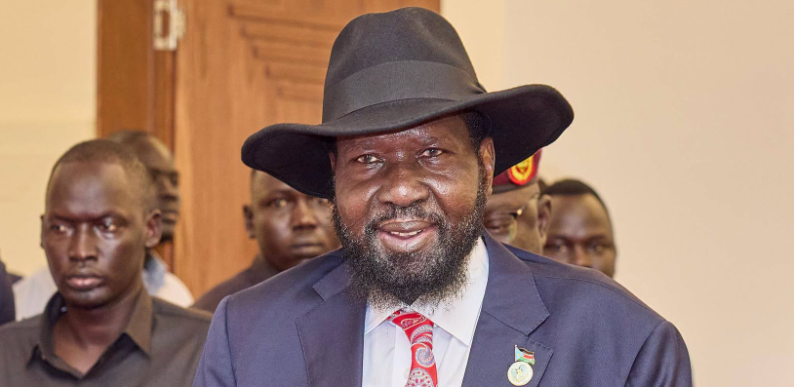
President Salva Kiir Mayardit has again emphasized that individuals holding constitutional offices in South Sudan must secure his explicit approval before undertaking foreign travel. This directive was reiterated by President Kiir on Saturday during a briefing to an expanded meeting of the caretaker government in Juba, following his recent diplomatic engagements abroad.
The restatement of this requirement follows the public circulation of a document dated October 3, which reportedly imposes restrictions on foreign travel for senior government officials and members of the organized forces. This alleged restriction is for a three-month period and requires permission directly from President Kiir, who also serves as the commander-in-chief. This indicates a clear intent to control the movement of key personnel.
However, the veracity and actual implementation of this October 3 document have not been independently confirmed. This lack of verification introduces a significant element of uncertainty regarding the precise scope and enforceability of the South Sudan government official travel ban, creating a complex situation for those affected by the directive.
Implications for Constitutional Office Holders
The directive, whether formally codified or reiterated verbally, creates a clear requirement for South Sudanese constitutional office holders to seek permission for foreign travel. Lawyers advising these officials or their employing entities must now contend with this explicit instruction from President Kiir, ensuring compliance to avoid potential repercussions.
The unverified nature of the underlying October 3 document, which outlines a three-month restriction, means that while the general principle of requiring permission is clear, the specific parameters of the South Sudan constitutional office travel restrictions remain somewhat ambiguous. This ambiguity necessitates careful legal interpretation and potentially direct clarification from the authorities.
President Kiir's dual role as head of state and commander-in-chief underscores the authority behind this Salva Kiir foreign travel directive, making compliance a critical consideration for all affected personnel. The need for President Kiir's commander-in-chief travel approval is now a central point for any official planning to leave the country, highlighting the centralized control over such movements.
Broader Political Landscape and Caretaker Government
This renewed focus on travel authorization emerges against a backdrop of significant political shifts in South Sudan. On September 22, President Kiir dissolved the transitional unity government and the nation’s legislative assemblies. This action led to the dismissal of the five vice-presidents and the establishment of a caretaker administration, which is currently responsible for overseeing government functions.
The expanded caretaker government meeting in Juba, where the directive was restated, is a key forum for this interim leadership. The Juba caretaker government travel policy is thus an integral part of its operational framework. The directive also comes as the country prepares for crucial elections.
A two-week inter-party dialogue, which concluded in Juba on October 7, specifically addressed election-related issues and preparations for the upcoming polls. During the expanded meeting, the government reaffirmed its commitment to holding these elections in December, signaling a path towards a more permanent political structure amidst these interim measures.
International Engagements and Electoral Support
President Kiir's own recent diplomatic visits to Kenya and South Africa provided the immediate context for his briefing to the caretaker government. During his visit to Nairobi, he met with Kenyan President William Ruto to discuss bilateral cooperation and South Sudan’s electoral preparations, emphasizing regional collaboration.
The South Sudanese government reported that Kenya expressed its readiness to support the electoral process, indicating international backing for the country's democratic transition. Similarly, in Pretoria, President Kiir held discussions with South African President Cyril Ramaphosa, who also conveyed support for the elections, reinforcing the international community's interest in stability.
The expanded caretaker cabinet subsequently reviewed the outcomes of these international engagements, alongside the progress made in the inter-party dialogue and security preparations for the electoral period. This comprehensive review highlights the ongoing efforts to stabilize the nation and prepare for its democratic future, even as internal travel policies, such as the South Sudan Kiir official travel permission requirement, are being clarified.
Practical Implications
Lawyers advising South Sudanese constitutional office holders or entities employing them must be aware of President Kiir's reiterated directive requiring permission for foreign travel, noting its potentially unverified status and the need for clarification to ensure compliance and avoid potential penalties or diplomatic issues.
Source
How does this affect you?
Get an AI analysis of this article grounded in your jurisdictions, practice areas, and any policy documents you've uploaded to Wansom.
Finish Reading the Full Story and the Expert Analysis.
Get the latest legal & regulatory intelligence in South Sudan
Wansom is AI and can make mistakes.