
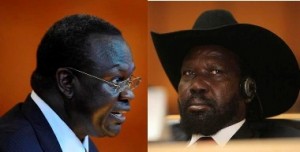
South Sudan Opposition: R-ARCSS Review Call Amid Peace Deal Crisis
Summary
- Eight South Sudanese opposition and civil society groups have urged IGAD to review the country's peace agreement.
- They claim the Revitalised Agreement on the Resolution of the Conflict in South Sudan (R-ARCSS) has collapsed, citing a constitutional and political crisis.
- Recent amendments to the R-ARCSS and electoral laws are criticized for undermining power-sharing and removing key electoral safeguards.
- The groups demand an inclusive national political dialogue to establish a binding constitutional settlement before participating in elections.
- They have called for an extraordinary summit involving IGAD, the African Union, and the United Nations to address the situation.
Opposition Demands Urgent Review of South Sudan Peace Deal
The groups contend that the transitional arrangements concluded on September 22 without an agreed successor framework, plunging the nation into what they describe as a constitutional and political crisis.
A coalition of eight South Sudanese opposition groups and civil society organizations has formally requested that the regional bloc IGAD undertake a comprehensive review of the nation's peace agreement and facilitate an inclusive national political dialogue. In a joint letter dispatched on September 23, addressed to IGAD Executive Secretary Workneh Gebeyehu and African Union Commission Chairperson Mahmoud Ali Youssouf, these groups asserted that the Revitalised Agreement on the Resolution of the Conflict in South Sudan (R-ARCSS) has ceased to function as the governing framework for the country's political transition.
Electoral and Constitutional Amendments Spark Alarm
The groups contend that the transitional arrangements concluded on September 22 without an agreed successor framework, plunging the nation into what they describe as a constitutional and political crisis. This critical juncture necessitates immediate intervention, according to the signatories, who are advocating for a fundamental re-evaluation of the current political trajectory. Their South Sudan opposition R-ARCSS review call underscores deep-seated concerns about the viability of the existing accord. Central to the opposition's grievances are recent modifications to the 2018 peace agreement and the country's electoral laws. They specifically highlighted July amendments to the R-ARCSS, which, they argue, severed the crucial link between the holding of elections and the prior completion of a permanent constitution and a national census. This change, they claim, removes vital safeguards intended to ensure a stable and legitimate transition.
Further exacerbating these concerns are the South Sudan electoral law changes. On September 21, President Salva Kiir Mayardit assented to amendments to the National Elections Act. These revisions would permit the president to remain in office throughout the electoral period while simultaneously allowing for the removal of the first vice-president and other vice-presidents. The signatories argue that these South Sudan peace agreement amendments fundamentally undermine the power-sharing structure originally established under the peace agreement, which mandates a president, a first vice-president, and other vice-presidents, raising significant R-ARCSS power-sharing concerns.
Unfulfilled Promises and a Call for Dialogue
The opposition groups also pointed to a series of unfulfilled commitments under the R-ARCSS, which was initially signed in 2018. They cited failures in key areas such as security-sector unification, institutional reforms, transitional justice mechanisms, the establishment of a permanent constitution, and the inability to conduct credible elections. These shortcomings, they maintain, demonstrate the agreement's ineffectiveness in achieving its core objectives.
In light of these perceived failures, the groups declared their refusal to participate in or legitimize any future elections unless what they termed the minimum conditions for free, fair, peaceful, inclusive, and credible elections are demonstrably met. Instead of proceeding with elections under the current conditions, they proposed an inclusive national political dialogue. This IGAD South Sudan political dialogue would involve a broad spectrum of stakeholders, including the government, various political parties, opposition movements, civil society organizations, religious and traditional leaders, women, young people, and other key constituencies.
International Engagement Sought Amidst Crisis
The proposed dialogue aims to produce a binding constitutional settlement. This settlement would comprehensively address critical aspects of governance, including the system of government, the distribution and exercise of political power, the protection of rights and freedoms, institutional accountability, security governance, and the overarching framework for democratic transition. This ambitious proposal seeks to lay a new foundation for South Sudan's future political landscape.
To facilitate this process, the groups urged IGAD, in collaboration with the African Union, the United Nations, the Reconstituted Joint Monitoring and Evaluation Commission, and other international partners, to convene an extraordinary summit. The purpose of this summit would be to review the current status of the R-ARCSS and to initiate the proposed political process. The letter, which represents a significant South Sudan opposition R-ARCSS review call, was signed by prominent figures including Nathaniel Oyet Perieno of the SPLM/A-IO and Dr. Goi Jooyul Yol of the SPLM/A-IO Kit-Gwang, among others. Copies were also sent to high-level regional and international officials, including Djiboutis President Ismaïl Omar Guelleh, UN Secretary-General António Guterres, UNMISS head Anita Kiki Gbeho, and representatives from the United States, United Kingdom, and Norway, underscoring the international dimension of their appeal.
Practical Implications
Lawyers and compliance officers with interests in South Sudan should monitor these developments closely for increased political and regulatory risk. The potential collapse of the R-ARCSS and proposed constitutional settlement could significantly alter the legal and operational landscape, impacting investment, contracts, and compliance obligations.
Source
How does this affect you?
Get an AI analysis of this article grounded in your jurisdictions, practice areas, and any policy documents you've uploaded to Wansom.
Finish Reading the Full Story and the Expert Analysis.
Get the latest legal & regulatory intelligence in South Sudan
Wansom is AI and can make mistakes.