
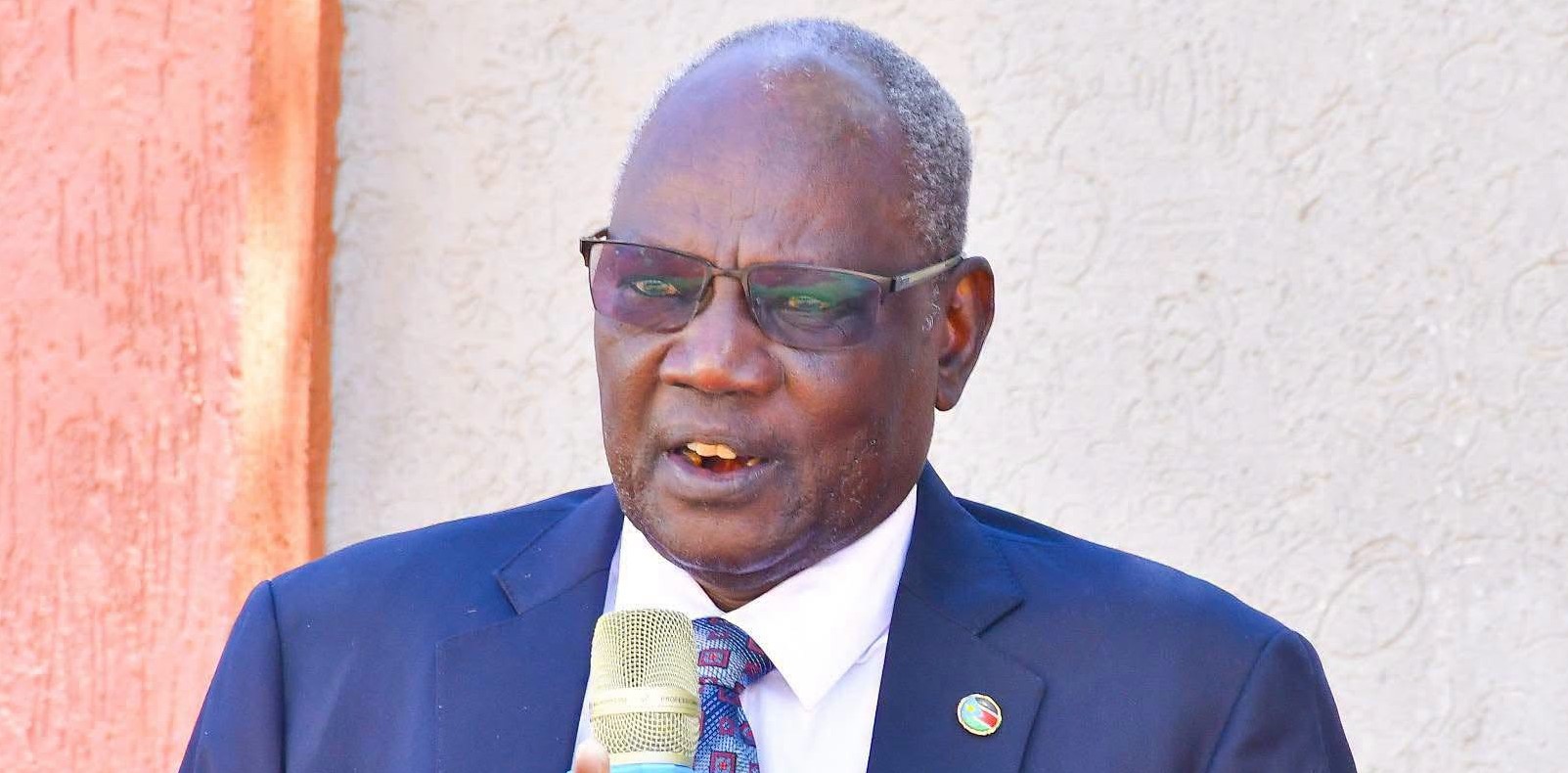
Makuei Cautions: EAC Confederation Constitution Drafting Complex
Summary
- Michael Makuei Lueth, South Sudan's caretaker minister for EAC Affairs, warned that drafting a constitution for the proposed East African Community political confederation will be a lengthy process.
- Makuei cited South Sudan's own difficulties in completing a permanent constitution, which faced extensions and ultimately saw the requirement removed from election conditions.
- The minister urged a broad, multi-stage consultation process for the EAC, starting with community input before developing a "zero draft."
- These consultations, launched in Juba, are part of the EAC's plan for a political confederation as a transitional model towards a political federation.
- South Sudan is the fifth EAC partner state to hold these consultations, following Burundi, Uganda, Kenya, and Rwanda, with discussions expected to last two weeks across several cities.
Regional Integration Efforts Face Cautionary Note
His emphasis on a methodical, multi-stage consultation process, drawing lessons from national challenges, signals that the establishment of the EAC political confederation will be a prolonged endeavor.
Michael Makuei Lueth, South Sudan's caretaker minister for East African Community Affairs, has issued a significant warning regarding the timeline for developing a constitution for the proposed East African Community (EAC) political confederation. Speaking in Juba at the official launch of national consultations on the confederation, Minister Makuei underscored the inherent complexity of the task, cautioning constitutional experts against underestimating its scope. He articulated that constitution-making is fundamentally a process, not a singular event, implying it will necessitate considerable time and effort.
His remarks set a measured tone for the initial discussions, which aim to gather perspectives from South Sudanese citizens on critical aspects of the proposed confederation. These include how the new entity would be financed, the method for adopting its foundational constitution, and the specific areas where member states would enhance their cooperation. The minister's intervention highlights the intricate challenges involved in forging a unified legal framework for the regional bloc.
South Sudan's Constitutional Hurdles Inform Regional Advice
Makuei's cautionary stance is deeply rooted in South Sudan's own arduous journey to establish a permanent constitution. Drawing on his experience as a former justice minister, he recounted the nation's struggles to complete this vital document within the deadlines initially stipulated by its revitalized peace agreement. The process proved so challenging that the peace accord was extended twice in an attempt to provide sufficient time for constitutional finalization. Ultimately, the government found it necessary to remove the requirement for a permanent constitution as a precondition for holding elections, acknowledging the difficulty of meeting the original timeframe.
Leveraging these national lessons, Makuei advised that the EAC's constitutional development should adopt a methodical, multi-stage approach. He proposed that the process must begin with extensive, broad-based consultations involving communities and various stakeholders across the member states. The insights gathered from these initial discussions would then be meticulously harmonized into a preliminary "zero draft." This initial draft, he emphasized, would not be a final product but merely the starting point for subsequent, more focused rounds of consultation and refinement.
The Path to a Political Confederation
The ongoing consultations in South Sudan are a pivotal component of the East African Community's broader strategic objective to establish a political confederation. This confederation is envisioned as a transitional model, serving as an intermediate step toward the bloc's ultimate, longer-term aspiration of achieving a full political federation. The discussions are designed to elicit comprehensive public input on the operational and structural elements of this future regional body.
EAC Secretary-General Stephen Patrick Mbundi reinforced the imperative of widespread participation, stressing that the constitution cannot be developed solely by governments or a select group of experts. He called for the views of citizens from all member states to be genuinely reflected throughout the process. South Sudan represents the fifth EAC partner state to host these crucial consultations, following similar engagements that have already taken place in Burundi, Uganda, Kenya, and Rwanda. The consultations in South Sudan are scheduled to continue for two weeks, extending beyond the capital, Juba, to include Rumbek, Wau, and Bor. During this period, constitutional experts are tasked with examining various models of confederation, reviewing the existing EAC Treaty and its associated protocols, gathering public opinions, and ultimately preparing a draft constitution based on the agreed framework.
Implications for Regional Governance
Minister Makuei's pronouncements underscore the intricate and time-intensive nature of forging a new constitutional framework for the East African Community. His emphasis on a methodical, multi-stage consultation process, drawing lessons from national challenges, signals that the establishment of the EAC political confederation will be a prolonged endeavor. This approach, prioritizing comprehensive stakeholder engagement and iterative drafting, highlights the significant legal and political complexities inherent in advancing regional integration through a new foundational document.
The ongoing consultations in Juba and other South Sudanese cities are therefore not merely procedural steps but critical initial phases in what is anticipated to be a lengthy and demanding journey toward a unified regional governance structure. The careful consideration of funding, adoption mechanisms, and areas of cooperation reflects the depth of planning required for such a transformative regional undertaking.
Practical Implications
Lawyers advising on regional integration or cross-border operations within the EAC should recognize that the establishment of a political confederation will be a protracted and complex process, requiring close monitoring of ongoing national consultations and potential delays in the finalization of a new foundational legal framework. This signals continued uncertainty regarding the future legal and political landscape of the bloc.
Source
How does this affect you?
Get an AI analysis of this article grounded in your jurisdictions, practice areas, and any policy documents you've uploaded to Wansom.
Finish Reading the Full Story and the Expert Analysis.
Get the latest legal & regulatory intelligence in South Sudan
Wansom is AI and can make mistakes.