
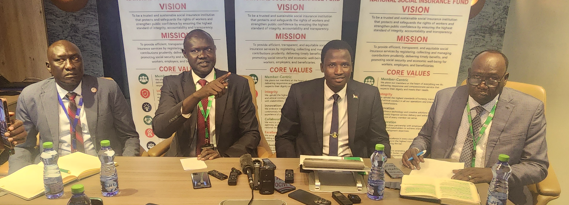
South Sudan NSIF: Employer Registration Directive for October 2026
Summary
- South Sudan's National Social Insurance Fund (NSIF) mandates employer and worker registration starting October 1, 2026.
- The directive applies to private sector entities, UN agencies, diplomatic missions, and NGOs employing South Sudanese nationals.
- A three-month grace period for registration is provided, after which penalties under the National Social Insurance Fund Act 2023 will apply.
- Employers must contribute 8% and employees 17%, totaling 25% of earnings, with penalties for late or non-remittance.
- Employers are also directed to remit any social insurance arrears withheld from employees since April 24, 2026.
Mandatory Social Insurance Registration Commences
Employers are obligated to contribute 8 percent of an employee's earnings, while employees themselves are responsible for contributing 17 percent.
The National Social Insurance Fund (NSIF) in South Sudan has issued a directive requiring employers to begin registering their workforce and remitting social insurance contributions. This crucial mandate is set to commence with worker registration on October 1, 2026. The administrative circular from the NSIF specifies that this requirement extends to all private sector employers and their employees. Furthermore, it explicitly includes South Sudanese nationals employed by United Nations agencies, diplomatic missions, and various non-governmental organizations operating within the country.
This directive, according to NSIF spokesperson Rambang Tot Deng, serves to implement Public Circular No. 5-2026, which was previously issued by the Minister of Labour. Employers and contributors will be granted a three-month grace period following the October 1, 2026, start date for registration. However, it is imperative for all covered entities to adhere to this timeline, as the NSIF has clearly stated that penalties for late registration will be enforced in accordance with the provisions of the National Social Insurance Fund Act 2023 once this grace period expires.
Beyond initial registration, the NSIF also mandates that all registered contributors promptly remit the required contributions. Failure to do so, whether through late payment or non-remittance, will also trigger applicable penalties. This comprehensive approach underscores the NSIF's commitment to establishing a robust social insurance framework across South Sudan, ensuring broad participation and compliance from both employers and employees, particularly concerning the South Sudan NSIF employer registration October 2026 deadline.
Contribution Structure and Arrears Directive
The financial structure of the social insurance scheme involves a shared contribution model between employers and employees. According to Kur Ayuen Kou, Policy Advisor to the NSIF, employers are obligated to contribute 8 percent of an employee's earnings, while employees themselves are responsible for contributing 17 percent. This arrangement results in a combined total contribution of 25 percent, designed to fund the social insurance benefits and outlines the South Sudan social insurance employer contributions.
A significant component of the NSIF's recent directive also addresses historical contributions. Employers have been explicitly instructed to remit any arrears that were withheld from employees, with this requirement dating back to April 24, 2026. This NSIF arrears payment directive aims to ensure that all past obligations are met, providing a clean slate for the new registration and contribution cycle.
Recognizing that some employers may not have previously deducted these contributions from their workers, the NSIF has indicated a flexible approach for such scenarios. Kur Ayuen Kou clarified that these specific cases would not be subject to a blanket policy but would instead be handled individually through direct administrative communication with the particular employer involved. This case-by-case assessment aims to facilitate compliance while addressing unique operational challenges.
Legal Foundations and Implementation Readiness
The entire social insurance scheme is underpinned by the National Social Insurance Fund Act 2023, which provides the legal framework for its operation and enforcement. The NSIF has been actively preparing for this rollout, with Policy Advisor Kur Ayuen Kou noting that the organization has dedicated recent months to developing the necessary legislation, regulations, policies, and operational systems required for effective implementation. This foundational work is critical to ensuring a smooth transition to mandatory South Sudan social security compliance.
In a move to enhance transparency and accessibility for individual contributors, the NSIF is also developing a digital system. This forthcoming platform will allow workers to independently track their social insurance contributions and deductions, fostering greater accountability and empowering beneficiaries with direct access to their records. This technological investment highlights the NSIF's forward-looking strategy for managing the scheme.
Despite some reported concerns from employers and other stakeholders regarding the scheme's implementation, including an ongoing court case involving petroleum-sector employers, the NSIF maintains that it has not been officially served with any legal proceedings. Kur Ayuen Kou affirmed the fund's readiness to address any issues through its established administrative mechanisms, preferring to resolve concerns internally before they escalate to judicial intervention. The NSIF strongly urges all eligible employers and workers to comply with the new registration requirements, emphasizing the importance of the October 1, 2026, registration opening and the subsequent three-month grace period, which marks the NSIF worker registration deadline South Sudan employers must heed.
Practical Implications
Lawyers and compliance officers must advise private sector employers in South Sudan, including those working with UN agencies, diplomatic missions, and NGOs, to prepare for mandatory worker registration and social insurance contributions by October 1, 2026, to avoid penalties under the NSIF Act 2023. They should also address the directive on remitting withheld arrears and understand the 8% employer / 17% employee contribution split.
Source
How does this affect you?
Get an AI analysis of this article grounded in your jurisdictions, practice areas, and any policy documents you've uploaded to Wansom.
Finish Reading the Full Story and the Expert Analysis.
Get the latest legal & regulatory intelligence in South Sudan
Wansom is AI and can make mistakes.