
South Sudan: 2026 Election Viability Questioned Amid Unmet Prerequisites
Summary
- South Sudan's general election is officially scheduled for December 22, 2026, but faces significant operational and legal challenges.
- Despite a 27-month extension granted in September 2024, critical preparations like a permanent constitution, electoral legislation, and voter registration remain incomplete.
- The chairperson of the South Sudan National Elections Commission, Professor Abednego Akok Kacuol, was dismissed on September 15, 2026, without public explanation, raising concerns about institutional independence.
- The United Nations warned in February 2025 that constitution-making and census timelines were incompatible with the December 2026 election schedule.
- As of September 20, 2026, there is no public accounting of the approved budget or expenditures for the upcoming election.
Mounting Challenges to South Sudan's 2026 Election
Without fundamental legal frameworks, comprehensive voter registration, and transparent financial backing, the December 2026 election date risks becoming a mere political declaration rather than a viable national undertaking.
The Republic of South Sudan is officially slated to hold its general election on December 22, 2026, marking a significant moment for a nation that has not conducted a national vote since gaining independence in 2011. However, the viability of this crucial democratic exercise is increasingly questioned as fundamental political, legal, financial, and operational prerequisites remain either incomplete or opaque to the public. Instead of visible progress on voter registration, civic education, constituency demarcation, or published polling procedures, the country is grappling with profound uncertainty and leadership changes within the very institution tasked with overseeing the vote.
The government initially extended the transitional period by two years in September 2024, rescheduling the election to December 22, 2026, and citing numerous unfinished essential tasks as the reason. This extension provided an additional 27 months for comprehensive electoral preparations. Despite this extended timeline, critical activities vital for a credible election remain unresolved, including the establishment of a permanent constitution, the enactment of electoral legislation, agreement on an electoral system, constituency delimitation, and comprehensive voter registration. Furthermore, security sector reform and the creation of conditions conducive to free political competition are still pending.
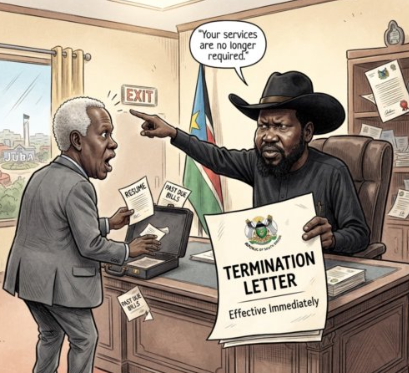
Adding to the precarious South Sudan December 2026 election status, President Salva Kiir dismissed Professor Abednego Akok Kacuol, the chairperson of the South Sudan National Elections Commission, on September 15, 2026. No public explanation was provided for this abrupt change, which occurred approximately three months before the scheduled polling date. Gabriel Bol Deng Majok, previously the commission's secretary-general, was subsequently appointed as the new head. This leadership alteration has further deepened public uncertainty regarding the integrity and operational continuity of the electoral body.
Unresolved Frameworks and Logistical Hurdles
The absence of a permanent constitutional framework and comprehensive electoral legislation represents a significant impediment to the South Sudan 2026 election viability. These foundational legal instruments are indispensable for defining the electoral landscape, yet their development continues to lag. Beyond the legal vacuum, practical logistical challenges are immense. A decisive element for any election is voter registration; without an agreed and verifiable register, the authorities cannot accurately determine who is eligible to vote, where citizens should cast their ballots, or how essential resources like ballots and polling staff should be distributed across the nation.
Moreover, the electoral process must explicitly address the participation of diverse and often marginalized populations. Specific provisions are required to ensure that refugees, internally displaced persons (IDPs), returnees, pastoralist communities, persons with disabilities, and citizens residing in conflict-affected areas can exercise their right to vote. The United Nations highlighted these scheduling conflicts as early as February 2025, warning that the timelines for constitution-making and the national census were incompatible with the December 2026 election schedule. More than a year later, the disparity between the political calendar and the operational realities on the ground remains stark.
Financial transparency and resource allocation also pose substantial concerns for South Sudan electoral preparations. Conducting a national election demands timely and significant expenditure for a wide array of items, including registration materials, detailed constituency mapping, the recruitment and training of polling staff, printing of ballots, transportation logistics, secure warehousing, communication infrastructure, civic education campaigns, security provisions, election observation, and dispute resolution mechanisms. Yet, as of September 20, 2026, there has been no sufficiently detailed public statement outlining the total approved cost for the election, the amount released by the Ministry of Finance, or the expenditure incurred to date. This lack of financial clarity further undermines confidence in the feasibility of the upcoming vote.
Governance Risks and Institutional Credibility
The unannounced dismissal of Professor Abednego Akok Kacuol from his role as chairperson of the South Sudan National Elections Commission on September 15, 2026, raises serious questions about institutional independence and the integrity of the electoral process. While leadership changes within an electoral body are not inherently illegitimate—commissioners can be replaced for lawful reasons such as incapacity or serious misconduct—the timing, procedure, and absence of a transparent public explanation are critical. A removal occurring just three months before a scheduled national vote, without any public account, inevitably fuels suspicions of political interference and jeopardizes operational continuity.
The National Elections Commission is intended to serve as the public's primary anchor of certainty regarding the electoral process. Its mandate includes publishing a binding electoral calendar, disclosing its budget, clearly explaining voter-registration procedures, and demonstrating that its decisions are insulated from partisan manipulation. In light of the recent leadership change, the incoming chairperson, Gabriel Bol Deng Majok, faces an immediate imperative to provide clarity. He must publicly articulate what preparatory tasks have been completed, what remains outstanding, the extent of funding received, and whether the December 22, 2026, election date remains operationally achievable. Silence on these critical matters will only intensify concerns about either another postponement or increased political control over the electoral body, further eroding public trust in the South Sudan 2026 election viability.
Practical Implications
Lawyers and compliance officers advising clients in South Sudan should closely monitor the escalating political uncertainty surrounding the 2026 general election. The lack of progress on critical electoral reforms, constitutional framework, and the recent dismissal of the election commission chairperson indicate significant governance risks and potential for instability, which could impact business operations, investment climate, and the overall rule of law.
Source
How does this affect you?
Get an AI analysis of this article grounded in your jurisdictions, practice areas, and any policy documents you've uploaded to Wansom.
Finish Reading the Full Story and the Expert Analysis.
Get the latest legal & regulatory intelligence in South Sudan
Wansom is AI and can make mistakes.