
South Sudan: Legislator Indicates Kiir to Dissolve Unity Government September 22
Summary
- South Sudanese lawmaker Stephen Ajongo Akol indicated the transitional government could dissolve on September 22, with parliament working to pass election law amendments.
- The proposed amendments would allow President Salva Kiir to remain in office while the five vice-presidents would depart.
- Opposition leader Kornelio Kon Ngu challenged the September 22 dissolution, citing a peace agreement extension that sets February 22, 2027, as the correct date.
- Kon Ngu warned that dissolving the government before February 2027 would amount to a coup and criticized the implementation of the 2018 peace agreement.
- Government spokesperson Ateny Wek Ateny had previously suggested an October dissolution, as President Kiir is expected to be at the UN General Assembly on September 22.
Developments in Juba
Any move to dissolve the government before February 2027 would constitute a coup.
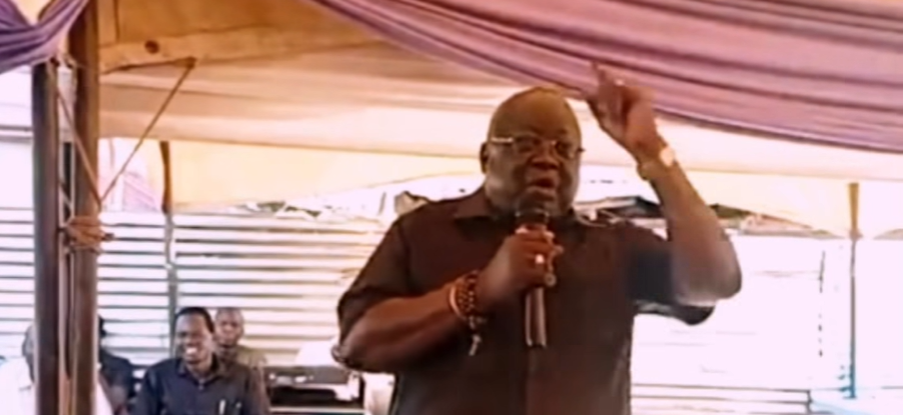
A prominent South Sudanese legislator, Stephen Ajongo Akol, indicated on Sunday that the nation's transitional government might be dissolved on September 22. This potential dissolution is closely tied to ongoing parliamentary efforts to amend the country's election law, a crucial step ahead of general elections slated for December. Akol, speaking during funeral prayers for the late Sultan Garang Deng Bol in Juba, detailed that the proposed legislative changes would permit President Salva Kiir to retain his position, while the five incumbent vice-presidents would step down.
Lawmakers have been diligently working on the election bill since Friday, continuing their review through Saturday. Akol anticipated that the bill would undergo further revision and be passed on Monday, likely by noon, before being forwarded to President Kiir for his assent. He also noted that members of parliament had approximately 24 hours remaining in their current terms, after which caretaker officials, including governors, would be appointed by the president following the dissolution of the transitional government. Akol underscored the government's commitment to holding general elections and firmly rejected any further extension of the transitional period.
However, this timeline for the South Sudan Kiir dissolve unity government September 22 plan faces immediate contention. Government spokesperson Ateny Wek Ateny was not available for comment on Sunday regarding the September 22 dissolution. Earlier in the month, Ateny had informed Radio Tamazuj that the transitional government's dissolution on that specific date was improbable. He suggested that the dissolution might instead occur in October, citing President Kiir's expected attendance at the United Nations General Assembly in New York on September 22.
Legal and Political Challenges
The prospect of the South Sudan transitional government dissolution on September 22 has been strongly challenged by Kornelio Kon Ngu, a presidential aspirant, the third deputy speaker of parliament, and leader of the opposition National United Democratic Front (NUDF). Kon Ngu asserted that the agreement reached by the parties for the latest extension of the transitional period explicitly set February 22, 2027, as the date for the transitional unity government's dissolution, not September 22, 2026. He issued a stark warning, stating that any move to dissolve the government before February 2027 would constitute a coup.
Kon Ngu also confirmed that the election law amendments would be considered by parliament on Monday, aligning with the legislative process described by Akol. However, he insisted that elections should proceed as scheduled on December 22, 2026, emphasizing the right of South Sudanese citizens to elect their leaders. Furthermore, Kon Ngu voiced significant criticism regarding the implementation of the 2018 peace agreement, alleging that the government had systematically removed key provisions and mechanisms from the accord. He specifically claimed that the recently signed election law bore no relation to the peace agreement.
Challenging the legal basis for the proposed September 22 dissolution, Kon Ngu argued that the constitution does not specify a timeframe for such a move. He clarified that parliamentary actions were intended to empower the president to overcome obstacles to elections, not to set a dissolution date. When questioned about Ateny's earlier remarks concerning a potential dissolution three months prior to elections, Kon Ngu dismissed them, noting that the Minister of Information was not involved in parliamentary deliberations. These conflicting interpretations highlight the deep divisions surrounding the South Sudan peace agreement 2018 implementation and the legitimacy of the proposed changes, forming a significant Kornelio Kon Ngu government challenge.
Uncertainty in South Sudan's Political Transition
The contrasting statements from lawmaker Akol and opposition figure Kon Ngu underscore a significant South Sudan political transition risk as the country approaches critical deadlines. While Akol's remarks suggest an imminent dissolution of the unity government and a swift legislative process for Kiir election law amendments South Sudan, Kon Ngu's challenge points to a fundamental disagreement over the agreed-upon timeline and the fidelity to the 2018 peace accord. The parliamentary review of the election bill, intended to facilitate the December elections, is now central to this dispute, with its provisions potentially allowing President Kiir to remain in power while other top officials depart.
The divergent views on the dissolution date – September 22 versus February 22, 2027 – and the legal interpretations of both the constitution and the peace agreement create an environment of considerable uncertainty. The government's commitment to holding elections, as stated by Akol, is juxtaposed with Kon Ngu's concerns about the integrity of the peace process and the election law itself. This complex situation demands close monitoring by all stakeholders, as the actual dissolution date of the transitional government and the final form of the election law amendments will have profound implications for the stability and future democratic trajectory of South Sudan.
Practical Implications
Lawyers and compliance officers in South Sudan should closely monitor the actual dissolution date of the transitional government and the final form of the election law amendments. Conflicting interpretations of the peace agreement and constitutional provisions could lead to significant political instability and legal challenges, impacting contractual stability and the legitimacy of future government actions.
Source
How does this affect you?
Get an AI analysis of this article grounded in your jurisdictions, practice areas, and any policy documents you've uploaded to Wansom.
Finish Reading the Full Story and the Expert Analysis.
Get the latest legal & regulatory intelligence in South Sudan
Wansom is AI and can make mistakes.