
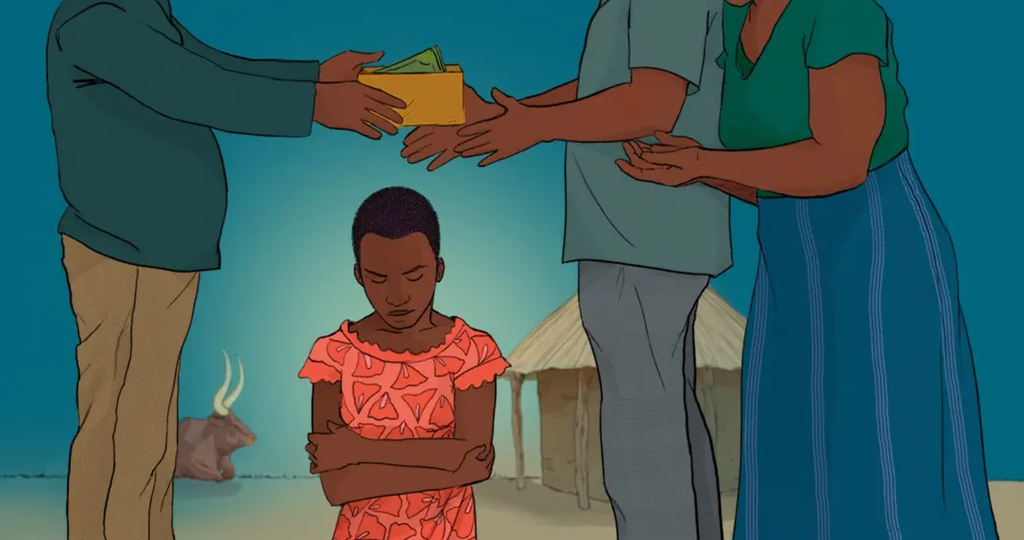
Feature| Child Marriage: ‘I Was Forced Into Marriage at the Age of 14’
What Happened
Married at 14 in exchange for cows, Nyanbuot is now a mother and is six months pregnant with her second child. Despite South Sudans laws protecting girls from early and forced marriage, she is still struggling to reclaim the future she once imagined. At 14, Nyanbuot was dreaming of becoming a doctor. She was in Primary Seven, studying in Kenya and imagining a future in which she could help pregnant women and mothers facing health challenges. But in January 2024, her life took a different turn. Without her knowledge or consent, she says, her relatives arranged her marriage to a man she had never met, in exchange for cows and other wealth. Now 17, Nyanbuot is a mother and is six months pregnant with her second child. Her education has been interrupted, her ambition of becoming a medical doctor put on hold, and her daily life shaped by responsibilities she says she was far too young to bear. “My family just decided to marry me off because of the cows. So, I was married into a family and to a man I had never met or seen in my life,” she said. The marriage was arranged while Nyanbuot was studying in Kenya. She said her relatives called her home during the Christmas period, assuring her that everything was fine. She had no idea that plans for her marriage had already been made. When she arrived in Rumbek, Lakes State, she discovered that her family had other intentions. “I was studying in Kenya, not in South Sudan. People just informed me during Christmas time that I should come back and see the family. When I came, I stayed for only two days before they married me off immediately,” she said. A childhood interrupted For Nyanbuot, the transition from schoolgirl to wife was overwhelming. She said her first pregnancy was particularly difficult, as she struggled to cope with household duties while carrying a child and adjusting to a husband she barely knew. “I am not feeling okay because this is a very new life to me. Imagine, someone who is a child like me is also carrying another child,” she said. “It was really very hard in the past months when I was pregnant. I struggled to cook while I was also pregnant. Sometimes, he could beat me, and I could not talk to him because he was someone I did not love.” She said that when she tried to turn to her parents for help, they also beat her rather than offering support. Leaving the marriage, she added, was not a straightforward option. Her family had received cows in exchange for her, and she feared that her relatives, particularly her brothers who owned the animals, would refuse to take her back. “My brothers, who received the cows, would not be happy to accept me back from the marriage. They could also chase me back to the man. So, my life was very hard,” she said. Her concerns are compounded by the demands of raising a young child in a household where, she said, her husband struggles to provide for the family. “I sometimes wonder why my family members put me into this difficult life because I am suffering, and my little child is also suffering. This man does not have anything apart from the cows he gave to my parents,” she said. Now six months pregnant again, Nyanbuot faces the prospect of raising two children while still trying to understand and cope with a life she says she never chose. Nyanbuots experience is not isolated. Forced and early marriage, often linked to the payment of cattle as bride wealth, has been documented in Lakes State, where girls have also faced violence for resisting family-arranged unions. In April 2019, a 20-year-old girl was beaten to death in Yirol after refusing to marry a man selected by her family. The suitor had offered 40 cows to the family. In May 2020, a 20-year-old woman was beaten to death by her brothers in Rumbek Centre after rejecting a marriage arranged by her family. In February 2025, a girl was hospitalised in Rumbek after her brothers beat her for refusing a marriage partner chosen by her family. A 2023 briefing by Saferworld on gender-based viol
Source
How does this affect you?
Get an AI analysis of this article grounded in your jurisdictions, practice areas, and any policy documents you've uploaded to Wansom.
Wansom is AI and can make mistakes.