
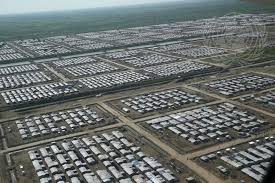
South Sudan: Bentiu IDP Camp Court Opens for SGBV, Drug Cases
Summary
- A temporary court has opened in South Sudan's Bentiu IDP camp to hear cases of sexual and gender-based violence, drug offenses, and gang violence.
- Operating from September 7 to 26, the court is supported by UNMISS, the Unity State government, and funded by the Royal Norwegian Embassy.
- This initiative responds to resident requests for stronger justice mechanisms and follows UNMISS-supported mobile courts that adjudicated 517 cases since 2024.
- The court aims to bring formal judicial services closer to the over 100,000 camp residents, addressing a significant justice gap in Unity State.
Establishing Justice in Bentiu
The Bentiu IDP Camp Court represents a crucial effort to bring formal judicial services physically closer to the camp's residents, thereby improving accessibility and ensuring that serious offenses can be properly investigated and adjudicated.
A new judicial body has commenced operations within South Sudan's largest camp for internally displaced persons (IDPs) in Bentiu. This specialized court, known as the Bentiu IDP Camp Court, is designed to address critical issues including sexual and gender-based violence (SGBV), drug-related offenses, and gang violence. Its establishment was officially announced on Monday, marking a significant step towards enhancing access to justice for the camp's more than 100,000 residents.
The court has commenced operations for a limited period, from September 7 to September 26. Its operations are bolstered by a collaborative effort involving several key entities: the United Nations Mission in South Sudan (UNMISS), the Unity State government, the Judiciary of South Sudan, and the Ministry of Justice and Constitutional Affairs. Further financial backing for this initiative comes from the Royal Norwegian Embassy, located in Juba. This temporary court aims to provide a formal judicial avenue for investigating and adjudicating serious offenses directly within the camp environment.
This deployment is also a joint undertaking with the Community High Committee of the Bentiu IDP camp, ensuring local engagement and relevance. It forms an integral part of a broader initiative spearheaded by the Unity State government's Task Force on Combating Drug Abuse and Gang Violence. This task force unites representatives from justice, security, health sectors, and UNMISS to coordinate efforts in investigations, accountability, prevention strategies, and community engagement, underscoring a comprehensive approach to law and order challenges within the region.
Addressing a Justice Vacuum
The creation of the Bentiu IDP Camp Court directly responds to persistent appeals from the camp's inhabitants for more robust justice and rule-of-law mechanisms. Residents have specifically highlighted the urgent need to tackle pervasive issues such as drug use, gang violence, and sexual and gender-based violence, particularly as these affect children and young people within the community. UNMISS has affirmed that these repeated requests were a primary catalyst for the court's establishment.
This judicial intervention arrives in a region that has long struggled with formal legal infrastructure. The re-establishment of a permanent judiciary in Unity State occurred in May 2026, following a substantial 13-year period during which the state lacked consistent judicial capacity. This historical context underscores the critical importance of temporary and mobile court solutions in the interim.
In fact, UNMISS has been actively supporting seven mobile courts across Unity State since 2024, including operations in Southern Unity and Mayom. These mobile judicial units have proven effective, adjudicating a total of 517 cases. This stands in stark contrast to the year 2023, during which no cases were processed through the formal justice system in Unity State, highlighting the significant gap in legal services that these initiatives are working to fill. The Bentiu IDP Camp Court builds upon these efforts, extending formal justice directly into the heart of the largest displaced persons' settlement.
Impact and Future Implications
The Bentiu IDP Camp Court represents a crucial effort to bring formal judicial services physically closer to the camp's residents, thereby improving accessibility and ensuring that serious offenses can be properly investigated and adjudicated. For a population exceeding 100,000 individuals, many of whom have endured displacement since the camp's establishment as a Protection of Civilians site following the onset of South Sudan's civil war in 2013—and its subsequent redesignation as an IDP camp in 2021—this court offers a vital avenue for redress and accountability.
By specifically targeting sexual and gender-based violence, drug-related offenses, and gang violence, the court addresses some of the most pressing security and social challenges within the camp. Its operation, even for a limited duration, signifies a commitment to upholding the rule of law in vulnerable communities. This initiative not only provides immediate relief by processing cases but also sets a potential precedent for how justice can be delivered in complex humanitarian settings, particularly in areas where permanent judicial structures are still developing or recovering from prolonged conflict.
Practical Implications
Lawyers and compliance officers involved in humanitarian law, criminal defense, or human rights in South Sudan should note the establishment of this temporary court in Bentiu IDP camp. It provides a formal judicial mechanism for cases involving SGBV, drug, and gang violence, offering a new avenue for justice for camp residents and potentially setting a precedent for similar initiatives in vulnerable communities.
Source
How does this affect you?
Get an AI analysis of this article grounded in your jurisdictions, practice areas, and any policy documents you've uploaded to Wansom.
Finish Reading the Full Story and the Expert Analysis.
Wansom is AI and can make mistakes.