
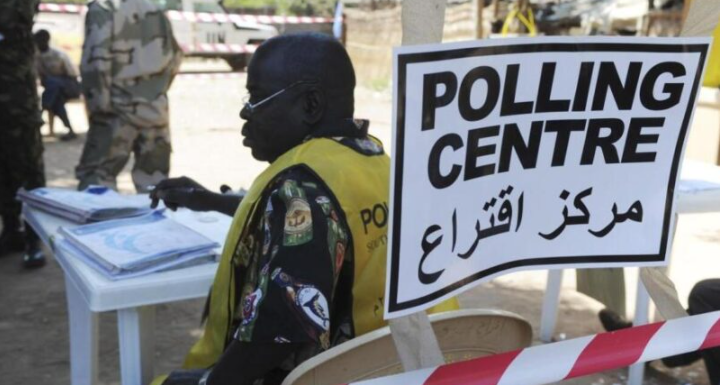
South Sudan 2026 Electoral Law Ambiguity: 270-Member Parliament Unclear
Summary
- South Sudan's amended National Elections Act, assented to on September 21, 2026, sets the National Legislative Assembly at 270 members for the December 22, 2026 elections.
- The 35% women's representation quota presents an arithmetic dilemma, as 35% of 270 seats is 94.5, requiring explicit clarification from the National Elections Commission.
- A proposal for a 2% seat allocation for persons with disabilities, discussed in 2023, remains unaddressed in the current 2026 electoral framework.
- A discrepancy exists between parliamentary updates (332 members) and post-assent government reports (270 members) regarding the National Legislative Assembly size.
- Immediate publication of the authenticated 2026 National Elections Act and its implementing schedules is crucial to resolve ambiguities and ensure electoral legitimacy.
What's at Stake for South Sudan's 2026 Elections
The immediate publication of the authenticated 2026 National Elections Act and its detailed implementing schedules by the National Elections Commission South Sudan is therefore not just an administrative formality but a critical step towards fostering a recognized, accessible, and legally legitimate democratic process in South Sudan.
South Sudan is moving towards its scheduled elections on December 22, 2026, facing critical questions about the foundational legitimacy and representativeness of its future institutions. A newly amended National Elections Act, assented to by the President on September 21, 2026, aims to align the electoral framework with the Transitional Constitution. This legislation also serves to decouple the election timeline from the ongoing permanent constitution-making process and national census, while empowering the National Elections Commission (NEC) to oversee elections across all governmental tiers.
Significant structural adjustments are introduced by this new framework. The National Legislative Assembly is now set to comprise 270 members, a reduction from previous configurations. Additionally, State Legislative Assemblies will each consist of 58 members, and Administrative Area Councils will have 20 councilors. While these changes represent a deliberate policy shift, the mere existence of a new law or a smaller parliament does not automatically guarantee a more representative or legitimate democratic outcome. The crucial challenge lies in ensuring that the new framework clearly defines who will be represented within this 270-member parliament, particularly concerning specific demographic groups.
Uncertainty Surrounds Seat Allocation and Women's Quota
The path to the 270-member parliament has been marked by shifting figures and a lack of transparency, creating significant legal uncertainty for electoral strategy. During the legislative process in September, official parliamentary communications indicated an assembly of 332 members. However, following presidential assent, government reports subsequently confirmed the 270-member figure as the operational law. This discrepancy underscores the urgent need for the immediate publication of the authenticated legislation and its detailed implementing schedules to prevent speculation and confusion among voters, candidates, political parties, and civil society organizations.
A critical ambiguity arises concerning the 35% women's representation quota, a landmark commitment introduced in the 2023 amendment to the electoral law. Applying this percentage to the new 270-member National Legislative Assembly yields 94.5 seats. Since a parliamentary seat cannot be fractional, the National Elections Commission must explicitly clarify through its implementing rules how this half-seat will be resolved. This is not a minor administrative detail; the precise allocation of seats directly impacts whether affirmative action mandates are genuinely fulfilled and can determine the success or failure of individual candidacies and the overall representativeness of the body. South Sudan's electoral framework has seen dramatic shifts over the past decade, moving from a 250-member assembly in the 2012 Elections Act (60% geographical, 25% women, 15% party lists) to a 332-member assembly in 2023 (50% geographical, 35% women, 15% party lists), before settling on the current 270 members. Each change in seat allocation represents a fundamental policy choice with significant implications for power distribution.
The Unaddressed Issue of Disability Representation
Beyond the mathematical challenge of the women's quota, the new electoral framework in South Sudan also leaves a significant question unanswered regarding the representation of persons with disabilities. During the legislative discussions in 2023, a proposal was put forward suggesting a 2% seat allocation specifically for this group. This proposed allocation was intended to complement other categories, including 50% geographical representation, 35% for women, and 10% for political parties.
However, the current 2026 National Elections Act does not explicitly address this proposed allocation, leaving the electoral participation and representation of persons with disabilities in an ambiguous state. This lack of clarity is a critical omission, as it impacts the accessibility and inclusivity of the electoral process and the ultimate legitimacy of the elected bodies. For South Sudan to build a truly representative democracy, all segments of its population must have a clear and defined pathway to political participation.
Why Clarity is Paramount for Democratic Legitimacy
The current ambiguities surrounding the South Sudan 2026 electoral law, particularly concerning the 270-member parliament's seat allocation, pose a substantial risk to the democratic process. Without immediate and transparent clarification on how the 35% women's representation quota will be mathematically implemented and how persons with disabilities will be accommodated, the integrity of the upcoming elections could be compromised. The absence of clear rules creates an environment where electoral outcomes could be challenged on legal grounds, undermining public trust and the perceived legitimacy of the elected institutions.
For political parties, candidates, and civil society organizations, this uncertainty complicates strategic planning and resource allocation. The government's responsibility extends beyond merely setting an election date; it must ensure the electoral framework is robust, unambiguous, and perceived as fair by all stakeholders. The immediate publication of the authenticated 2026 National Elections Act and its detailed implementing schedules by the National Elections Commission South Sudan is therefore not just an administrative formality but a critical step towards fostering a recognized, accessible, and legally legitimate democratic process in South Sudan.
Practical Implications
Lawyers advising political parties, candidates, or civil society organizations in South Sudan must closely monitor the immediate publication of the authenticated 2026 National Elections Act and its implementing schedules. The current ambiguities regarding the 270-member parliament's seat allocation, particularly the mathematical implementation of the 35% women's quota and any provisions for persons with disabilities, create significant legal uncertainty for electoral strategy and potential grounds for future challenges to election outcomes.
Source
How does this affect you?
Get an AI analysis of this article grounded in your jurisdictions, practice areas, and any policy documents you've uploaded to Wansom.
Finish Reading the Full Story and the Expert Analysis.
Get the latest legal & regulatory intelligence in South Sudan
Wansom is AI and can make mistakes.