
Ramaphosa: South Sudan 2018 Peace Agreement Legal Instrument Paramount
Summary
- South Africa's President Cyril Ramaphosa affirmed the 2018 Revitalised Agreement on the Resolution of the Conflict in South Sudan (R-ARCSS) as the nation's paramount legal instrument.
- The African Union's C5 committee, including IGAD members, urged full compliance with the peace deal and avoidance of unilateral actions ahead of South Sudan's December 22, 2026 elections.
- Regional leaders called for an immediate end to hostilities, release of arbitrarily detained individuals, and guarantees for human rights and due process.
- The summit demanded a feasible, consensual, and time-bound South Sudan electoral roadmap, along with adequate funding for electoral and transitional institutions.
- While acknowledging progress, President Ramaphosa highlighted significant remaining challenges and stressed that the primary responsibility for implementation lies with the South Sudanese government and signatory parties.
Paramount Legal Framework Reaffirmed
The 2018 Revitalised Agreement on the Resolution of the Conflict in South Sudan (R-ARCSS) stands as the paramount legal instrument governing the nation's path forward, according to recent high-level discussions.
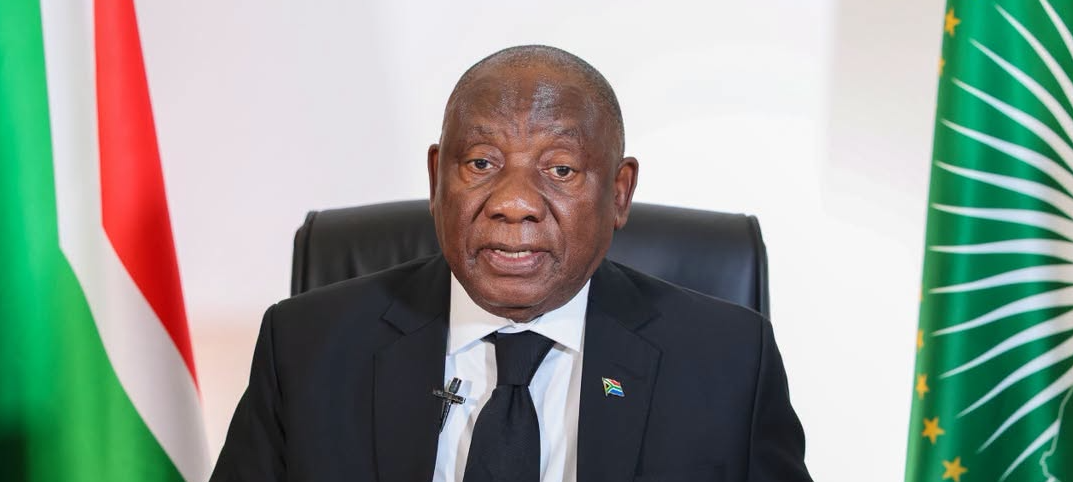
South Africa's President Cyril Ramaphosa recently underscored the enduring significance of the South Sudan 2018 peace agreement legal instrument, declaring it the nation's "paramount legal instrument." This assertion came during the virtual closing of a summit hosted by the African Union's High-Level Ad Hoc Committee on South Sudan, known as the C5, which also included representatives from the Intergovernmental Authority on Development (IGAD) and the broader African Union. The C5, chaired by South Africa and comprising Algeria, Chad, Nigeria, and Rwanda, actively supports peace efforts and the implementation of the Revitalised Agreement on the Resolution of the Conflict in South Sudan (R-ARCSS), originally signed in 2018.
President Ramaphosa emphasized that all parties must adhere fully to the provisions of this 2018 peace agreement, cautioning against any unilateral actions that could undermine its integrity. He explicitly stated that the Revitalised Peace Agreement remains the definitive legal framework by which South Sudan's progress will be measured, and with which all stakeholders must comply. These remarks are particularly pertinent as South Sudan prepares for its first national elections since achieving independence in 2011, with general elections scheduled for December 22, 2026.
Urgent Calls for Electoral Integrity and Human Rights
Beyond reaffirming the foundational role of the 2018 Revitalised Agreement on the Resolution of the Conflict in South Sudan, the summit issued several critical directives aimed at ensuring a credible electoral process and upholding human rights. Regional leaders called for an immediate cessation of hostilities and strict adherence to the permanent ceasefire stipulated within the agreement. A key demand was for the South Sudanese government to release individuals subjected to arbitrary detention on political grounds, while simultaneously upholding the country's sovereignty and judicial processes. Furthermore, the leaders insisted on guarantees for the rights, humane treatment, and due process for all individuals facing judicial proceedings.
The C5 and its partners also pressed for the adoption of a "feasible, consensual and time-bound" South Sudan electoral roadmap. This roadmap, they stressed, must clearly delineate the legal basis, scope, and sequencing of the upcoming elections. To facilitate a peaceful and credible vote, the government was urged to provide adequate and timely funding to both electoral and transitional institutions, and to proactively address all political, legal, technical, operational, financial, and security requirements essential for the democratic exercise.
Challenges and Shared Responsibility
Despite acknowledging some progress made by the South Sudanese government towards the impending elections, President Ramaphosa highlighted that significant challenges and extensive work still lie ahead. He urged the government to swiftly address these remaining obstacles to ensure the national elections are free, fair, and credible. The 2018 peace agreement was initially conceived to bring an end to years of conflict and establish a framework for a transitional government that would ultimately lead to elections. However, its implementation has been fraught with difficulties, leading to repeated extensions and amendments as parties struggled to enact key provisions, including security arrangements, constitutional reforms, and electoral preparations.
President Ramaphosa reiterated that the primary responsibility for implementing the agreed measures rests squarely with the South Sudanese government and the parties signatory to the 2018 peace agreement. He emphasized that support from the African Union, the C5, and international partners should serve to reinforce South Sudanese ownership and respond to clearly identified national priorities. The summit also called for the protection of civilians, humanitarian and medical workers, and UN peacekeepers, demanding safe and unhindered humanitarian access and accountability for any attacks against these personnel.
Path to Lasting Stability
The African Union, the C5, and IGAD were specifically tasked with coordinating technical assistance to support both the electoral process and the broader implementation of the peace agreement. This collaborative effort is deemed crucial for fostering a stable and democratic future for South Sudan. President Ramaphosa concluded by stressing that for democracy to take root in the nation, its leaders must demonstrate a genuine commitment to inclusivity, peace, and national reconciliation.
He articulated that only through such dedicated commitment can South Sudan truly begin the vital work of building its institutions, strengthening democratic practices, and forging a unified nation. The ongoing emphasis on the South Sudan 2018 peace agreement legal instrument as the guiding framework underscores the international community's expectation that its provisions will be fully honored as the country navigates this critical electoral period.
Practical Implications
Lawyers advising clients operating in South Sudan or engaging with its government should be aware that the 2018 Revitalised Peace Agreement (R-ARCSS) remains the paramount legal framework. Compliance with its provisions, particularly regarding the electoral roadmap, human rights, and judicial processes, will be critical for assessing legal and political risk in the lead-up to the December elections.
Source
How does this affect you?
Get an AI analysis of this article grounded in your jurisdictions, practice areas, and any policy documents you've uploaded to Wansom.
Finish Reading the Full Story and the Expert Analysis.
Get the latest legal & regulatory intelligence in South Sudan
Wansom is AI and can make mistakes.