
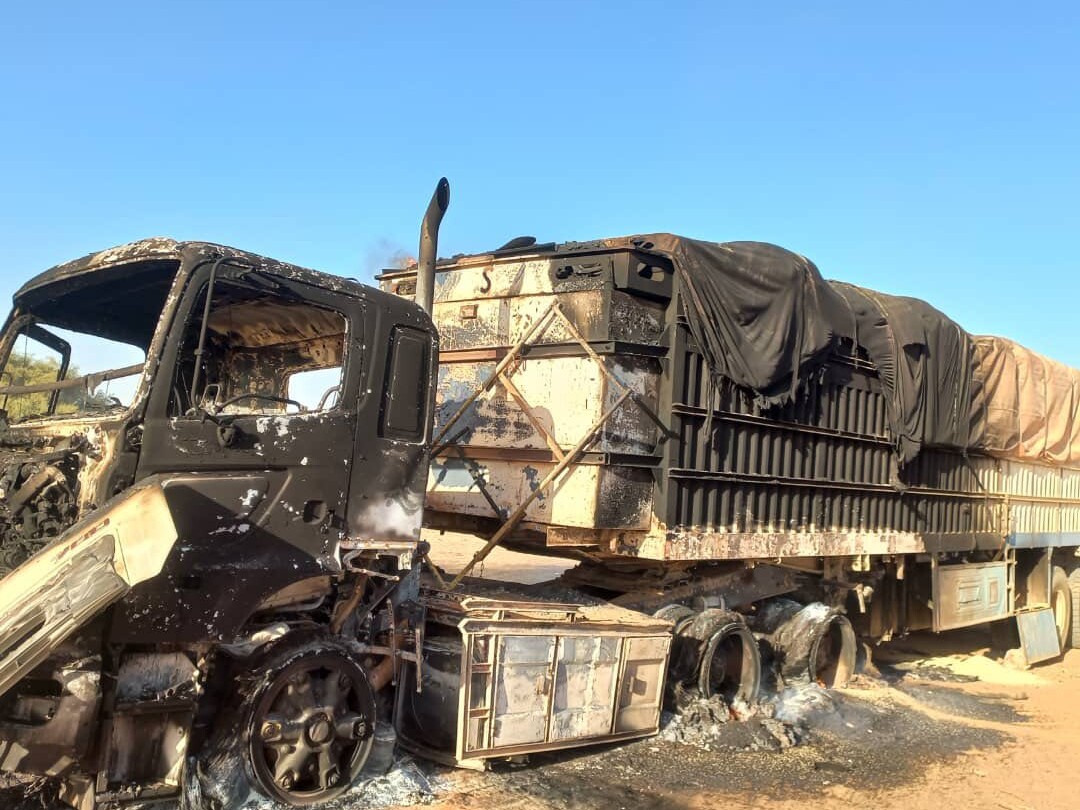
WFP: South Kordofan WFP Aid Truck Attack Destroys 50 Tonnes Food
Summary
- An aerial attack on August 30 destroyed two UN World Food Programme (WFP) trucks carrying food aid in South Kordofan, Sudan.
- The clearly marked trucks were hit near Dilling while en route to Kadugli, where WFP supports nearly 58,000 people.
- Over 50 tonnes of food, sufficient for 5,800 people for a month, were destroyed in the incident.
- This marks the latest of eight aerial attacks recorded by the WFP this year, disrupting its operations and damaging premises.
- The WFP condemned the attack and urged all parties to respect international humanitarian law, protecting civilians, aid workers, and supplies.
Attack on Aid Convoy in South Kordofan
Attacks targeting aid workers and humanitarian operations are unequivocally unacceptable and must cease immediately, as stated by the organization.
On August 30, two trucks transporting vital food assistance for the UN World Food Programme (WFP) were struck by an aerial attack near Dilling in South Kordofan, Sudan. These vehicles, clearly identifiable with WFP banners and flags, were en route to Kadugli, a location where the organization provides critical support to nearly 58,000 individuals grappling with severe food insecurity. The incident resulted in the destruction of more than 50 tonnes of essential food supplies, including cereals, yellow split peas, vegetable oil, and salt.
This substantial loss represents enough life-saving assistance to feed 5,800 people for an entire month. The WFP has issued a strong condemnation of this South Kordofan WFP aid truck attack, underscoring the severe impact on already vulnerable populations. The air strike on the Dilling aid convoy highlights the extreme dangers faced by humanitarian operations striving to deliver aid in conflict-affected regions, directly impeding the provision of Kadugli food assistance.
Escalating Risks for Aid Operations
This recent assault on a humanitarian convoy is not an isolated event but rather the latest in a series of incidents severely disrupting the critical work of the UN World Food Programme in Sudan. The organization has documented at least eight aerial attacks since the beginning of the current year alone, which have caused damage to its facilities and significantly hampered its operational capacity. Such repeated assaults underscore the escalating risks faced by humanitarian agencies striving to deliver essential services in conflict-affected areas.
The UN World Food Programme Sudan's ongoing efforts are crucial for communities grappling with emergency levels of food insecurity, making the uninterrupted flow of aid paramount. The consistent targeting of aid infrastructure and personnel represents a grave challenge to humanitarian principles and the ability to alleviate suffering, exacerbating an already dire situation for millions.
Upholding International Humanitarian Law
In the wake of the attack, the UN World Food Programme has reiterated its urgent call for all parties engaged in the Sudan conflict to uphold their obligations under international humanitarian law (IHL). The WFP specifically emphasized the imperative to protect civilians, humanitarian personnel, and aid supplies from harm. Attacks targeting aid workers and humanitarian operations are unequivocally unacceptable and must cease immediately, as stated by the organization.
This incident serves as a stark reminder of the severe legal and ethical implications of failing to adhere to IHL, particularly for entities operating or advising on activities in conflict zones. A Sudan WFP humanitarian law violation of this nature carries significant reputational and legal risks, underscoring the critical importance of compliance with established international norms designed to safeguard humanitarian efforts. The protection of food assistance, exemplified by the Kadugli food assistance attack, is a fundamental tenet of international humanitarian law Sudan conflict.
Practical Implications
This incident serves as a critical example of potential violations of international humanitarian law (IHL) in conflict zones. Lawyers advising clients on operations, risk assessment, or compliance in conflict-affected regions, particularly those involved in humanitarian efforts or supply chains, should note the severe legal and reputational risks associated with such attacks and the imperative to adhere to IHL.
Source
How does this affect you?
Get an AI analysis of this article grounded in your jurisdictions, practice areas, and any policy documents you've uploaded to Wansom.
Finish Reading the Full Story and the Expert Analysis.
Wansom is AI and can make mistakes.