
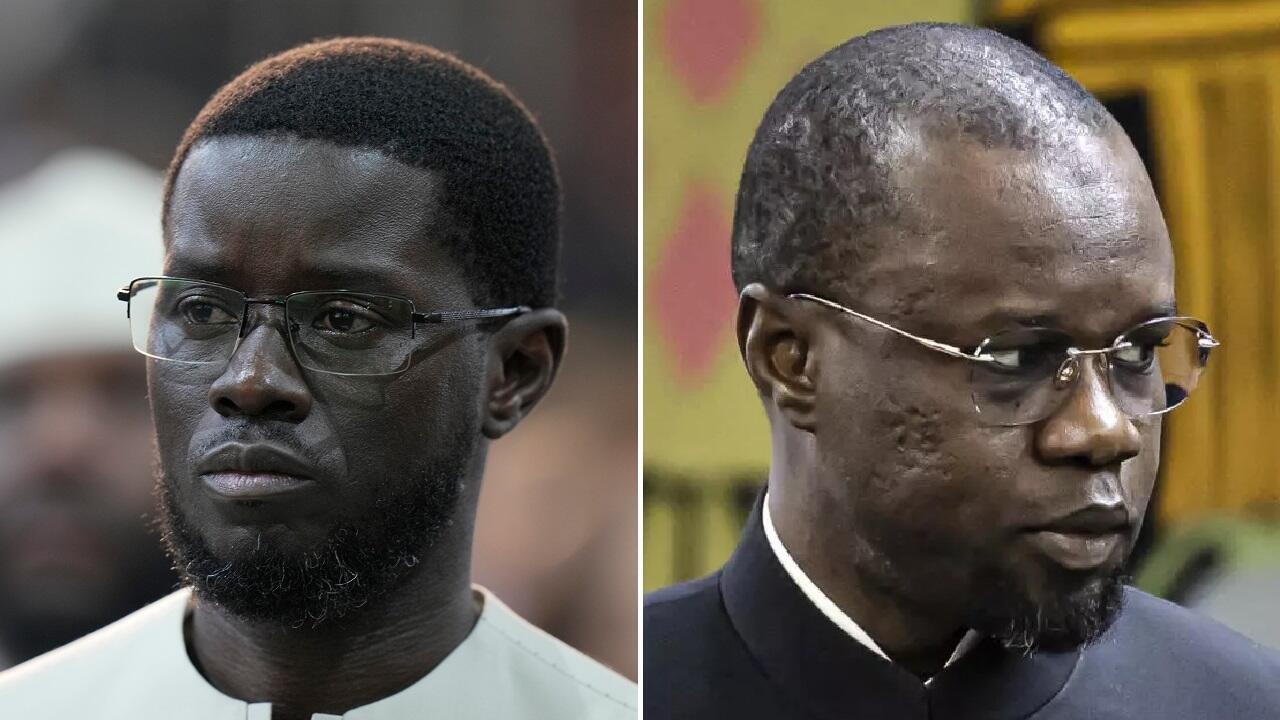
Soudieck Dione: Calls for Dissolution of Assemblée Sénégal Amidst Crisis
Summary
- Soudieck Dione, a researcher, suggests dissolving Senegal's National Assembly due to an irreconcilable political rift between President Bassirou Diomaye Faye and Ousmane Sonko.
- The conflict escalated following Sonko's announcement that Faye was no longer part of the Pastef party and the rejection of key finance bills.
- Dione cites Article 87 of the Constitution, noting the legislature will meet the two-year dissolution prerequisite by December 2nd, to allow for early legislative elections.
- The political crisis has led to a significant drop in Senegal's bonds and is worsening an already tense economic situation with pending IMF programs and credit downgrades.
- The researcher warns that the confrontation harms Senegal's image and risks further economic and public finance difficulties.
A Deepening Political Rift
Soudieck Dione emphasizes that this high-level governmental confrontation severely damages Sénégal's international image.
A significant political chasm has emerged between Senegalese President Bassirou Diomaye Faye and Ousmane Sonko, the head of the National Assembly and president of the Pastef party. This rupture reached a critical point when Sonko publicly declared on November 17, 2026, that President Faye was no longer officially affiliated with the party. This internal conflict, according to Soudieck Dione, a researcher at Université Gaston Berger de Saint-Louis, has escalated to a "point of no return," making any reconciliation exceedingly difficult.
The current political impasse is closely linked to recent legislative actions, specifically the rejection of the revised finance bill by a commission, followed by the subsequent rejection of the initial finance bill. This budgetary confrontation has already begun to ripple beyond the legislative chambers, with Sonko reportedly threatening to obstruct President Faye's budget proposals. Such actions underscore the profound disagreement at the highest levels of government, creating an environment of uncertainty and political instability within Sénégal.
Constitutional Pathways and Political Clarification
In light of the escalating tensions, Soudieck Dione advocates for a political clarification through the dissolution of the Assemblée nationale. He suggests that this measure would pave the way for anticipées législatives, or early legislative elections, providing an opportunity to accurately gauge the level of voter support for both political factions. This approach, Dione believes, is crucial for resolving the current crisis politique Assemblée nationale.
To support his recommendation, Dione refers to Article 87 of the Constitution du Sénégal. He highlights that the current legislative term will have completed two years on December 2nd, a condition he identifies as a constitutional prerequisite for the dissolution of the National Assembly. While Dione does not anticipate a resignation from the head of state, he views the current situation as unsustainable, framing the ongoing confrontation within the broader context of the 2029 electoral cycle. He also observes that the traditional opposition remains largely on the periphery of this debate, as the primary political struggle is predominantly between the two prominent factions originating from the Pastef party.
Economic Repercussions and National Image
The political discord between Bassirou Diomaye Faye and Ousmane Sonko is having tangible negative consequences for Senegal's economic standing. On a recent Monday, the nation's bonds experienced their most significant decline in New York since early September, reflecting investor apprehension. This financial downturn occurs against a backdrop of already strained economic conditions, including a pending International Monetary Fund (IMF) program, a substantial national debt burden, and recent credit rating downgrades by both Moody's and S&P. Furthermore, the country's economic growth has slowed considerably, reaching just 2.2%.
Soudieck Dione emphasizes that this high-level governmental confrontation severely damages Sénégal's international image. He warns that the ongoing political instability risks exacerbating the nation's existing economic challenges and further straining public finances. The confluence of political deadlock and economic vulnerability presents a critical challenge for the country, underscoring the urgent need for resolution to prevent deeper financial and reputational damage.
Practical Implications
Lawyers and compliance officers in Senegal should closely monitor the political developments surrounding the potential dissolution of the National Assembly and early legislative elections, as this could significantly impact the legislative agenda, regulatory environment, and economic stability, potentially leading to new legal frameworks or changes in existing financial laws.
Source
Source: Original reporting via RFI
How does this affect you?
Get an AI analysis of this article grounded in your jurisdictions, practice areas, and any policy documents you've uploaded to Wansom.
Finish Reading the Full Story and the Expert Analysis.
Get the latest legal & regulatory intelligence in Senegal
Wansom is AI and can make mistakes.