
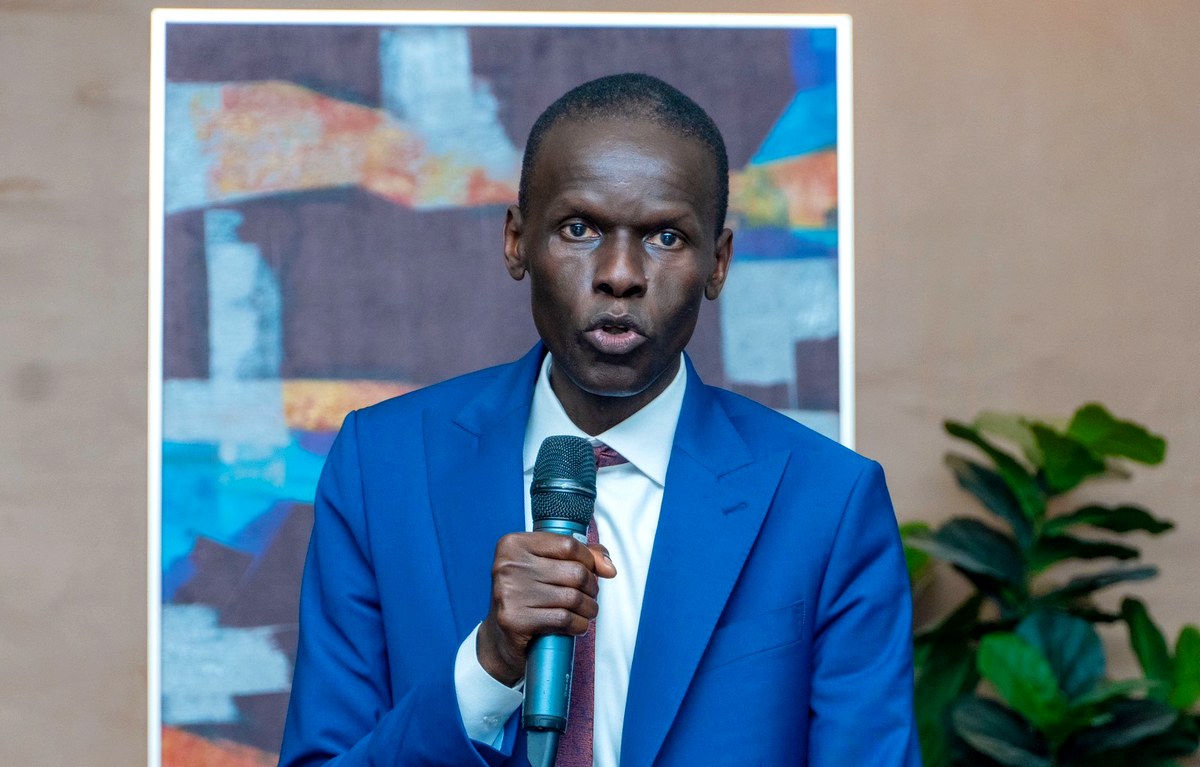
Senegal: Waly Diouf Bodiang Challenges Legality of Decree Enacting Rejected Law
Waly Diouf Bodiang, in Senegal, has publicly denounced the use of a decree to implement a text previously rejected by parliamentarians, labeling it an "act of dictatorship" and warning against a concentration of powers.
This statement raises fundamental questions about the separation of powers and the constitutional limits of executive authority in Senegal, particularly concerning the legislative process and the hierarchy of legal norms. For practitioners, this highlights a potential constitutional crisis or at least a significant challenge to democratic governance if the executive is perceived to be circumventing parliamentary will. Such actions can undermine legal certainty and the rule of law, impacting public trust in governmental institutions and potentially leading to legal challenges regarding the validity of executive actions.
The core legal context revolves around the Senegalese Constitution, which establishes the framework for the separation of powers between the executive (President and government), legislative (National Assembly), and judiciary. Specifically, it concerns the legislative process, the role of decrees (décrets) versus laws passed by parliament, and the constitutional review mechanisms. The principle that a decree cannot override a parliamentary rejection is a key constitutional tenet. The "LFR 2026" likely refers to a specific legislative or financial reform law for 2026, making the budgetary and financial laws relevant. Key parties involved include Waly Diouf Bodiang as the critic, the Senegalese Parliament (National Assembly), and the Executive branch (government issuing the decree), with the Constitutional Council potentially serving as the ultimate arbiter of such constitutional disputes.
Attorneys specializing in constitutional law, administrative law, and public policy in Senegal should closely monitor this debate, as it could lead to significant legal challenges regarding the validity of executive decrees and the interpretation of constitutional provisions on legislative authority. Businesses and individuals affected by the "LFR 2026" or similar executive actions should seek legal advice on potential avenues for challenging such decrees, including through administrative or constitutional courts. The broader implications for governance, the balance of power, and the rule of law warrant careful attention from all legal professionals, as this issue could set important precedents for future legislative and executive actions.
How does this affect you?
Get an AI analysis of this article grounded in your jurisdictions, practice areas, and any policy documents you've uploaded to Wansom.
Finish Reading the Full Story and the Expert Analysis.
Get the latest legal & regulatory intelligence in Senegal
Wansom is AI and can make mistakes.