
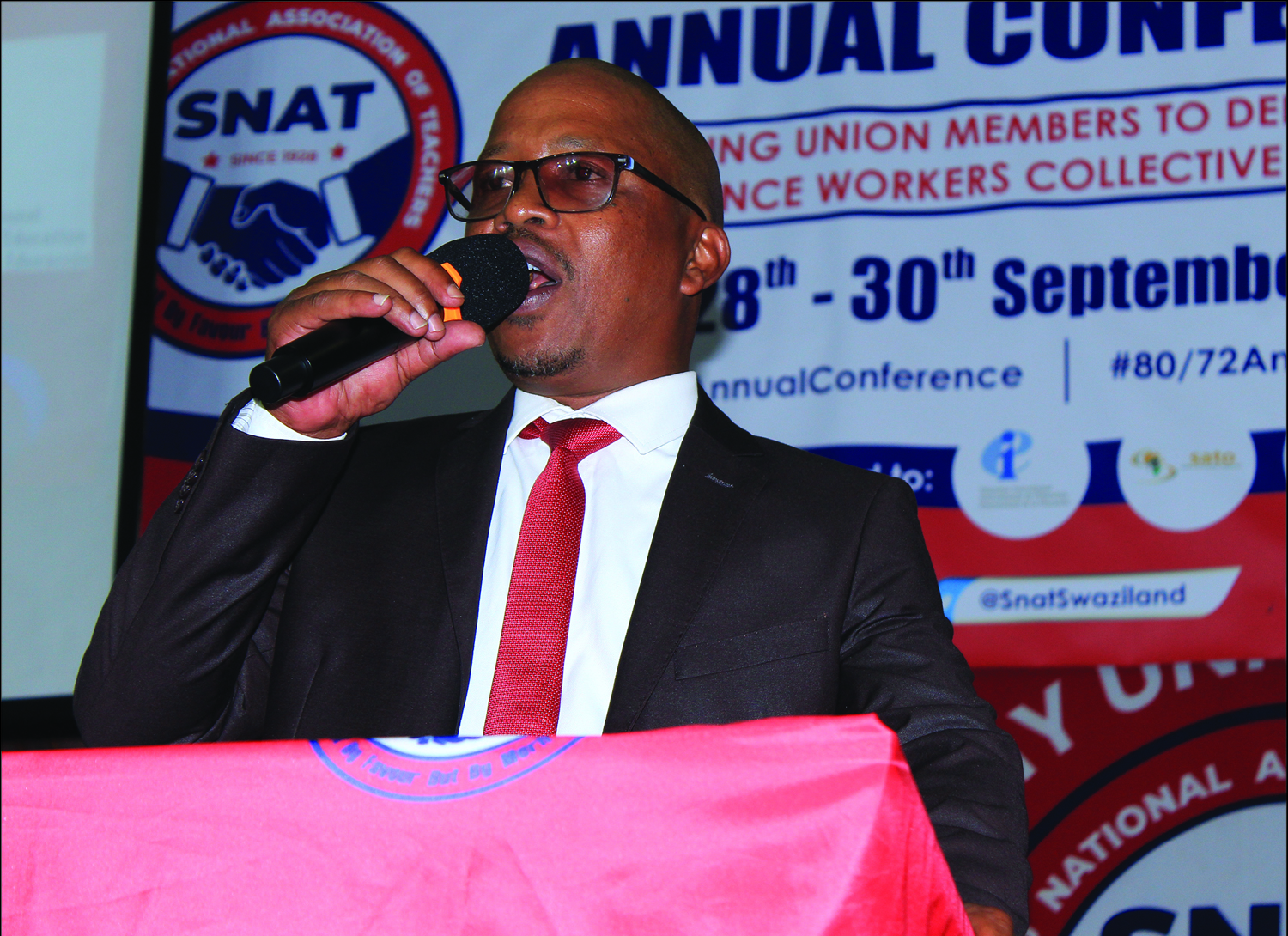
SNAT President Urges Stronger Employment Conditions for Teachers
Outgoing Swaziland National Association of Teachers (SNAT) President Mbongwa Dlamini publicly challenged the union's incoming leadership in Eswatini to escalate their demands beyond mere cost-of-living adjustments (COLA) to advocate for a living wage and enhanced employment conditions for teachers. This significant pronouncement was made during the 2026 SNAT Annual Conference held at Esibayeni Lodge in Matsapha, signalling a strategic shift in the union's future negotiation posture. Dlamini's call represents a clear directive for the new leadership to adopt a more assertive and comprehensive approach to improving the welfare and professional standing of educators across the kingdom.
The legal significance of this development is substantial for industrial relations in Eswatini, particularly within the public sector. A move from demanding COLA, which typically aims to maintain purchasing power, to advocating for a "living wage" implies a fundamental re-evaluation of current remuneration structures and a challenge to the government's fiscal policies. This shift could lead to more complex and potentially protracted collective bargaining negotiations, as the concept of a living wage often involves broader socio-economic considerations beyond inflation rates. For legal practitioners advising the government or other public sector entities, this signals a need to prepare for more robust union demands and potentially increased industrial action.
The legal context for such demands in Eswatini is primarily framed by the Industrial Relations Act, 2000 (as amended), which governs trade unions, collective bargaining, and dispute resolution mechanisms. While the Act provides for minimum wages, the concept of a "living wage" is not statutorily defined but is a common objective in labour movements globally, aiming for a wage sufficient to afford a basic but decent standard of living. "Stronger employment conditions" can encompass a wide array of issues, including benefits, job security, working hours, and professional development, all of which fall under the purview of collective bargaining. Disputes arising from these negotiations would typically be handled through conciliation, mediation, and arbitration by the Conciliation, Mediation and Arbitration Commission (CMAC), with ultimate recourse to the Industrial Court.
Key parties involved include the Swaziland National Association of Teachers (SNAT) and its leadership, both outgoing (Mbongwa Dlamini) and incoming, with the Eswatini government being the implied employer and primary negotiating counterparty. Attorneys advising the government should proactively review existing collective bargaining agreements, assess the financial implications of a living wage, and develop strategies for engaging with these new demands, including potential legal challenges or dispute resolution processes. Labour lawyers representing unions or individual teachers should thoroughly research the legal and economic arguments supporting a living wage and be prepared to navigate the dispute resolution framework effectively. This strategic shift by SNAT could establish a precedent for other public sector unions in Eswatini, necessitating a broader re-evaluation of labour relations strategies across the board.
How does this affect you?
Get an AI analysis of this article grounded in your jurisdictions, practice areas, and any policy documents you've uploaded to Wansom.
Finish Reading the Full Story and the Expert Analysis.
Get the latest legal & regulatory intelligence in Eswatini
Wansom is AI and can make mistakes.